Creator Agency Growth Strategy: How to Grow a Creator Management Business
How an established creator agency chooses where its next stage of growth comes from: the seven growth levers (deeper accounts, new clients, roster, services, niches, regions and partnerships), how to diagnose which one is limiting you, sequencing, hiring ahead of demand and the metrics that show growth is healthy.
Most creator agencies grow the first time almost by accident: a founder with good relationships signs a few creators, brands start calling, and the work multiplies. The second stage is harder. Revenue plateaus, the founder is the bottleneck, and adding creators or clients at random makes the business busier without making it better.
This guide is for agencies that already work: they have a roster, repeat brand clients and a delivery process. If you're starting from zero, read how to start a creator management agency in India first.
Quick answer
A creator agency grows through seven levers: more revenue from existing brand clients, new brand clients, a stronger roster, new services, new niches, new regions or languages, and partnerships with other agencies and platforms. Growth strategy means finding which lever is actually constrained right now (demand, supply of creators, delivery capacity or margin), fixing that constraint first, and adding the next lever only when the current one is working. Measure growth by net revenue, gross margin, repeat client rate and revenue concentration, not by follower counts on the roster or the number of campaigns.
The seven growth levers
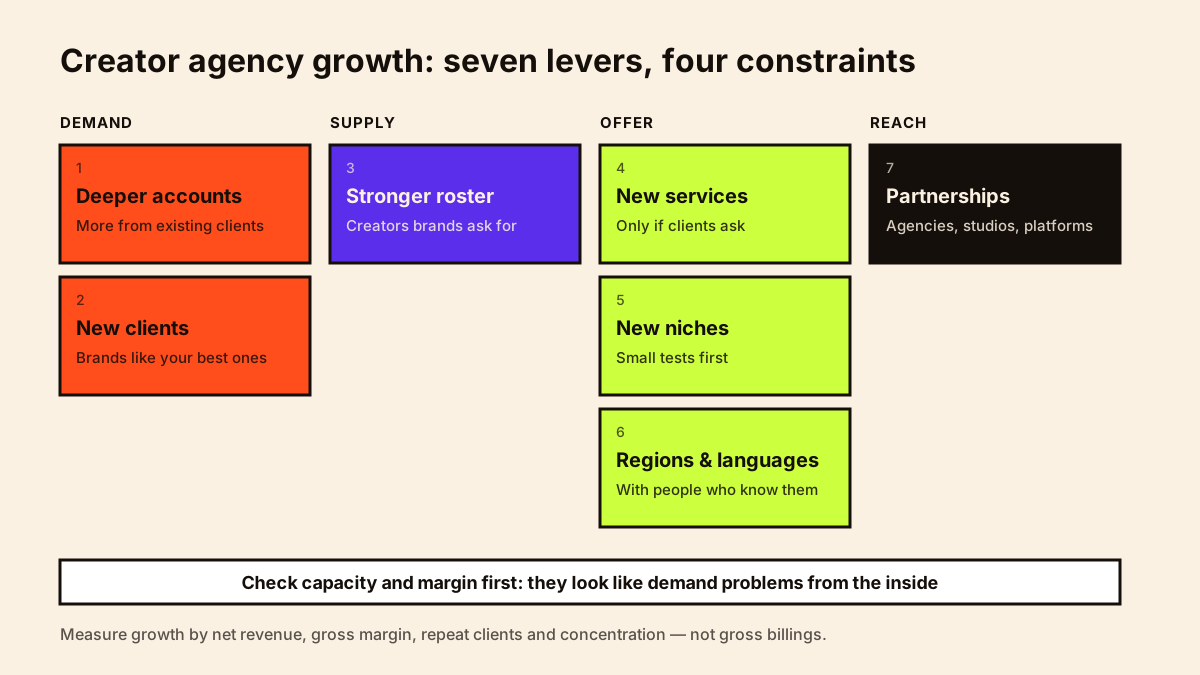
| Lever | What it means | Works when | Risk |
|---|---|---|---|
| 1. Deeper client accounts | More campaigns, services or markets for brands you already serve | Clients are happy and have more budget than you currently capture | Over-dependence on a few clients |
| 2. New brand clients | Winning brands or agencies you don't work with yet | Delivery has spare capacity and case studies are strong | Discounting to win; poor-fit clients |
| 3. Stronger roster | Adding or developing creators brands ask for | You have briefs you can't fill | Signing creators you can't keep busy |
| 4. New services | Campaign management, UGC, paid amplification, strategy, production | Clients already ask for them | Stretching a small team across too many skills |
| 5. New niches | A second category where you can build credibility | The first niche is saturated or seasonal | Losing the specialist reputation that made you trusted |
| 6. New regions or languages | Regional creators or brands in new states | Brands in your niche want regional reach | Needing people who genuinely know the language and culture |
| 7. Partnerships | Working with influencer marketing agencies, media agencies, platforms or studios | Partners bring demand you can't reach directly | Margin shared; less control of the client relationship |
Find the constraint before choosing a lever
Growth stalls for one of four reasons. Pulling a lever that doesn't address the real constraint just creates more work. A quick diagnosis:
| Constraint | Symptoms | Levers that help |
|---|---|---|
| Demand | Creators ask why deals are slow; pipeline thin; team has spare time | New clients, deeper accounts, partnerships |
| Supply | You decline or half-fill briefs; brands ask for creator types you don't have | Roster, new niches or regions |
| Capacity | Deadlines slip; the founder approves everything; team works late every week | Hiring, process, pricing (not more clients yet) |
| Margin | Busy but little profit; heavy revisions; discounting | Pricing, service mix, profitability work |
Capacity and margin problems look like demand problems from the inside, because the team feels stretched. Check them first: creator agency profitability shows how to read margin per client and per creator, and creator campaign capacity planning shows how many campaigns your team can actually carry.
Lever 1: Grow existing accounts first
A brand that already trusts you is usually the cheapest growth available. It knows your process, has a vendor record for you and has seen your results. Growth here comes from running campaigns more often, adding services the brand already buys elsewhere, and covering more of the brand's product lines, regions or platforms. The process is covered in creator agency client retention.
Lever 2: Add new clients deliberately
New clients should look like your best existing clients: similar category, budget range and way of working. Write that profile down before prospecting, and say no to briefs that would pull your team into work you can't do well. The prospecting routine and the sales funnel are in creator agency client acquisition.
Lever 3: Build the roster brands ask for
Keep a list of briefs you declined or couldn't fill, and why. After a quarter it tells you exactly which creators to recruit: a Kannada parenting creator, a fintech explainer on YouTube, a mid-sized fitness creator in Pune. That's a demand-led roster plan instead of signing whoever applies. Creator roster strategy covers roster design, and creator talent acquisition covers finding and signing the creators.
Levers 4 to 6: Services, niches and regions
- Add a service only when clients have asked for it more than once and you can name who will deliver it.
- Price a new service before launching it, including the management time it will take; see creator agency pricing strategy.
- Enter a new niche with a small, strong set of creators and one or two anchor clients, not a public rebrand.
- Enter a region or language with someone who knows it: a team member, a partner agency or a creator who can advise.
- Keep each expansion as a small test with an end date and a decision point.
Service pricing: creator agency pricing strategy. How the revenue streams fit together: creator management agency business model.
Lever 7: Partnerships
Influencer marketing agencies, media agencies, PR firms, production studios and creator platforms all need creators. A partnership with one of them can bring steady briefs your own sales effort would take years to generate. Agree roles in writing: who owns the client relationship, how creators are presented, how fees are shared and who invoices whom. Be transparent with your creators about how these deals are priced.
Sequence growth, don't stack it
Quarter 1  Fix the constraint: pricing, capacity or process. Measure margin per client.
Quarter 2  Deepen the top five accounts: quarterly reviews, next-campaign proposals.
Quarter 3  Fill the roster gaps from the declined-briefs list; add one partner agency.
Quarter 4  Test one new service or niche with an anchor client; decide keep or stop.
If you're planning the year on paper, creator agency business plan turns these choices into a written plan with a financial model.
Hiring for growth
Most agencies hire too late: the founder keeps doing sales, talent management and approvals until quality slips. Hire when your capacity plan shows the team above a comfortable workload for more than a month or two, and separate roles in the order where mistakes cost the most trust: finance and payments, then campaign management, then talent management, then business development. Role definitions are in creator agency operations.
Metrics that show healthy growth
| Metric | Healthy direction | Warning sign |
|---|---|---|
| Net revenue (your fees, not creator pass-through) | Rising | Billings rise but net revenue doesn't |
| Gross margin after delivery team cost | Stable or rising | Falling as volume rises |
| Repeat client rate | Rising | Growth comes only from new clients |
| Share of revenue from top three clients | Falling | One client could sink the year |
| Share of revenue from top three creators | Falling | One creator leaving would hurt badly |
| Days to pay creators | Stable | Rising as you grow |
| On-time delivery | Stable | Slipping with each new client |
Common mistakes
- Measuring growth by gross billings, which include creator fees that aren't your revenue.
- Adding clients when the real constraint is delivery capacity.
- Signing creators without briefs to put them on.
- Launching several new services at once.
- Discounting to win logos that don't fit your niche.
- Letting the founder remain the approval step for everything.
Conclusion
A creator agency grows well when it pulls the right lever at the right time. Diagnose whether demand, supply, capacity or margin is holding you back, fix that first, grow existing accounts before chasing new ones, build the roster from real brief demand, and test new services and niches as small experiments. Judge the result by net revenue, margin and concentration, and the agency gets stronger as it gets bigger.