Creator Attribution: How to Prove Your Content Generated Sales
How creators show brands that content drove sales: tracked links and UTMs, codes, product tags, affiliate data, brand-side data, search and branded lift signals, the limits of each method, and how to report attribution honestly.
A brand asks, "How many sales did your video drive?" It's a fair question, and a hard one. Some buyers click your link; some use your code; many see your video, search the product days later on a marketplace and buy without any trackable trace. Attribution is the practice of connecting sales to content as accurately as the tools allow, and being honest about what they can't see.
This guide explains the attribution methods creators can use and how to report them. For the conversion metrics themselves, see creator conversion rate; for codes specifically, see creator discount codes.
Quick answer
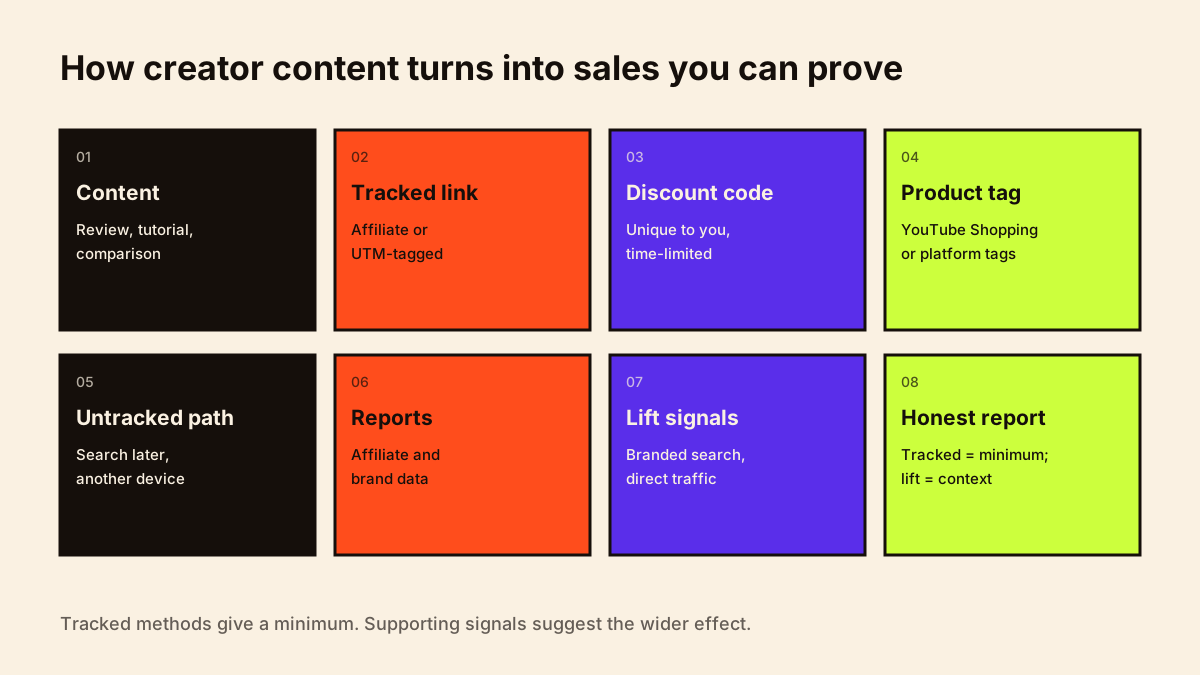
Creators prove content drove sales by combining tracked methods (unique affiliate or UTM-tagged links, unique discount codes, platform product tags) with brand-side data (sales by code or link from the brand's store or marketplace reports) and supporting signals (spikes in branded search or direct traffic around posting, comments showing purchase). Agree the method and attribution window with the brand before the campaign, set up tracking before posting, and report tracked sales as a minimum rather than claiming credit for everything.
Attribution methods
| Method | What it captures | Blind spots |
|---|---|---|
| Affiliate link | Clicks and purchases within the programme's window | Buyers who don't click; cross-device purchases |
| UTM-tagged link | Visits and conversions in the brand's analytics | Needs the brand's analytics access; cookies and privacy settings |
| Unique discount code | Purchases where the code was used | Codes shared on coupon sites; buyers who forget the code |
| Platform product tags | Tag clicks and programme sales | Only within that platform's system |
| Brand store or marketplace data | Sales by link or code, sometimes regional spikes | Requires the brand to share it |
| Branded search and direct traffic lift | Increases around posting dates | Correlation, not proof |
Agree attribution before the campaign
• Which methods: link, code, tag, or combination
• Attribution window: how long after a click or view a sale counts
• What the brand will share: sales by code/link, returns, timeline
• How returns and cancellations are treated
• For performance fees or commission: how and when it's calculated
Performance-based pay needs these terms in writing. See creator contracts vs emails.
Set up tracking before posting
- Create unique links per platform and per piece of content where possible.
- Add UTM parameters if the brand uses them (source, medium, campaign).
- Test every link and code before publishing.
- Put the link where people will use it (see creator affiliate links).
- Note posting times so you can match traffic spikes.
Links: creator affiliate links.
UTM parameters, simply
A UTM-tagged link adds labels to a URL so the brand's analytics can see where visitors came from, for example source=instagram, medium=creator, campaign=diwali-yourname. They don't track purchases by themselves; the brand's analytics connects visits to orders. Ask the brand which naming they use so your data appears in their reports.
Report attribution honestly
- Lead with tracked results: clicks, code uses, tagged sales.
- Label them as tracked minimums.
- Add supporting signals separately (comments, DMs, search lift if the brand shares it).
- Don't claim untracked sales as yours; suggest the brand looks at lift instead.
- Compare with your averages and the objective.
Creator campaign reporting has a report template.
Reporting: creator campaign reporting.
Why attribution is never complete
People often see a product several times, on several platforms, before buying, sometimes in a physical store. Marketplace purchases may not pass tracking data to the brand. Privacy settings limit tracking. That's why brands running creator campaigns often look at overall lift during a campaign as well as tracked sales, and why honest creators present tracked sales as a floor.
For brands: setting creators up for measurable results
For brands, attribution works best when tracking is set up before launch: unique links and codes per creator, agreed UTM naming, and a plan to share sales data after the campaign. Combining tracked sales with lift analysis gives a fairer picture of creator impact. Kudozz's guides to influencer marketing ROI cover brand-side measurement.
For brands: YouTube influencer marketing ROI.
Worked example: an honest attribution summary
Campaign: Running shoes launch, 1 YouTube review + 2 Shorts + 1 Reel
Tracked (minimum):
• Affiliate link: 2,340 clicks · 118 orders · ₹8,85,000 revenue (after returns)
• Code RUNWITHAMIT: 64 orders · ₹4,48,000
• Tracked total: 182 orders, ₹13,33,000
Supporting signals (shared by brand):
• Branded search for the shoe rose in the week after the review
• 37 comments mention buying or ordering
Not claimed:
• Marketplace sales without code or link during the campaign
Next time: separate codes per platform; agree a 14-day attribution window upfront
Presenting tracked sales as a minimum and supporting signals as context is more persuasive to a performance-minded brand than an inflated total.
Common mistakes
- Setting up tracking after posting.
- One link for every platform, so you can't compare.
- Claiming all sales in a period as yours.
- Not agreeing how returns affect commission.
- Not asking the brand to share code or link sales.
Conclusion
Attribution connects content to sales as far as the tools allow. Agree methods and windows upfront, set up unique links and codes before posting, report tracked results as a minimum, add supporting signals honestly, and help brands see both tracked sales and wider lift.