Creator Content Licensing: How to License Your Content to Brands
Licensing turns content you've already made into income. Here's the difference between creating and licensing, what a licence should define, and how to structure licensing deals without giving away more than you mean to.
Most creators think of income as "make something, get paid once." Licensing breaks that link. A brand can pay to use a video you made last year, extend the use of a sponsored Reel for another six months, or put your footage on its product pages. The content already exists; the licence is the product.
Quick answer
Content licensing means giving a brand permission to use content you own, under defined conditions, in exchange for a fee, while you usually keep ownership. A licence should define the content, the purpose (organic social, paid media, website, e-commerce, offline), duration, territory, platforms, editing and derivative-work rights, exclusivity and fee. It's separate from the fee to create content: creating is the work; licensing is the permission to use it.
Creating content vs licensing content
| Creating content | Licensing content | |
|---|---|---|
| What the brand pays for | Your time, skill and production | Permission to use content |
| When | Before the content exists | Content may already exist |
| Priced by | Deliverables, production, your audience (if posted) | Purpose, duration, territory, media, exclusivity |
| Ends when | Content is delivered | The licence period expires |
| Renewable? | No, you'd create new content | Yes, extensions are new income |
A sponsored deal often includes both: a creation fee and a limited licence. Creator usage rights covers how rights are scoped inside a sponsored deal. This guide covers licensing as a product in its own right, including content brands didn't commission.
Ownership: start here
- You generally own content you create, unless you've signed an agreement assigning ownership (copyright) to someone else.
- Check past brand contracts: some assign ownership, some grant perpetual licences, which limits what you can license again.
- Music, footage, fonts and images inside your content may belong to others. Platform-licensed music often can't be used in brand ads.
- People appearing in your content may need to consent to commercial use.
What a licence should define
| Term | Options | Why it matters |
|---|---|---|
| Content | Specific video(s), photos, clips, with links or file names | Avoids "all your content" ambiguity |
| Purpose / media | Organic social, paid ads, website, e-commerce listings, email, in-store, print, TV | Paid and offline use are far more valuable |
| Platforms | Instagram, Facebook, YouTube, marketplaces, brand app | Each platform adds reach |
| Duration | 30, 90, 180 days, 1 year, perpetual | The main pricing lever |
| Territory | India, specific countries, worldwide | Wider territory, more value |
| Editing | None, trims and subtitles, re-edits | Protects how you're presented |
| Derivative works | New edits, compilations, AI variations of voice or likeness | Protects your identity |
| Exclusivity | Non-exclusive, or exclusive to this brand/category | Exclusive licences stop you licensing to others |
| Credit | Handle credited or not | Visibility and audience trust |
| Fee and renewal | One-off, per period, renewal price | Makes extensions easy |
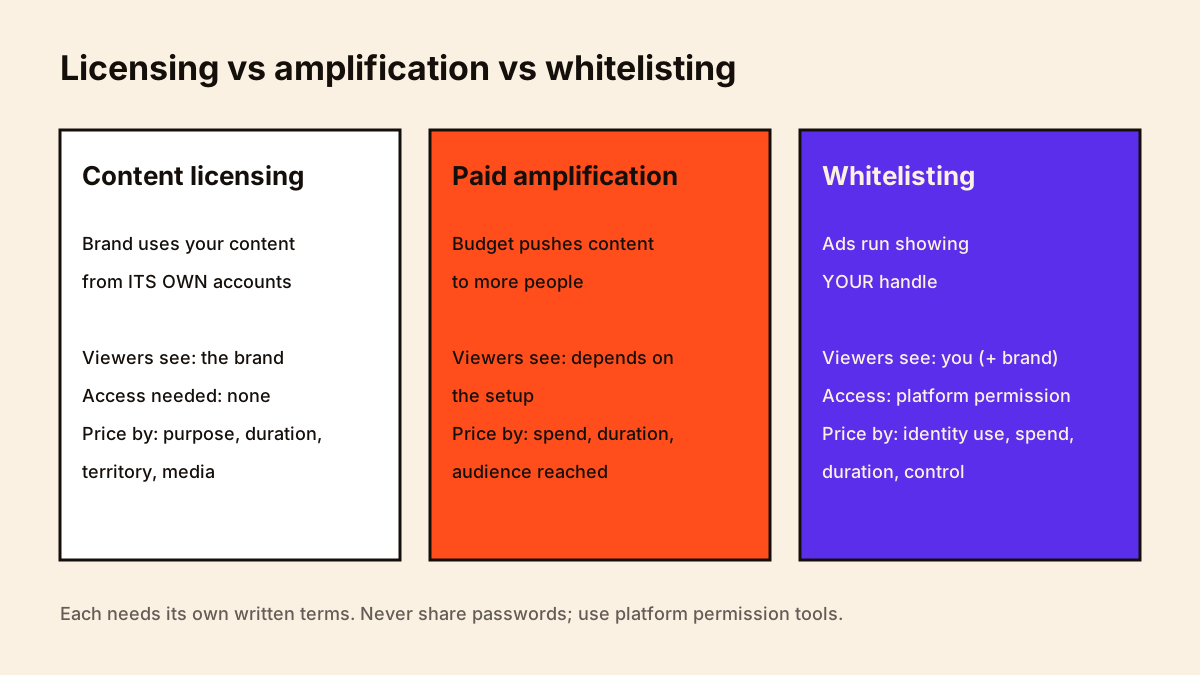
Common licensing scenarios
- Extension: a brand wants to keep running your sponsored Reel as an ad after the original 60 days.
- Retroactive licence: a brand spots an old organic review you made and wants to use it on its website.
- UGC licence: a brand commissions UGC for its own ads and needs paid usage for three months.
- Stock-style licence: a travel brand wants your destination footage for its campaign.
- Media licence: a publisher or channel wants to feature your viral clip.
How to price a licence
There's no universal licensing rate. Instead, think about what the licence is worth to the brand and what it costs you. The factors that raise value are paid media, longer duration, wider territory, more platforms, exclusivity and broader editing rights. Many creators price licences per period (for example per 30 or 90 days) with a clear renewal price, so extensions are simple.
Content: [Reel title, date, link]
Purpose: Paid social ads (Meta platforms)
Territory: India
Duration: 90 days from first ad date
Editing: Trims, subtitles, aspect-ratio changes. No re-edits with other footage. No AI changes to face or voice.
Exclusivity: Non-exclusive
Credit: @handle credited where the ad format allows

Fee: ₹____ for 90 days
Renewal: ₹____ per additional 30 days
After expiry: No new ads; organic posts already published may remain
Perpetual and buyout licences
Some brands ask for perpetual licences or full buyouts. That can be reasonable for certain uses (for example archival organic posts, or product-page videos) if the fee reflects it. Be more cautious with perpetual paid use and derivative rights, which can mean your content or likeness in ads indefinitely, including after you've partnered with a competitor.
You can only license what you own. For copyright basics in India, see creator copyright.
A licence agreement outline
1. Parties
2. Licensed content: [links/files], created on [dates]
3. Ownership: creator retains copyright; this is a licence, not a transfer
4. Permitted use: [organic brand channels / paid ads / website / print]
5. Platforms and territory: [e.g. Instagram and YouTube ads, India]
6. Duration: [start] to [end]; content removed from ads after expiry
7. Edits allowed: [cropping, captions, cut-downs]; no changes to meaning; no AI alteration of likeness
8. Fee and payment terms; renewal pricing
9. Credit or handle tag, if required
10. Termination and what happens to content in use
Usage rights inside a new brand deal are covered in creator usage rights; ownership in creator intellectual property.
Licensing checklist
☐ I own it (no past assignment or conflicting exclusive licence)
☐ Music, footage and people in it are cleared for commercial use
☐ Content identified precisely
☐ Purpose and media listed
☐ Platforms listed
☐ Duration and start date
☐ Territory
☐ Editing limits; derivative and AI use addressed
☐ Exclusive or non-exclusive
☐ Credit
☐ Fee, renewal price, payment terms
☐ What happens at expiry
☐ Everything in writing
If the brand wants to run ads through your handle rather than its own, that's whitelisting, which needs extra terms; see creator whitelisting. For turning licences into a regular income line, see how to turn brand content into multiple revenue streams.
Brands read about the same topic from their side in influencer usage rights and how to repurpose influencer content for paid ads.