Influencer Marketing for Fintech Brands in the UAE: Building Trust and Generating Leads
How payments, banking, investment, insurance and crypto brands can use creators in the UAE: explaining products clearly, choosing credible creators, accurate claims, qualifying leads and tracking, and the financial-promotion rules from the SCA, VARA and free-zone regulators.
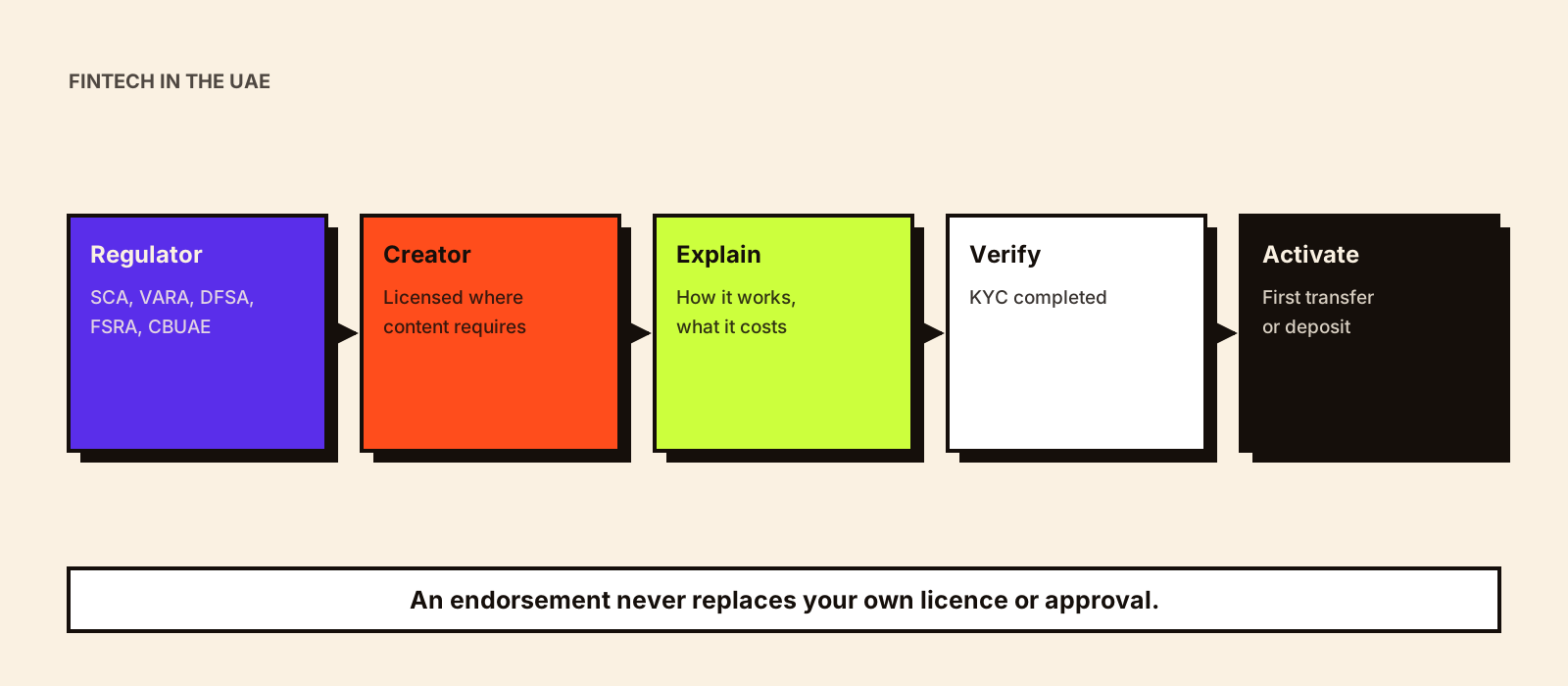
Money is personal, and UAE residents are cautious about where they put it. That makes trusted creators valuable to fintech brands, and it's also why regulators watch financial content closely. A creator explaining how a remittance app works is one thing; a creator recommending an investment is, since 2025, a licensed activity.
Reviewed 9 October 2026. This guide is general information, not legal or regulatory advice. An influencer's endorsement never replaces the licence or approval your firm needs to offer or promote a financial product. Confirm requirements with your regulator and counsel.
Quick answer
Fintech influencer marketing in the UAE works best when creators explain a product clearly to an audience that needs it: how a payment, remittance or budgeting app works, what it costs and who it's for. Content that recommends or promotes investments, trading or other regulated financial products is restricted. Under SCA Resolution No. 10 of 2025, people giving financial content, advice or recommendations to UAE audiences need an SCA licence; virtual-asset marketing in Dubai falls under VARA's marketing rules; and DIFC and ADGM firms have their own financial promotion rules. Measure qualified leads and activated customers, not sign-ups alone.
Which rules apply to your product
| Product | Regulator to check | Creator implication |
|---|---|---|
| Investments, trading, securities, financial advice or recommendations (mainland) | Securities and Commodities Authority (SCA) | Creators giving financial content or recommendations need an SCA licence |
| Virtual assets marketed in or from Dubai | Virtual Assets Regulatory Authority (VARA) | Marketing by or on behalf of licensed firms only; mandatory risk disclaimer; no guaranteed returns |
| Firms in the DIFC | Dubai Financial Services Authority (DFSA) | DFSA financial promotion rules |
| Firms in ADGM | Financial Services Regulatory Authority (FSRA) | FSRA financial promotion rules |
| Banking, payments, stored value, lending, insurance | Central Bank of the UAE (CBUAE) | Consumer protection and fair, clear marketing standards for licensed institutions |
| Any creator advertising | National Media Authority | Advertiser permit for the creator |
According to Pinsent Masons' summary of SCA Resolution No. 10 of 2025, the regime took effect in May 2025 and covers anyone producing financial content, advice or promotional material for UAE audiences on traditional or social media. Financial firms partnering with unlicensed influencers or affiliates were advised to review those arrangements. It doesn't directly cover promotions conducted within financial free zones, though firms whose content reaches UAE audiences more widely should review it. Check current details with the SCA.
VARA's marketing regulations, published in its rulebooks, require virtual-asset marketing targeting the UAE to be carried out by a licensed firm or a third party acting with its approval, to carry a prominent risk disclaimer, and to avoid suggesting returns are guaranteed or creating pressure to buy. Free-zone firms should check the DFSA or the FSRA rules, and banks and payment firms the CBUAE's consumer protection standards.
What creators can usefully do
| Content | Fits | Avoid |
|---|---|---|
| How it works | Walkthrough of opening an account, sending money, splitting a bill | Skipping fees, limits or eligibility |
| Cost transparency | Showing fees and exchange rates against what the creator used before | Cherry-picked comparisons; unsubstantiated 'cheapest' claims |
| Financial education | Budgeting, saving habits, understanding a product category | Turning education into a recommendation to buy a specific investment without a licence |
| Community use cases | Remittances to a home country, salary accounts, freelancer payments | Promising approvals or credit |
| Security and trust | How the creator sets up two-factor login, how to spot scams | Implying the product has no risk |
Choosing credible creators
- Relevance: a creator whose audience has the need, such as expatriates sending money home, freelancers or small business owners
- Licensing: for investment or financial-advice content, an SCA-licensed creator; for any advertising, an advertiser permit
- History: no past promotion of get-rich-quick schemes, unlicensed trading platforms or tokens that collapsed
- Language and community: remittance and banking decisions are often made within language communities; use creators who speak to them
- Tone: creators who explain calmly perform better in finance than those who hype
Accurate claims and required disclosures
- Approved claims list, reviewed by compliance, including fees, limits, eligibility and any 'from' rates
- Required risk warnings and regulatory status statements, in every language used
- No guarantees of returns, approvals or savings unless they're true for every customer
- No urgency tactics such as 'only today' unless genuinely limited, and never for investments
- Clear disclosure of the paid relationship and any referral reward
- Compliance review of the final edit and caption before posting, and a check of the live post
Generating leads that turn into customers
Fintech campaigns often produce lots of sign-ups that never complete verification, fund an account or make a transaction. Define the funnel before launch and pay attention to the stage that matters commercially.
| Stage | Definition | Why it matters |
|---|---|---|
| Click | Visit to landing page or app store | Shows interest, little else |
| Sign-up | Account created | Cheap to generate, easy to inflate with incentives |
| Verified | Identity verification (KYC) completed | Filters out ineligible and low-intent sign-ups |
| Activated | First deposit, transfer or transaction | The first commercially meaningful step |
| Retained | Still active after 30 or 90 days | Indicates whether the creator's audience is the right one |
- Give each creator a tracked link and, for apps, attribution links from your mobile measurement partner
- Report cost per verified and cost per activated customer, not just cost per sign-up
- Be careful with referral bonuses; they attract bonus hunters who never return
- For B2B fintech, track qualified leads and sales conversations; see B2B influencer marketing in Dubai
App-specific attribution is covered in influencer marketing for mobile apps in the UAE, and B2B lead quality in B2B influencer marketing in Dubai.
Common mistakes
- Assuming a creator's endorsement covers your own licensing or approval obligations
- Working with unlicensed creators on investment content
- Omitting risk warnings in the Arabic or other language versions
- Paying for sign-ups that never pass verification
- Choosing creators for reach when the audience doesn't have the need
Conclusion
Trust is the product in fintech, and creators can transfer it, or burn it. Keep creators in the role they're best at, explaining clearly to people who need the product. Keep regulated recommendations with licensed people, put compliance review in the workflow and measure the customers who actually activate.