Arabic vs English Influencer Campaigns in the UAE: How to Choose the Right Approach
How to decide between Arabic, English and bilingual creator content in the UAE: researching who your audience is, native-language copy rather than translation, dialect and cultural review, bilingual production, testing and reporting by segment.
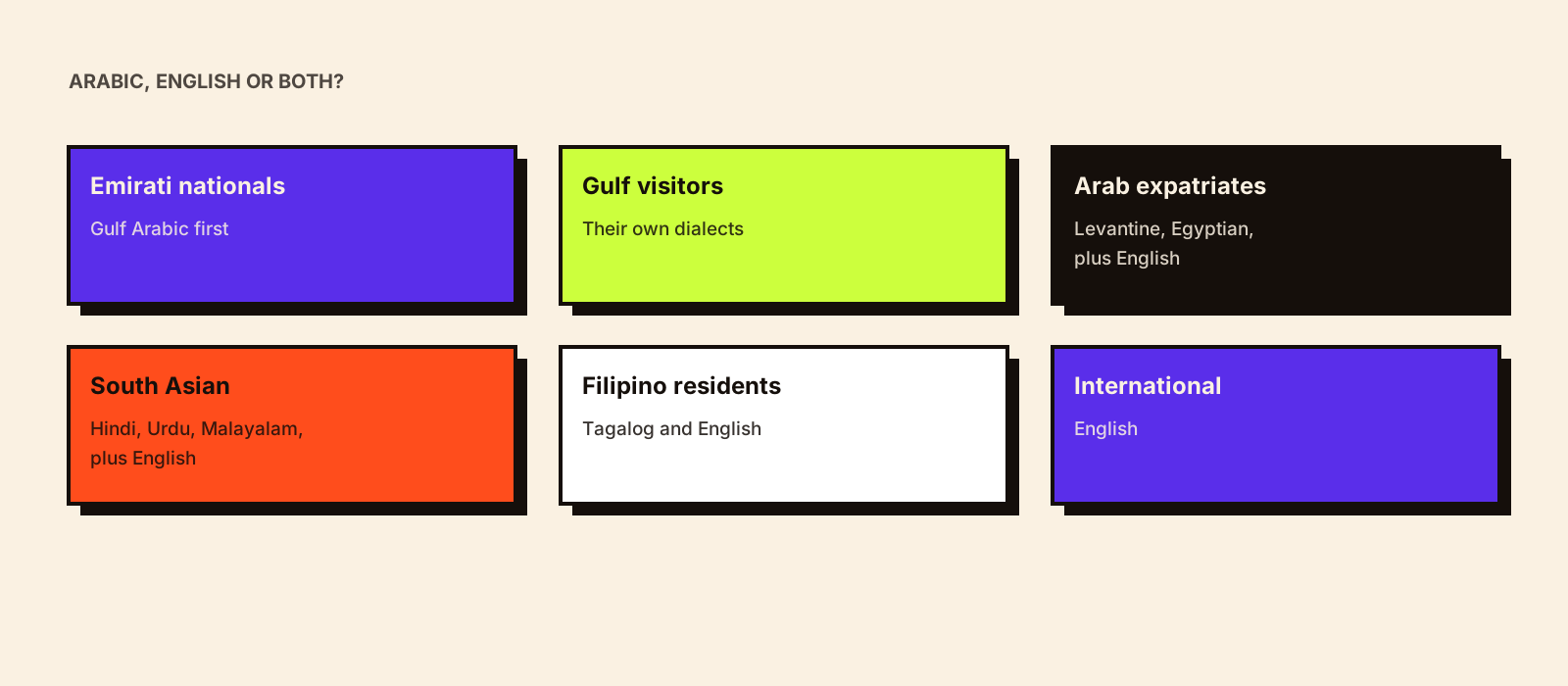
'Should our UAE campaign be in Arabic or English?' is usually the wrong first question. The UAE isn't one language market. Emirati nationals, Arab expatriates from the Levant, Egypt and North Africa, South Asian communities, Filipino residents and Western expatriates all consume content differently, and many people switch between languages depending on the platform and topic. The right question is which audience you need, and what language they choose when nobody's selling to them.
Quick answer
Choose the campaign language from audience research, not assumption. English reaches the broadest resident audience; Arabic is usually essential for Emirati nationals, Gulf visitors and many Arab expatriates, and the dialect matters; other community languages such as Hindi, Urdu, Malayalam or Tagalog can reach large segments more effectively than either. If you need several segments, produce native content for each rather than translating one script, have it culturally reviewed by native speakers, and test and report performance by language and segment. Arabic doesn't automatically outperform English, and English doesn't automatically reach everyone.
Start with who you're trying to reach
| Audience | Language tendencies | Creator implication |
|---|---|---|
| Emirati nationals | Emirati and Gulf (Khaleeji) Arabic for personal content; English common in education and work | Emirati or Gulf creators; Arabic-first content for cultural and family topics |
| Gulf visitors (for example from Saudi Arabia, Kuwait or Oman) | Their own Gulf dialects | Creators from or popular in those markets |
| Levantine, Egyptian and North African expatriates | Their own Arabic dialects, often alongside English | Creators from those communities; dialect affects relatability |
| South Asian communities | Hindi, Urdu, Malayalam, Tamil, Bengali and others, plus English | Community creators in their language often outperform generic English content |
| Filipino residents | Tagalog and English | Filipino creators in the UAE |
| Western and international expatriates | English | English-language lifestyle creators |
Use first-party data where you have it: the language your app or site visitors use, customer service language, past ad performance by language. Then look at each shortlisted creator's audience by country and language. A creator speaking Arabic doesn't guarantee an Emirati audience; it might be mostly Egyptian or Saudi.
Native copy, not translation
- Brief Arabic creators in Arabic, and let them write in their own words
- Don't send an English script to be translated and read out; it sounds translated, and audiences notice
- Adapt the idea, not just the words: humor, references and examples should belong to the audience
- Let product names, prices and offer terms stay consistent across languages
- Keep a glossary of approved terms for products and claims in each language
Dialect and cultural review
Arabic isn't one register. Modern Standard Arabic suits formal and official communication; spoken content on social media is usually in a dialect. A Gulf audience may find Egyptian or Levantine Arabic friendly and familiar, or not quite 'for them', depending on the topic. Decide which dialect fits the audience and the brand's tone, and get native speakers from the target audience to review drafts.
- Check captions, on-screen text and voiceover, not just the script
- Review religious and cultural references, especially around Ramadan, Eid and national occasions
- Check right-to-left text in graphics and that Arabic text isn't broken or reversed
- Confirm that claims and disclosures are equally clear in every language
- Review South Asian and other language versions with native speakers too
Bilingual production
| Approach | How it works | Suits | Trade-off |
|---|---|---|---|
| Separate creators per language | Arabic creators make Arabic content; English creators make English content | Clearly distinct audiences | More creators and briefs to manage |
| Bilingual creators | One creator switches between Arabic and English, or posts both versions | Audiences that switch languages naturally | Smaller pool, often at a premium |
| One video, two caption sets | Visual-led content with subtitles in each language | Demonstrations where speech matters less | Less personal; weaker for persuasion |
| Arabic-first with English subtitles (or the reverse) | Primary language spoken, the other in subtitles | A main audience plus secondary reach | Secondary audience gets a weaker experience |
Make sure the landing experience matches. Arabic content that sends people to an English-only website or app onboarding loses many of the people it persuaded.
Testing and reporting by segment
- Give each language version its own tracked link or code
- Report reach, engagement, clicks and conversions by language and segment, not as one total
- Compare cost per result across languages, not just engagement rates
- When running paid amplification, test the same idea in each language against the matching audience
- Read the comments: questions and objections differ by community
You'll find industry articles claiming large engagement uplifts for Arabic-first content in the Gulf. They're often useful signals, but they tend to come from vendors, with no published method. Your own segment-level results are the evidence that should decide future budget.
Many UAE residents are best reached in neither Arabic nor English; see reaching expat communities in the UAE for Hindi, Malayalam, Urdu, Tagalog and other community-language campaigns.
When each approach tends to fit
| Situation | Likely starting point |
|---|---|
| Government-adjacent, cultural or national-occasion campaigns | Arabic-first, with Emirati creators, plus English |
| Luxury aimed at Gulf nationals | Arabic or bilingual Gulf creators |
| Mass-market retail, delivery or telecom | Several languages, matched to segments |
| Expatriate-focused services (remittance, schools, community food) | The community's language plus English |
| International brands targeting residents broadly | English, plus Arabic for reach among Arab audiences |
| B2B | Mostly English; Arabic for some public-sector and Gulf-national audiences |
These are starting points, not rules. Test before committing a large budget. Saudi Arabia has a different language balance from the UAE, with campaigns mostly in Saudi dialects; see the Arabic and dialect section of influencer marketing in Saudi Arabia.
Common mistakes
- Treating 'Arabic' as one audience and one dialect
- Translating an English script word for word
- Assuming Arabic always performs better, or that English reaches everyone
- Reporting one blended number that hides which language worked
- Skipping native review of captions and on-screen text
Conclusion
Language in the UAE is a targeting decision. Work out which communities you need, give each one creators who speak to them naturally, review every version with native speakers, and let segment-level results guide where the next dirham goes.