Influencer Marketing in Saudi Arabia vs UAE: Key Differences for Brands
How influencer marketing differs between Saudi Arabia and the UAE: audiences and language, platform priorities, creator discovery, commercial terms, campaign operations and the separate licensing regimes, Mawthooq in Saudi Arabia and the advertiser permit in the UAE.
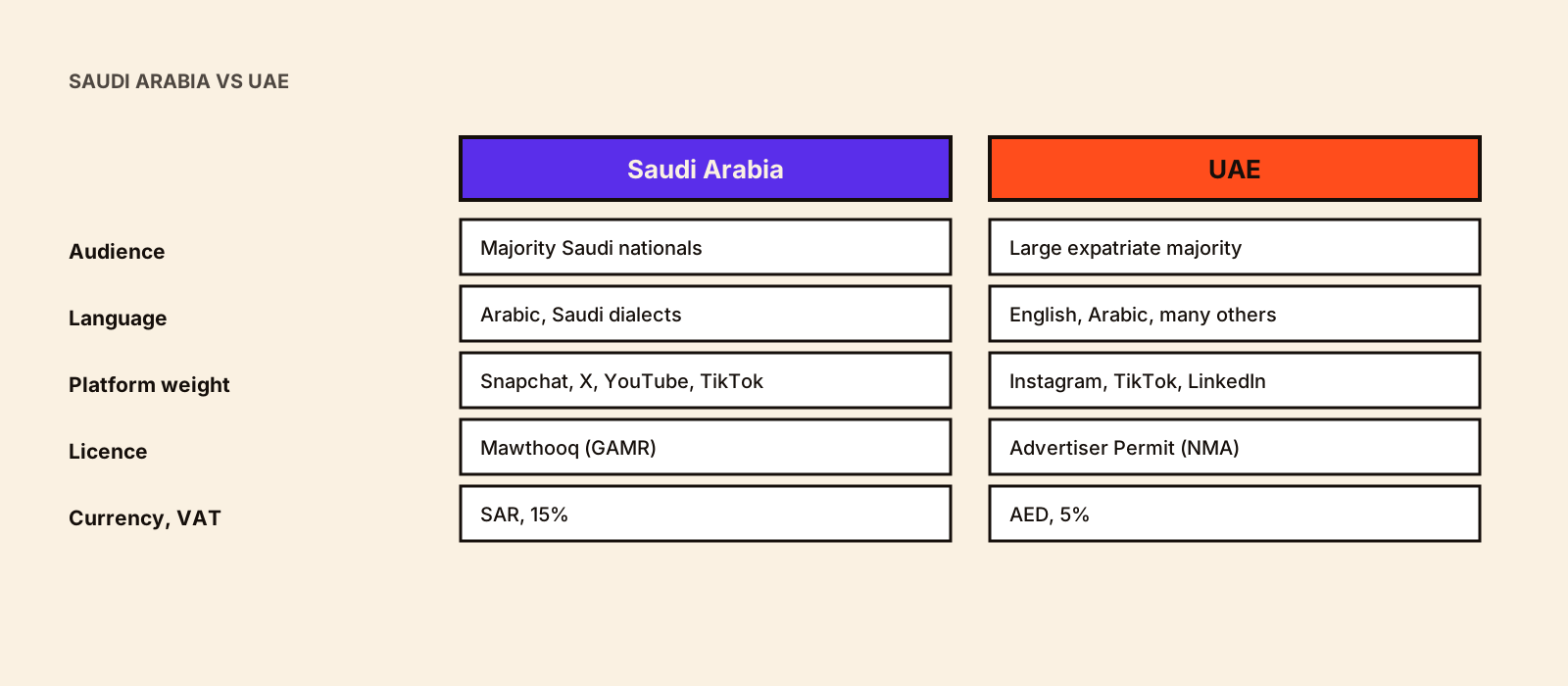
Brands that succeed in the UAE often assume Saudi Arabia is the same campaign at a bigger scale. It isn't. The audience is different, the language balance is different, the platforms carry different weight, and the licensing regime is a separate Saudi system that a UAE permit doesn't satisfy. The two markets reward different plans.
Reviewed 9 October 2026. Regulatory points are summaries for planning, not legal advice. Saudi requirements should be confirmed with the General Authority for Media Regulation (GAMR) and Saudi counsel; UAE requirements with the National Media Authority.
Quick answer
The main differences: Saudi Arabia's population is mostly Saudi nationals, so campaigns are typically Arabic-first in Saudi dialects, while the UAE's resident audience is mostly expatriate and multilingual. Snapchat, X, YouTube and TikTok carry more weight in Saudi Arabia than in the UAE, while Instagram and LinkedIn reach a larger share of UAE residents. Saudi creators who earn from promotional content need a Mawthooq licence from GAMR, with additional requirements for non-Saudis; UAE creators need a separate advertiser permit from the National Media Authority. Plan, brief, contract and measure each country separately, even when one team runs both.
Side-by-side
| Saudi Arabia | UAE | |
|---|---|---|
| Population (late 2025, DataReportal) | About 34.7 million | About 11.4 million |
| Audience make-up | Majority Saudi nationals, plus large expatriate communities | Large expatriate majority from many countries; Emiratis a minority |
| Main content language | Arabic, in Saudi dialects; English for some segments | English widely; Arabic for nationals and Arab expatriates; many community languages |
| Regional variation | Riyadh, Jeddah and the Eastern Province differ in dialect and culture | Dubai, Abu Dhabi and the Northern Emirates differ in audience and authorities |
| Creator licensing | Mawthooq licence (GAMR) | Advertiser Permit and Visitor Advertiser Permit (National Media Authority) |
| Currency and VAT | SAR; VAT 15% | AED; VAT 5% |
| Key national and seasonal moments | Founding Day (22 February), Saudi National Day (23 September), entertainment seasons, Ramadan and Eid | Commemoration Day and National Day (30 November and 2 December), Dubai Shopping Festival, Ramadan and Eid |
Audience and language strategy
In Saudi Arabia, most campaigns are built for Saudi nationals, in Arabic, by Saudi creators. Dialect and regional identity matter: a creator from Riyadh, one from Jeddah and one from the Eastern Province may each resonate differently. In the UAE, the same budget might be split across Emirati, Arab expatriate, South Asian and Western expatriate segments, in several languages.
- Don't use UAE-based Arabic creators as a proxy for Saudi audiences unless their audience data shows a strong Saudi following
- Brief Saudi creators in Arabic and have Saudi native speakers review drafts
- Expect cultural references, humor and family norms to differ; localize the idea, not only the language
- English-only campaigns will reach far less of the Saudi market than of the UAE's
More on language choices in the UAE is in Arabic vs English influencer campaigns in the UAE.
Platform priorities
DataReportal's Digital 2026 reports for Saudi Arabia and the UAE, published in November 2025, show the difference in advertising audiences as a share of the total population:
| Platform | Saudi Arabia: ad reach (share of population) | UAE: ad reach (share of population) |
|---|---|---|
| Snapchat | 25.3 million (72.9%) | 5.13 million (44.9%) |
| YouTube | 27.5 million (79.2%) | 8.37 million (73.3%) |
| 18.2 million (52.4%) | 8.05 million (70.5%) | |
| X | 15.0 million (43.1%) | 2.85 million (25.0%) |
| TikTok (users aged 18+) | 38.6 million (more than the adult population) | 12.5 million (more than the adult population) |
| LinkedIn (registered members) | 12.0 million (34.6%) | 10.0 million (87.6%) |
Ad-reach figures aren't active users and can exceed the population, so use them for relative emphasis only. The pattern is consistent with what practitioners describe: Snapchat and X are central to many Saudi campaigns, Instagram is relatively stronger in the UAE, and LinkedIn is far more relevant for UAE B2B.
Creator licensing: two separate systems
Saudi Arabia: Mawthooq
Saudi Arabia's Mawthooq licence, issued by GAMR, is required for individuals who publish paid promotional content on social media. Saudipedia, a Saudi reference platform, describes the conditions: licensees must comply with the authority's content and advertising controls, provide data when asked, stop advertising content immediately on request, and advertise only through an account registered with the authority and linked to the licence. When the scheme launched in 2022, Arab News reported a fee of SAR 15,000 for three years, penalties of up to SAR 1 million, and extra requirements for non-Saudi residents, including representation by licensed agencies. Requirements for non-Saudi creators have evolved since launch, and secondary sources disagree on the current route, so confirm the current fee, conditions and the non-Saudi process with GAMR.
UAE: the Advertiser Permit
In the UAE, individuals advertising on social media need an Advertiser Permit; the registration deadline was 31 January 2026, and the National Media Authority now regulates it. Press reports say it's free for residents for the first three years, though the regulator's FAQ lists one free year, and there are exemptions such as people promoting their own business through their personal account. Visiting creators need a visitor permit through an accredited UAE agency. Details and sources are in our UAE advertiser permit guide.
| Practical question | Saudi Arabia | UAE |
|---|---|---|
| Does the other country's licence count? | No. A UAE permit doesn't authorize advertising under Saudi rules | No. Mawthooq doesn't replace the UAE permit |
| Creator from the other country posting while visiting | Check GAMR's requirements for non-Saudi creators | Visitor Advertiser Permit through an accredited agency |
| What brands should check | Mawthooq licence and registered account | Permit number displayed on the account |
| Sector rules | Saudi sector regulators (for example health, food and drug, financial) | UAE federal and emirate regulators |
A creator based in Dubai with a large Saudi audience raises a question both regimes may care about. Don't assume one licence covers the other; get advice for cross-border arrangements.
Creator discovery
- Saudi Arabia: a large, fast-growing pool of Saudi creators; check for a current Mawthooq licence early in shortlisting
- UAE: a highly international pool, many with audiences spread across the region; check audience country carefully
- In both: verify audience location and authenticity with creator-provided insights, and look at comment language and quality
- Regional celebrities may have audiences across both countries, but their fees reflect that; local mid-sized creators often deliver more relevant reach
Commercial terms
- Currency: contract in SAR for Saudi creators and AED for UAE creators to avoid exchange disputes
- VAT: 15% in Saudi Arabia and 5% in the UAE; agree whether fees include it
- Licensing costs: creators carry their own licensing costs, which may be reflected in fees
- Usage rights and exclusivity: define the territory explicitly (Saudi only, UAE only or GCC) because content often travels
- Payments: cross-border payments to creators may need different invoicing and tax handling; check with finance
Campaign operations
| Operation | Saudi Arabia | UAE |
|---|---|---|
| Briefing | Arabic briefs; Saudi reviewers | Language per segment; native reviewers for each |
| Calendar | Founding Day, National Day, entertainment seasons, Ramadan, Eid | National Day, Dubai Shopping Festival, summer slowdown, Ramadan, Eid |
| Events and on-ground | Major cities are far apart; plan city by city | Dubai-led, with separate Abu Dhabi planning where footfall matters |
| Measurement | Track separately; Snapchat and X often matter more | Track separately by language segment |
Ramadan and Eid fall at roughly the same time in both countries, but official announcements are made separately in each and can occasionally differ by a day. Confirm dates per country.
Coordinating campaigns across Saudi Arabia and the UAE
Many brands run both markets from one team. That works if you're clear about what can be shared and what each country needs of its own.
| Element | Standardize across both | Localize per country |
|---|---|---|
| Strategy | Brand positioning, objective framework, KPI definitions | Objective, target and audience per market |
| Creators | Occasional regional creators for broad awareness | Saudi creators for Saudi audiences; UAE creators by community and emirate |
| Creative | The core idea and brand guidelines | Dialect, language mix, references, casting, offers |
| Approvals | One approval workflow and checklist format | Mawthooq and Saudi rules; UAE permits and sector approvals; promotion licences in each |
| Contracts | One template structure | Currency (SAR or AED), VAT (15% or 5%), licence warranties, territory |
| Budget | Allocation logic and reserve rules | Budgets in SAR and AED, converted only at a stated rate |
| Measurement | Report format, windows, definitions | Separate links, codes, landing pages and reports per country |
- Timeline: start Saudi licence checks and Arabic briefing earlier; UAE campaigns may need more language versions
- Calendar: Ramadan and Eid fall at roughly the same time, but official dates are announced separately; national days and seasons differ
- Ownership: one owner per market and one person accountable for the combined view
- Content reuse: re-voice or re-cast before reusing Saudi content in the UAE, or the reverse, and make sure rights cover both
- Optimization: move budget between the two markets on cost per result in a common currency, against each market's own objective
Budget allocation and fair cross-country reporting are covered in GCC influencer marketing budgets and GCC influencer campaign reporting.
Each market has its own guide: influencer marketing in Saudi Arabia and influencer marketing in the UAE. A market-by-market approach for the rest of the Gulf is in influencer marketing for brands entering the GCC.
Conclusion
Saudi Arabia and the UAE sit next to each other, share many cultural moments and are often run by the same regional team, but for creator campaigns they're different markets. Plan the audience, language, platforms and licensing for each on its own terms, and you'll avoid the most common regional mistake: a UAE campaign stretched to cover a much larger Saudi audience it was never built for.