Influencer Marketing for Eyewear Brands and Optical Stores
Eyewear sells on fit and trust. How eyewear brands, optical chains and eye clinics can use creators for try-ons and everyday use, keep eye-care claims with qualified professionals and measure try-ons, visits and returns.
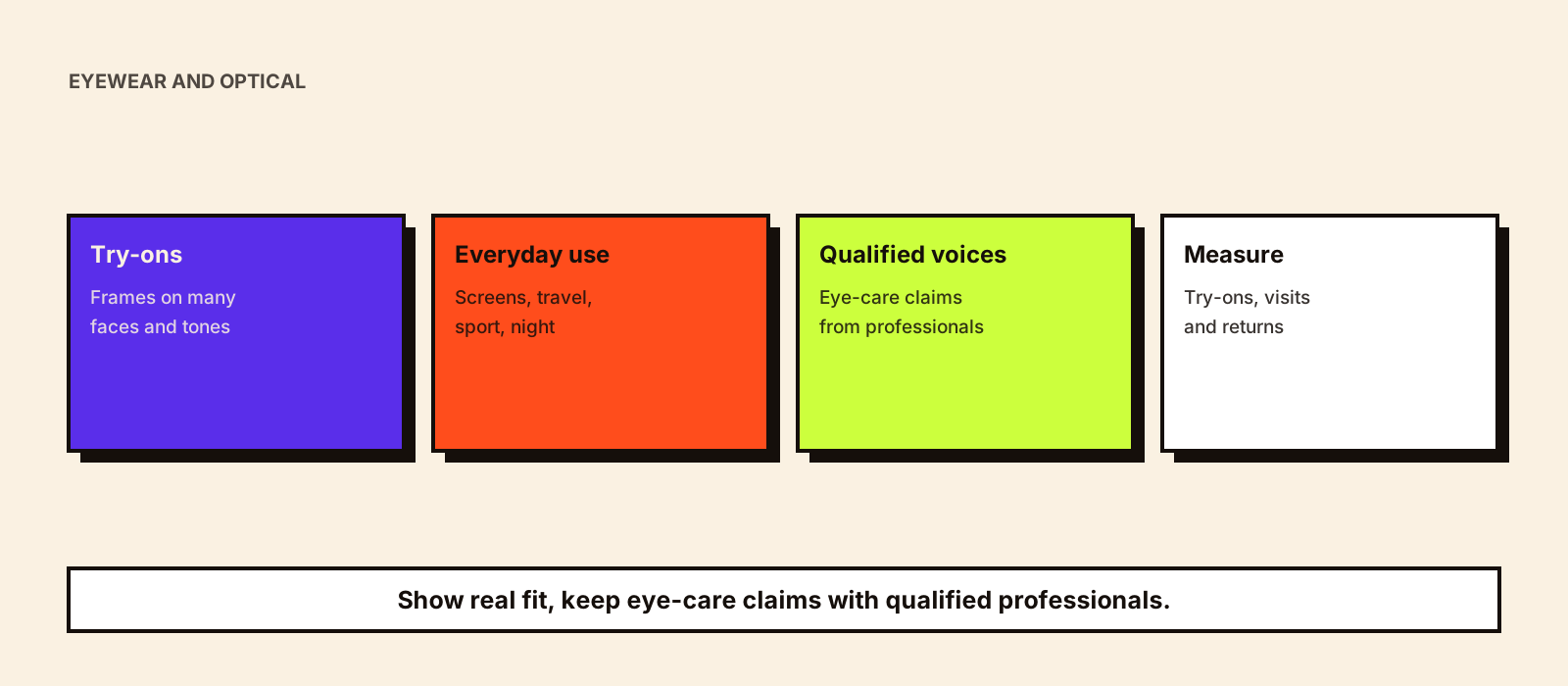
Eyewear is bought on fit and face as much as features. People want to see frames on a face like theirs, know whether a lens will suit their prescription and trust the store or app that sells it. Creators are good at the first part, and with care they can help with the second. The third depends on the brand getting eye-care claims right.
Quick answer
Influencer marketing for eyewear brands and optical stores works best when creators show frames on real faces in everyday situations: work, screens, travel and sport. Choose creators by face shape, style and audience, not only reach. Use try-on and 'how to choose frames' content to reduce returns, and keep anything about eye health, prescriptions or lens benefits to qualified optometrists or ophthalmologists, stated clearly. Track try-on bookings, home try-on requests and store visits as well as online sales.
Eyewear brands vs optical stores and clinics
| Business | What creators do best | What to be careful about |
|---|---|---|
| Frame and sunglasses brands (D2C or retail) | Style, fit on different faces, everyday use, collections and collaborations | Showing frames that suit the creator but not the audience's face shapes |
| Optical store chains | Store visits, the fitting experience, frame choice with a stylist or optician | Promising an outcome from an eye test |
| Eye clinics and optometry services | Education from qualified professionals about when to get eyes checked | Medical claims, diagnosis in comments, promising results of treatment |
| Contact lens and lens-tech brands | How to wear, care and choose, from qualified voices | Health claims about lenses or coatings without evidence |
Content that works
- Try-ons across face shapes and skin tones, ideally with several creators so viewers find someone like them.
- Day-in-the-life content: office screens, commuting, driving at night, sport and travel.
- Frame-choosing explainers: face shape, bridge fit, weight and lens thickness for higher prescriptions.
- Home try-on or store fitting experiences, showing the real process and timeline.
- Honest durability and comfort check-ins after a few weeks of wear.
Eye-care claims and qualified voices
Statements about eye health, vision, screen strain, blue-light lenses or treatments are technical health claims. Under ASCI's influencer guidelines as revised in 2025, creators giving technical health information need relevant qualifications and must declare them, so use optometrists or ophthalmologists for that content and keep lifestyle creators to style, comfort and experience. Every claim about a lens or coating should match evidence the brand holds. See influencer marketing for healthcare and wellness brands for the qualification rule in more detail.
- Don't let creators say a lens 'protects your eyes' or 'cures' strain unless the brand can substantiate it.
- Encourage regular eye tests with a professional rather than suggesting frames alone fix vision problems.
- Moderate comments: creators shouldn't answer prescription or medical questions.
Measuring eyewear campaigns
| Goal | What to measure |
|---|---|
| Online sales | Orders by creator code or link, return rate by creator |
| Try-on demand | Virtual try-on sessions, home try-on bookings |
| Store visits | Bookings for eye tests or fittings by store and creator |
| Collection launches | Saves and shares of try-on content, sell-through of featured frames |
Return rate matters in eyewear: creators whose audiences buy frames that suit them are worth more than those who drive orders that come back. Retail and store-visit measurement is covered in influencer marketing for retail brands.
Common mistakes
- Using one creator's face for every collection.
- Letting lifestyle creators make eye-health claims.
- Judging creators on orders without looking at returns.
- Showing frames only in studio shots, not real daily use.
Conclusion
Eyewear creator campaigns work when viewers can picture the frames on their own face and trust what they're told about their eyes. Show real fit across many faces, keep eye-care claims with qualified professionals, and measure try-ons, visits and returns alongside sales. Kudozz can find the right mix of style and eye-care creators through its creator discovery service.