Influencer Affiliate Programs: How Brands Can Build a Creator-Led Sales Channel
How to run a commission-based creator program as an ongoing sales channel: commission structures, tracking, recruiting and activating creators, tiers, payouts, fraud, what to measure, and how affiliates graduate into paid partnerships.
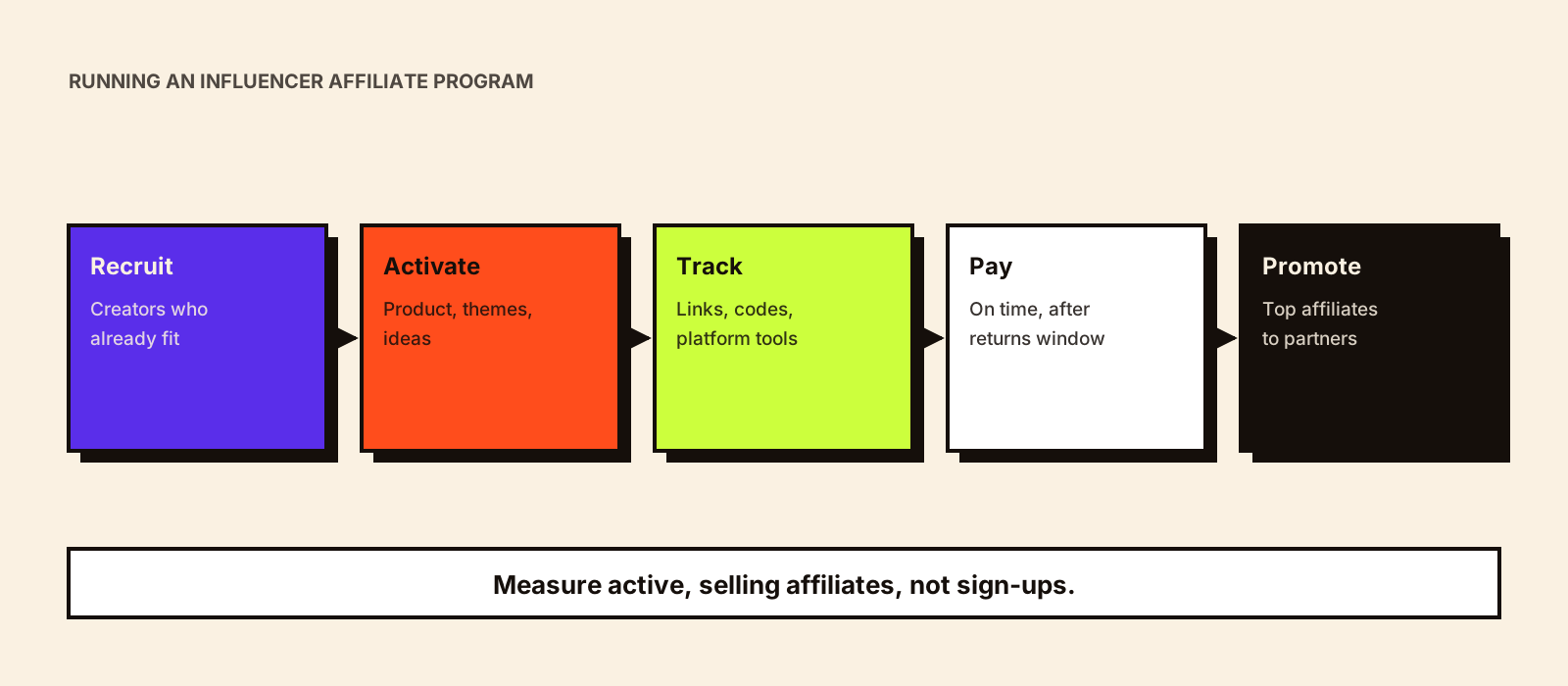
A one-off affiliate campaign is a test. An affiliate program is a sales channel: a standing offer that any suitable creator can join, with commission on the sales they drive, run month after month. Most brands that launch one discover the same thing quickly: signing creators up is easy, getting them to post consistently is the real work.
Quick answer
An influencer affiliate program pays creators commission on sales tracked through their unique links or codes, as an always-on channel rather than a single campaign. To build one: set a commission structure your margins can sustain, choose tracking that works where your customers actually buy, write clear terms (disclosure, prohibited practices, returns, payout timing), recruit creators whose audiences already ask about your category, activate them with product and simple briefs, pay reliably, control fraud, and move your best affiliates into paid or hybrid partnerships.
Affiliate program, campaign or performance deal?
| Sponsored campaign | Performance-based deal | Affiliate program | |
|---|---|---|---|
| Who | Chosen creators | Chosen creators | Any creator who qualifies and joins |
| Pay | Fee for deliverables | Base plus bonus or commission, or per action | Commission on tracked sales |
| Deliverables | Guaranteed | Usually guaranteed | Not guaranteed |
| Duration | Campaign window | Campaign or a few months | Ongoing |
| Main work | Briefing and approvals | Defining terms and tracking | Recruiting, activating and paying many creators |
Individually negotiated results-based deals are covered in performance-based influencer marketing, and the broader choice between the channels in influencer marketing vs affiliate marketing.
The building blocks
| Element | Decide |
|---|---|
| Commission | A percentage or fixed amount per order; whether it differs by product margin, new vs returning customer, or affiliate tier |
| Attribution | Links, codes or both; the attribution window; what happens when a buyer uses a different code |
| Tracking | Your store's discount and referral tools, an affiliate platform, or marketplace and platform affiliate programs where your products sell |
| Terms | Disclosure, approved claims, prohibited practices (coupon sites, paid search on your brand name, misleading claims), returns and clawbacks |
| Payouts | Minimum threshold, monthly timing after the return window, invoicing and tax deductions |
| Creator kit | Product information, approved claims, brand assets, content ideas, how to get product |
| Ownership | Who runs recruitment, support, reporting and payouts each month |
Where your customers buy decides the tracking. Sales on your own site are easiest to attribute. For products sold on marketplaces or through platform shopping features, check which affiliate programs are available to creators in India; YouTube Shopping's affiliate program is one example, explained from the creator's side in YouTube Shopping for Indian creators. Instagram's affiliate features vary by market, so confirm availability before you plan around them; see Instagram influencer affiliate marketing.
Recruiting the right affiliates
- Customers who already create content about your product
- Creators from seeding and gifting who posted without being asked
- Creators from past paid campaigns who performed but weren't rebooked
- Niche creators whose audiences ask for recommendations in your category
- Inbound applications, screened like any other creator
Screen affiliates for audience fit, authenticity and past disclosure, just as you would a paid creator, because their content carries your brand. A lighter version of how to vet influencers is usually enough at the entry tier.
Activation is the real job
In most affiliate programs, many members never post or post once. Commission alone rarely changes that. What does:
- Send product. Creators recommend what they've used
- Give a monthly theme or moment (a launch, a festival, a restock) with two or three content ideas
- Share what's working: formats and hooks from top affiliates, without asking anyone to copy
- Time-limited bonuses for activity in key periods, written into the terms
- Early access to launches for active affiliates
- A simple community channel for questions and announcements
- Fast, reliable payouts; late commission is the quickest way to lose good affiliates
Tiers: from affiliate to partner
| Tier | Who | What they get |
|---|---|---|
| Open | Approved members | Standard commission, creator kit, product on request |
| Active | Creators posting regularly with sales | Higher commission, priority product, early access |
| Partner | Top performers with strong content | Hybrid deals with a base fee, briefed campaigns, possibly retainers or ambassador roles |
The affiliate program becomes a discovery engine for paid partnerships: the creators who sell for you without a fee are the ones most worth paying. Long-term structures are covered in long-term influencer partnerships and influencer ambassador programs.
Fraud and quality controls
- Monitor coupon and cashback sites for leaked codes; deactivate and reissue
- Exclude self-purchases and flag unusual order patterns
- Prohibit paid search on your brand name unless agreed
- Hold commission until the return or cancellation window has closed
- Spot-check affiliate content for disclosure and accurate claims
What to measure
| Metric | Why |
|---|---|
| Active affiliates (posted and sold this month) | Shows whether the program is alive, not how many signed up |
| Revenue and orders per active affiliate | Concentration: usually a few drive most sales |
| New-customer share | Whether affiliates find new customers or reach existing ones |
| Return and cancellation rate by affiliate | Quality of the sales driven |
| Contribution after commission | Whether the channel makes money |
| Content produced and reusable | Affiliate content can feed product pages and ads, with rights agreed |
If you want to reuse affiliate content in ads or on product pages, agree usage rights in the program terms; see influencer usage rights.
Common mistakes
- Measuring the program by sign-ups rather than active, selling affiliates
- Commission rates set without checking margins after returns
- No product for affiliates to actually use
- Late or unpredictable payouts
- Leaving disclosure to chance because affiliates 'aren't sponsored'
- Never promoting top affiliates into paid partnerships
Conclusion
An affiliate program is cheap to start and demanding to run. Commission that fits your margins, tracking that follows your customers, clear terms, real activation work and reliable payouts are what turn a list of sign-ups into a sales channel, and into a pipeline of creators worth paying properly.