Performance-Based Influencer Marketing: How to Structure Creator Deals Around Results
How to pay creators partly or fully for results: the deal models from bonus to commission-only, when paying for performance works and when it doesn't, how to define a conversion, set rates from your margins, track fairly and avoid the usual disputes.
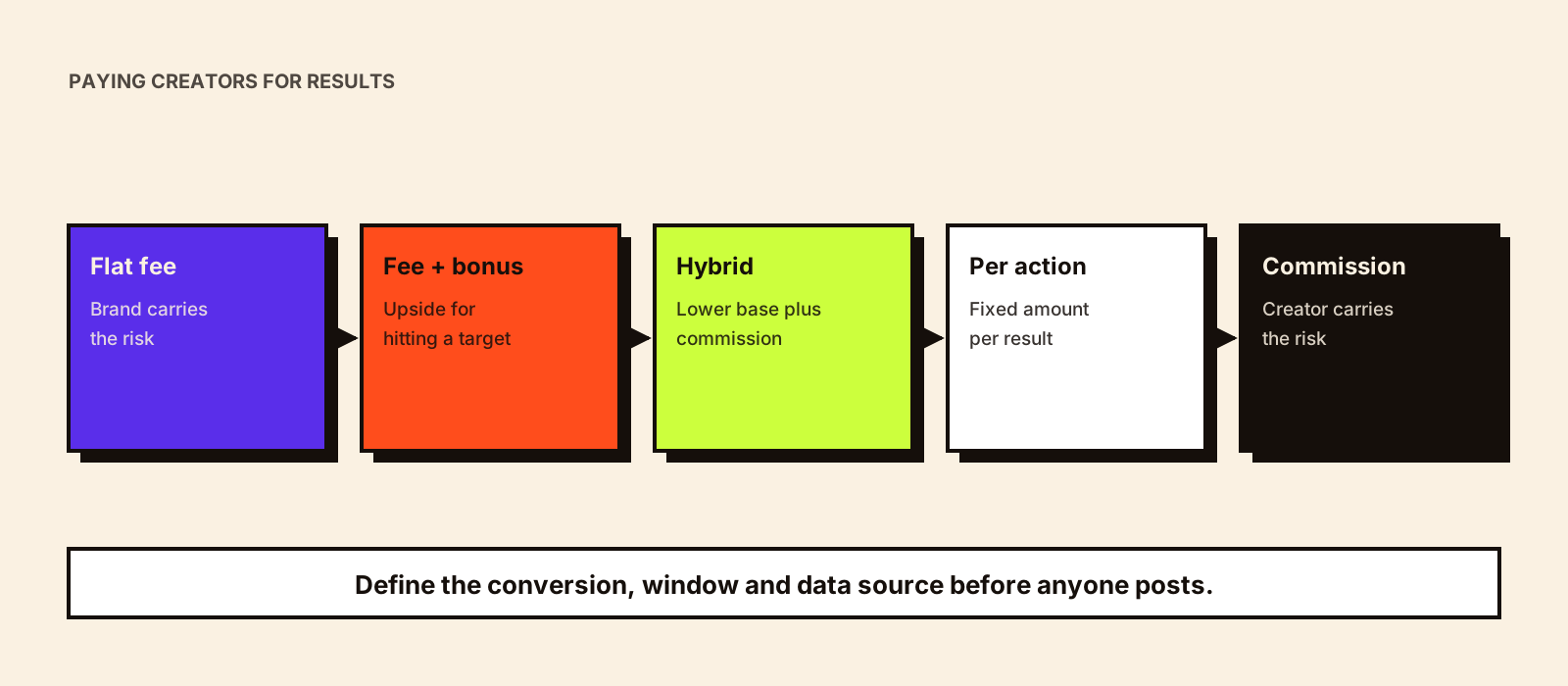
"We'll pay for results" sounds like the safest way to buy creator content. Sometimes it is. Often it turns into a fee nobody accepts, a creator who posts once and disappears, or a dispute about whether a sale counted. Paying for performance works when the result is trackable, close to the content and largely within the creator's influence. This guide is about structuring those deals; running creator content as paid ads is a different topic, covered in influencer marketing for performance marketing.
Quick answer
Performance-based influencer marketing ties some or all of a creator's pay to measurable results such as sales, sign-ups, installs or qualified leads. The common structures are a flat fee with a performance bonus, a hybrid of a lower base fee plus commission, commission-only affiliate terms, and fixed payments per action. It suits trackable conversion goals with healthy margins; it suits awareness, long B2B cycles and marketplace-heavy sales poorly. Define exactly what counts as a conversion, the attribution window and the data source in writing, set rates from what an outcome is worth to you, and pay a fair base for the creator's work when you need guaranteed deliverables.
The deal models
| Model | How it works | Suits | Watch for |
|---|---|---|---|
| Flat fee | Fixed fee for agreed deliverables | Awareness, content, launches; any creator | Paying the same for posts that underperform |
| Flat fee plus bonus | Fixed fee, plus a bonus if a threshold is hit | Established creators on sales or lead goals | Thresholds set without data become arbitrary |
| Hybrid | Lower base fee plus commission per conversion | Testing sales impact while respecting creators' time | Creators may compare the base with their usual fee |
| Pay per action | Fixed amount per sale, install, sign-up or qualified lead | App installs, lead generation, subscriptions | Definitions of a valid action; fraud |
| Commission-only (affiliate) | Percentage or fixed commission on tracked sales, no fee | Always-on programs with many creators | Few established creators accept it for planned deliverables |
| Tiered commission | Rate rises with volume | Rewarding top affiliates | Complexity in reporting and payouts |
These sit alongside the other payment models in how much to pay influencers, and running commission-only creators as an ongoing program is covered in influencer affiliate programs.
When paying for performance works, and when it doesn't
| Works when | Struggles when |
|---|---|
| The action happens soon after viewing and can be tracked (an order, install or sign-up) | The goal is awareness, recall or consideration |
| Margins leave room to pay per outcome | Sales cycles are long, as in most B2B, and leads convert months later |
| The audience has buying intent in your category | Most sales happen on marketplaces or offline where links and codes don't follow |
| Your site, offer and stock are ready, so the creator isn't paid less for problems they can't fix | Price, stock or checkout issues are likely to suppress conversions |
| You have past data to set realistic rates | It's a first test with no baseline |
Pure commission shifts the risk onto the creator for things they don't control: your price, your landing page, your stock, your delivery promise. That's why experienced creators often decline commission-only terms for planned deliverables or price them higher. A fair structure pays for the work and shares the upside.
Define the conversion before anything else
| Decision | Options | Why it matters |
|---|---|---|
| What counts | Order placed, order delivered, first order only, any order | Cash-on-delivery refusals and returns change the number |
| Customer type | New customers only, or all | Existing customers using a creator's code aren't new demand |
| App actions | Install, registration, first transaction | Installs without activation are cheap to generate and worth little |
| Leads | Form fill, or qualified lead by agreed criteria | Unqualified leads inflate payouts |
| Attribution | Code, link, platform tool, or a combination; window in days | Decides who gets credit and for how long |
| Data source | Brand's store, affiliate platform, app attribution tool | Both sides need to trust the same number |
| Adjustments | Returns, cancellations, fraud exclusions | Clawbacks must be agreed upfront, not applied after |
Setting rates from what an outcome is worth
Work backwards from your economics, not from what another brand pays. Hypothetical example: average order value ₹1,200, contribution margin after product, shipping and returns ₹480 per order. The brand decides it can spend up to ₹300 to acquire a new customer given expected repeat purchases. It offers a ₹10,000 base fee for one Reel and Stories, plus ₹150 per delivered first order. If the creator drives 60 new customers, total cost is ₹19,000, or about ₹317 per customer, close to the target; at 120 it's about ₹233, comfortably inside it. The base guarantees the content; the commission rewards results the creator actually drives.
All figures are illustrative. How much a customer is worth over time, and how to forecast outcomes before committing, is covered in influencer marketing ROI forecasting and influencer CPM, CPE, CPC and CPA.
Tracking and reporting fairly
- Give each creator a unique link with UTM parameters and a unique code, so buyers who don't click are still counted
- For apps, use the attribution tool you already rely on for other channels, with creator-specific links
- Agree the reporting cadence and give creators read access to their own numbers where you can
- Report delivered orders and returns separately so adjustments don't come as a surprise
- Track marketplace and quick-commerce sales separately; codes and links often don't follow buyers there
Tracked results usually undercount creator impact, because some buyers search for the brand later or buy on a marketplace. Treat tracked conversions as a floor, and look at branded search and overall sales during the campaign as well; how to measure influencer marketing ROI covers incrementality.
Risks to plan for
- Code leakage to coupon and cashback sites, earning commission on sales the creator didn't drive
- Self-purchases or fake orders to trigger payouts
- Paying commission on existing customers who would have bought anyway
- Pressure to oversell: commission-driven content is more likely to exaggerate claims, which brands remain responsible for
- Disclosure slipping because creators treat affiliate posts as 'not sponsored'; affiliate links are a material connection
- Disputes about attribution windows and returns, when terms were vague
Claims and disclosure rules apply to performance deals exactly as they do to flat-fee posts; see influencer marketing compliance.
What to put in the agreement
- Base fee and deliverables, if any, separate from performance terms
- Conversion definition, customer type and attribution method and window
- The data source both sides accept, and how the creator can see it
- Rate, any tiers or caps, and how returns, cancellations and fraud are handled
- Payout timing (for example monthly after the return window) and tax treatment
- Disclosure requirements and approved claims
- How long the code or link stays active, and what happens after the campaign
Tax deductions on creator payments and invoicing are covered in the influencer payment process, and negotiating performance terms fairly in negotiate influencer rates.
Common mistakes
- Offering commission-only terms to creators whose value is content and credibility
- Using performance pay for awareness or long-cycle B2B goals
- Vague conversion definitions that lead to disputes
- Setting rates without knowing your own margins and acceptable acquisition cost
- Counting all code uses as new demand
- No plan for returns, cancellations and code leakage
Conclusion
Performance-based deals work best as a shared bet: the creator is paid fairly for the work and shares in results they genuinely influence, measured on terms both sides agreed before posting. Use them where outcomes are trackable and margins allow, keep flat fees where the job is reach, content or credibility, and write the definitions down.