How to Negotiate Influencer Rates Without Damaging the Relationship
How to talk about money with creators so both sides feel the deal is fair: responding to a quote, adjusting scope instead of squeezing price, honest budget conversations, wording that helps and hurts, and when to walk away politely.
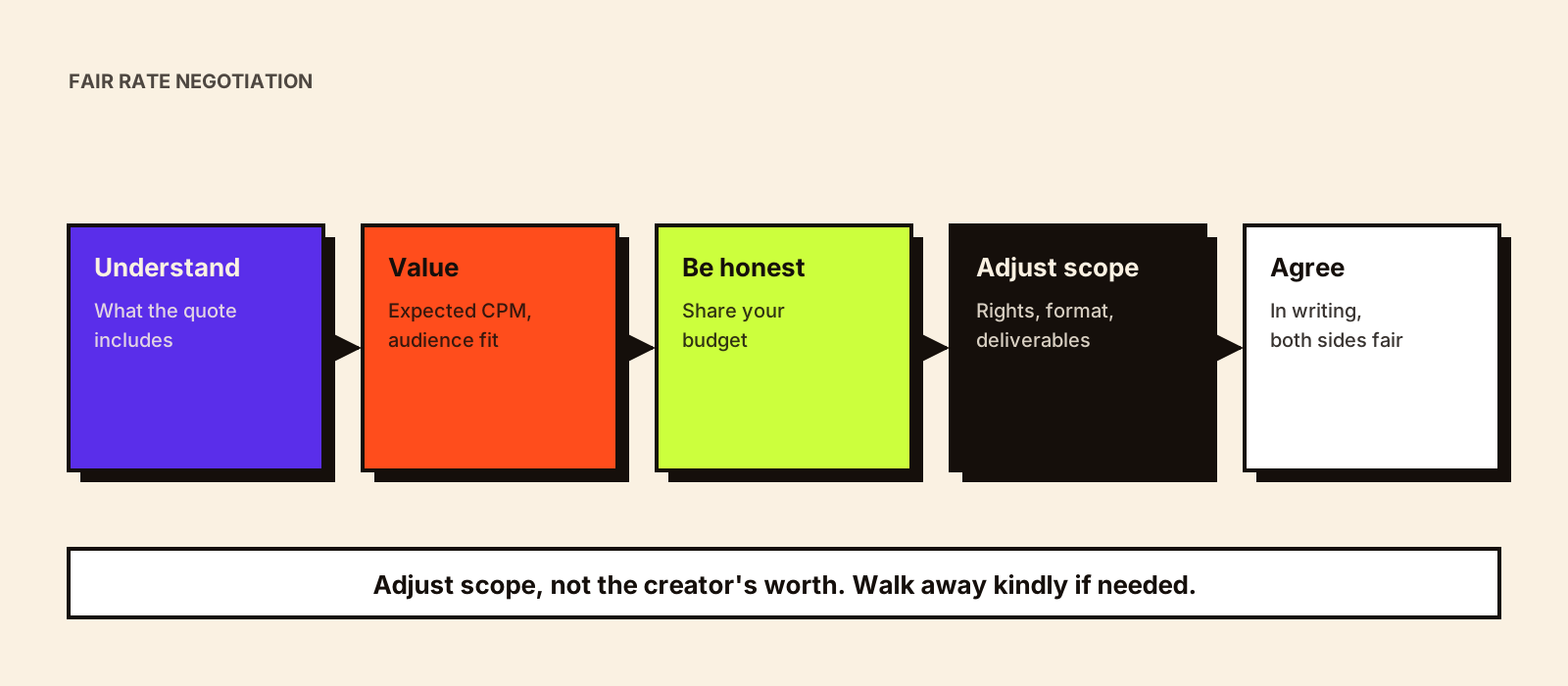
A creator sends a rate that's above your budget. What you say next decides more than the fee. Push hard and you may save a little money while getting a creator who does the minimum, remembers how they were treated and tells their manager. Respond well and you may agree a fair deal, or a smaller scope, with someone happy to work with you again.
Quick answer
Negotiate influencer rates by first understanding what the quote includes, then being honest about your budget and adjusting scope (deliverables, rights, exclusivity, timeline) rather than simply asking for a lower price for the same work. Explain your reasoning, avoid lowball offers and pressure tactics, respect that creators set their own rates, and walk away politely when the numbers don't work. The goal is a fair deal both sides would repeat, not the lowest possible fee.
This guide focuses on the money conversation. The full set of terms (deliverables, rights, exclusivity, timelines, payment) is covered in how to negotiate with influencers, and how to judge whether a rate is reasonable in the first place is in how much to pay influencers.
Step 1: Understand the quote
- What exactly is included: number and type of deliverables, revisions, raw footage, usage rights, link in bio, Stories?
- How long is organic content expected to stay up?
- Is there a usage or exclusivity component priced in?
- Is GST additional?
- Is the rate standard or adjusted for your brief's complexity (travel, scripting, multiple products)?
Many apparent gaps disappear once you compare like with like. A quote that looks high may include paid usage rights you'd otherwise pay for separately.
Step 2: Decide what the creator is worth to this campaign
Before responding, estimate value rather than reacting to the number: expected cost per thousand views based on their median views, how they compare with similar creators you've worked with, the role they'd play and what rights you're getting. A higher fee can be the better deal if the creator's audience is exactly your customer, their content converts or you get usable assets for ads. Influencer benchmarking explains how to build these comparisons.
Step 3: Adjust scope, not just price
| Lever | How it changes the fee | Trade-off |
|---|---|---|
| Fewer deliverables | One Reel instead of a Reel plus Stories | Less exposure |
| Different format | Stories or a static post instead of video | Different impact |
| Shorter or no paid usage | Organic only, or 3 months instead of 12 | Less content for ads |
| No or shorter exclusivity | Category exclusivity for 30 days instead of 90 | Competitor could book them sooner |
| Longer timeline | Less rush, simpler production | Later go-live |
| Simpler brief | Fewer mandatory points or locations | Less control |
| Bundled or repeat work | Several posts over months at a combined rate | Longer commitment |
| Performance element | Smaller fixed fee plus commission or bonus | Creator takes on risk; must be fair and tracked |
Asking a creator to do the same work for much less money is asking them to value their time less. Asking whether a smaller scope fits your budget respects their pricing.
Step 4: Be honest about budget
Hi [name], thanks for sending this, and for the detail on what's included. Our budget for this campaign is ₹[ ] per creator, which I know is below your rate for [deliverables]. Would any of these work for you?
• [one Reel, organic only]
• [Reel + Stories, with paid usage for 3 months instead of 12]
If not, completely understood. We'd still love to work with you on a bigger campaign later in the year.
This works because it's specific, acknowledges their rate, proposes options rather than a demand, and leaves the door open.
Language that helps, and language that hurts
| Helps | Hurts |
|---|---|
| 'Our budget for this is ₹X. What could you do within that?' | 'Others charge half of this.' |
| 'Could we reduce the usage period to bring the fee down?' | 'It's great exposure for you.' |
| 'We'd like to make this a longer partnership, so could we discuss a package?' | 'Take it or leave it.' |
| 'Can you help me understand what's included?' | 'Your engagement isn't that high.' |
| 'This doesn't fit our budget right now, but thank you.' | Silence after receiving their rates. |
Practices to avoid
- Lowball first offers designed to anchor low. Creators and managers recognise them and it sets a combative tone.
- Offering 'exposure' or product instead of payment for work a creator prices as paid.
- Making payment depend entirely on results the creator doesn't control.
- Renegotiating after the content is made.
- Long payment terms used as a hidden discount.
- Sharing one creator's rates with another.
Why the lowest fee isn't always the best deal
Hypothetical: Creator A quotes ₹80,000 for a Reel; Creator B accepts ₹45,000 after hard bargaining. A's audience is concentrated in your launch cities and her past sponsored posts drew many product questions; B's audience is national and his sponsored posts get little discussion. If A's post drives three times the qualified traffic, she was cheaper per outcome. Squeezing price can also cost you goodwill, rush the content and lose the chance of a repeat booking at a fair rate.
Negotiating with managers
- Managers negotiate many deals and know market rates; be straightforward.
- Ask what flexibility exists on scope, rights or bundling rather than pushing on headline price.
- Respect that managers protect their creators' rates; a fair package often works better than a discount.
- Keep the creator in mind: confirm creative details with them directly where appropriate.
Walk away well
Sometimes the numbers don't work. Say so clearly and kindly, thank the creator for their time and leave the door open if you mean it. Creators remember brands that declined respectfully, and budgets change. Influencer collaboration rejection covers the other side: what to do when creators say no.
Performance-based pay, fairly
Commission or bonus elements can align incentives, but they shift risk to the creator. Keep them fair:
- Keep a fixed fee that covers the creator's work; add performance elements on top rather than replacing the fee.
- Track results transparently (unique codes or links) and share the data.
- Count only outcomes the creator influences and you can measure.
- Agree payout timing, and how returns and cancellations are handled, in advance.
Influencer marketing payments covers payment models in detail.
Hypothetical rate conversation
Brand: Offers ₹40,000 for one Reel + 3 Stories, paid usage 6 months.
Creator: Quotes ₹75,000; explains paid usage adds significantly to her rate.
Brand: Asks what organic-only would cost. Answer: ₹50,000.
Brand: Proposes Reel + 3 Stories, organic only, ₹50,000; if the Reel performs, a separate usage fee for 3 months of ads.
Creator: Agrees.
Outcome: Brand pays fairly for what it needs now and buys usage only if the content earns it.
Negotiation checklist
□ Do I know exactly what's included?
□ Have I estimated value (expected CPM, audience fit, role)?
□ Is my counter about scope, not just price?
□ Am I sharing my real budget or range honestly?
□ Have I avoided comparing them to other creators' rates?
□ Is GST/TDS handling clear?
□ If this doesn't work, will I decline kindly and promptly?
Common mistakes
- Negotiating before knowing what's included.
- Treating the creator's rate as an opening bid to be halved.
- Comparing rates without comparing audiences and rights.
- Forgetting GST and TDS when comparing quotes.
- Winning the negotiation and losing the relationship.
Conclusion
Fair rate negotiation means understanding the quote, judging value rather than price, adjusting scope honestly, using respectful language and walking away well when it doesn't fit. Brands that negotiate this way pay fair prices and get creators who want to work with them again, which is the cheapest outcome over time. For managing those relationships after the deal, see influencer relationship management.