Influencer Collaboration Rejection: How Brands Should Respond When Creators Say No
How to respond professionally when a creator declines: fee disagreements, bad timing, no interest, product mismatch, exclusivity conflicts and competitor partnerships, with reply templates, what to learn from rejections and when to try again.
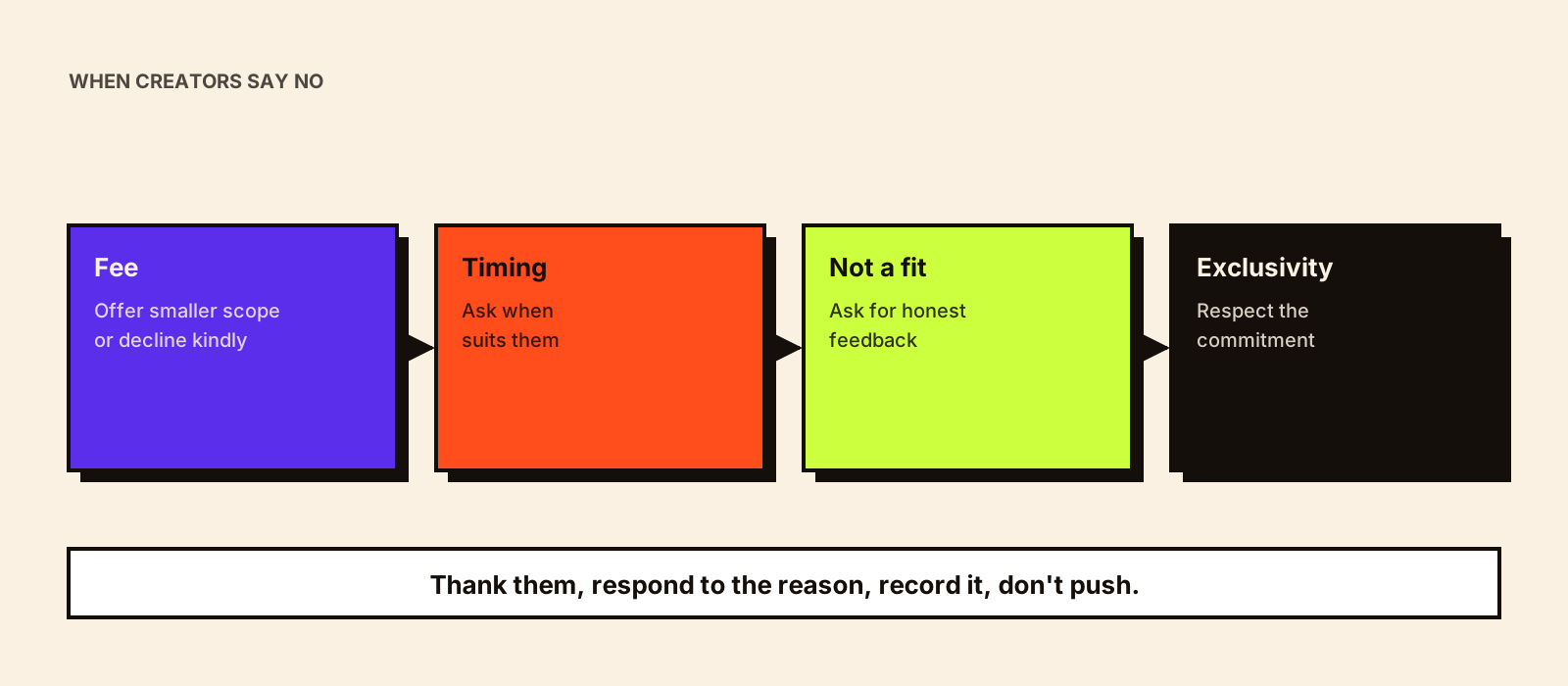
Every brand working with creators hears 'no' regularly. Creators decline because of fees, timing, fit, existing commitments or simply because they don't want to. How a brand responds matters more than it seems. Creators talk to each other and to their managers, and the brand that handled a rejection gracefully is the one they'll consider next time.
Quick answer
When a creator says no, thank them, accept the decision without pressure, and respond to the specific reason: offer a different scope if fees were the issue, ask about future timing if they're busy, take product feedback seriously, respect exclusivities and competitor relationships, and simply wish them well if they're not interested. Record the reason, learn from patterns across rejections, and only re-approach when something has genuinely changed.
Six common reasons, and how to respond
| Reason | What it means | Good response |
|---|---|---|
| Fee disagreement | Your offer is below their rate for this scope | Offer a smaller scope if it genuinely fits, or thank them and decline politely |
| Poor timing | They're busy, travelling or fully booked | Ask when might suit; note it; return with a new opportunity |
| No interest | Not their thing | Thank them; don't argue; don't re-pitch the same offer |
| Product mismatch | Doesn't suit their audience, values or use | Ask (lightly) for feedback; it's useful |
| Exclusivity conflict | Contractually committed to a competitor or category | Respect it; ask when it ends if appropriate |
| Already working with a competitor | Credibility concern even without exclusivity | Accept; don't criticise the competitor |
Reply templates
Thanks for being upfront about your rates, [name]. That's beyond what we can do for this campaign. If a smaller scope ([e.g. Stories only, organic usage]) would ever work for you, we'd love to talk; if not, completely understood, and we hope to work together on a bigger project later.
Totally understand, [name]. Thanks for letting us know. Is there a month that usually works better for you? We'd love to come back with something that fits your calendar.
Thanks for the honest reply, [name]. If you're open to sharing what didn't feel right, it would genuinely help us, but no pressure at all. Wishing you the best with what you're working on.
Thanks for letting us know, [name], and for respecting your commitments. If that changes in future and our categories are a fit, we'd be glad to talk. All the best.
What to change in each: use their name and reason, keep it short, never add guilt or pressure, and only offer alternatives you can actually deliver.
What not to do
- Argue with the decision or ask them to reconsider repeatedly.
- Lower the offer and resend it as if nothing happened.
- Criticise their rates, audience or a competitor.
- Go around a manager who declined on the creator's behalf.
- Go silent, or publicly comment on their decision.
- Add them to an automated sequence that keeps messaging.
Learn from rejection patterns
| Pattern across rejections | Likely issue | What to review |
|---|---|---|
| Most decline on fee | Budget below the market for these creators | Budget, scope, or creator tier |
| Most decline on timing | Outreach too late | Lead times |
| Many 'not a fit' | Shortlist quality | Selection criteria |
| Many competitor conflicts | Category crowded with competitor deals | Look for less-contested creators; see competitor influencers |
| Declines from one segment only | Offer or message doesn't suit that language or tier | Segment template and terms |
Record each rejection and its reason. After a few campaigns, patterns tell you whether to change budgets, timing, shortlists or messaging. Competitor influencers and influencer response rate cover two of the most common causes.
When to try again
- When they told you a better time and that time arrives.
- When you have a meaningfully different offer (paid instead of gifted, a bigger scope, a better fit product).
- When an exclusivity they mentioned has ended.
- Not when nothing has changed except your persistence.
Influencer follow-up covers how to reopen a conversation after 'not now'.
When the brand says no
Rejection goes both ways. When you decide not to proceed after a creator has shared rates, ideas or availability, tell them promptly and kindly. Silence after a creator has invested time is one of the most common complaints creators and managers have about brands.
Hi [name], thanks so much for sharing your rates and ideas. We've decided to go a different direction for this campaign, [brief honest reason if appropriate: budget / different format]. We really appreciated your time and would like to keep in touch for future campaigns.
Handling rejection through a manager
When a manager declines on a creator's behalf, reply to the manager with the same courtesy. Don't contact the creator directly to change their mind; it undermines the manager and rarely works. Ask the manager whether there's a better time or a different kind of brief that would suit the creator, and note the answer.
Turning rejections into better campaigns
- If fees are the main reason: revisit budget, scope or creator tier before the next campaign.
- If timing: start outreach earlier, especially before festivals and sale events.
- If fit: review your shortlisting criteria and your brief.
- If competitor conflicts: map which creators are committed and look for gaps.
Influencer market mapping helps find less-contested creators when many in your category are committed elsewhere.
Hypothetical example
Hypothetical: a food brand's outreach to 30 Hindi recipe creators gets 12 declines, eight citing Diwali bookings. The brand thanks each, records their preferred months and plans its next push for January. When it returns in late December with a winter recipes brief, several of those creators reply quickly, remembering the polite exchange.
Common mistakes
- Taking rejections personally.
- Not recording reasons, so the same mistakes repeat.
- Re-pitching unchanged offers.
- Ghosting creators when the brand decides not to proceed.
Conclusion
A creator's 'no' is information and an opportunity to show what kind of partner you are. Thank them, respond to the actual reason, don't push, record what happened and learn from patterns. Handled well, today's rejection is often next season's collaboration.