Influencer Market Mapping: How Brands Can Understand the Creator Landscape in Their Category
How to map the creator landscape in a category, from audience to tiers, platforms, locations, languages, formats, competitors and whitespace, plus a niche landscape analysis for finding specific opportunities and a Creator Market Map template.
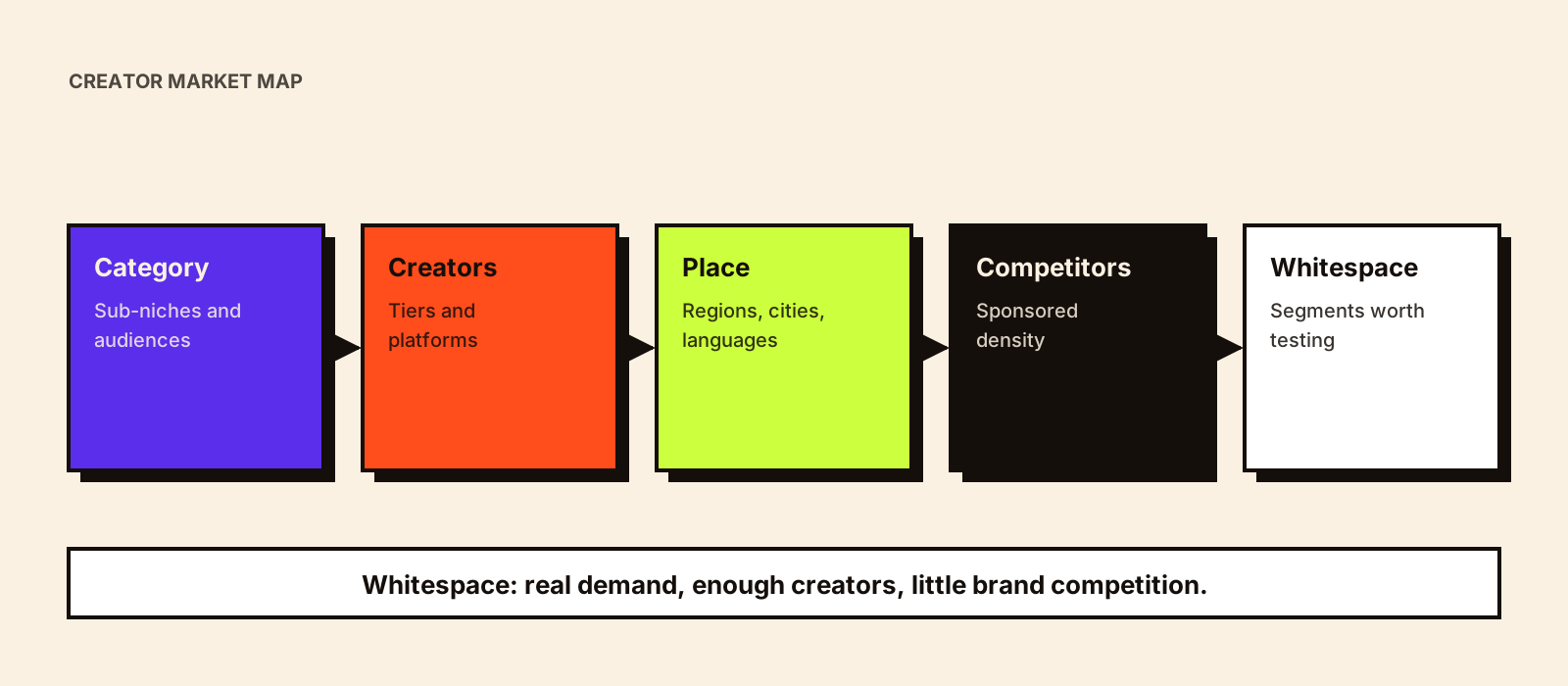
Before deciding which creators to book, it helps to know what the creator landscape in your category looks like: who creates, for whom, in which languages and places, on which platforms, how crowded each corner is with sponsorships, and where nobody is working yet. Without that view, brands tend to compete for the same visible creators while better-fitting ones go unnoticed.
Quick answer
Influencer market mapping is a structured view of the creator ecosystem in a category. Map it in layers: category and sub-niches → audience segments → creator tiers → platforms → locations → languages → content formats → competitor presence → whitespace. Populate each layer from discovery searches, listening, competitor logs and your own campaign data, count roughly how many relevant creators sit in each cell and how saturated they are with sponsorships, then pick the segments where audience demand is real and competition for creators is low. Update it every six to twelve months.
The creator market map
| Layer | Question | Example (personal care) |
|---|---|---|
| Category and sub-niches | What topics make up the category? | Skincare, haircare, men's grooming, Ayurveda, dermatology education |
| Audience segments | Who buys, and why? | Students on a budget, working women 25–35, new mothers, men starting a routine |
| Creator tiers | How many creators at each size? | Nano, micro, mid, macro, celebrity |
| Platforms | Where does each segment watch? | Instagram Reels, YouTube long-form, YouTube Shorts |
| Locations | Where are creators and their audiences? | Metros, tier 2 cities, specific states |
| Languages | In which languages does the conversation happen? | Hindi, English, Tamil, Telugu, Bengali, Marathi |
| Content formats | How do creators cover the topic? | Routines, reviews, dermatologist explainers, hauls, before/after |
| Competitor presence | Which brands already work with creators in each cell? | Heavy in English metro skincare; light in regional haircare |
| Whitespace | Where is demand real and competition low? | Bengali haircare educators; men's grooming in Hindi |
How to populate the map
- Discovery searches by sub-niche, language and location (native search, tools, Google operators).
- Listening for category conversations to see where audiences ask questions.
- Competitor creator logs to mark sponsored density in each cell.
- Your own campaign data to mark which cells you've tested and how they performed.
- Creator and manager conversations to learn about communities tools miss.
Influencer search tools covers search methods, and influencer competitor analysis covers the competitor log.
A market map grid
Sub-niche | Language | Region | Platform | Relevant creators found (approx.) | Typical tier | Sponsored density (low/med/high) | Competitors present | Audience demand signal | Our history | Opportunity (low/med/high)

Example row (hypothetical):
Haircare education | Bengali | West Bengal | YouTube + Reels | ~40 | micro | low | 1 | many unanswered questions in comments | none | high
Counts are approximate; the goal is relative scale between cells, not a census. 'Sponsored density' is the share of a cell's creators' recent posts that are paid partnerships, judged from a sample.
Finding whitespace
Whitespace is where three things line up: an audience you can serve and sell to, enough credible creators to work with, and little brand competition for those creators. Score each cell on those three and look for high-high-low combinations.
| Audience demand | Creator supply | Brand competition | Reading |
|---|---|---|---|
| High | High | High | Crowded; compete on creator quality and creative |
| High | High | Low | Whitespace; test early |
| High | Low | Low | Opportunity to develop creators (seeding, ambassadors) |
| Low | High | Low | Probably low value for you |
Niche landscape analysis
A market map shows the whole category. When you've picked a promising niche, a landscape analysis goes deeper to find specific creator opportunities inside it:
- List the 30–60 most relevant creators in the niche, across tiers.
- Group them by sub-topic, style (expert, reviewer, storyteller, entertainer) and audience.
- Mark who's rising (growing views and topic participation over months) and who's plateauing.
- Note sponsorship density and recent brand partners for each.
- Identify the conversation leaders others reference; social listening for creator discovery explains how.
- Spot missing voices: sub-topics with audience questions but no creator answering well.
- Pick a first wave: a few established voices plus a few rising ones, with roles assigned.
Rising voices and emerging sub-niches are covered in influencer trend analysis; how to find conversation leaders is in social listening for creator discovery.
India-specific layers worth mapping
- Language × region: Hindi alone covers very different audiences across states; regional languages often have tighter, more loyal creator communities.
- City tier: tier 2 and tier 3 audiences may follow different creators and respond to different price points.
- Script: creators writing captions in native script vs Roman transliteration reach overlapping but different readers.
- Platform mix: some regional creators are strongest on YouTube; some categories live mainly on Instagram.
- Festival calendar by region: creator demand and sponsorship density spike at different times in different states.
Influencer marketing in tier 2 and tier 3 cities covers planning for those markets.
Using the map
- Annual planning: decide which cells to own, test and ignore.
- Budget allocation: weight spend towards proven and promising cells.
- Discovery briefs: send searches to specific cells rather than 'find skincare creators'.
- Competitive positioning: avoid cells where you'd be the fifth brand with the same message.
Hypothetical worked map: packaged snacks
| Segment | Creators (approx.) | Sponsored density | Competitors | Demand signal | Opportunity |
|---|---|---|---|---|---|
| Hindi · healthy snacking · Reels · metros | Many | High | 4 | Strong | Low (crowded) |
| Tamil · kids' tiffin · Reels + YouTube | Moderate | Low | 1 | Many recipe questions | High |
| Marathi · office snacks · Reels | Moderate | Medium | 2 | Moderate | Medium |
| Bengali · evening snacks · YouTube | Few | Low | 0 | Searches and comments growing | Develop (seed creators) |
| English · fitness snacking · YouTube | Many | High | 3 | Strong | Low (crowded) |
All invented. The map points to a Tamil tiffin test first, a Marathi follow-up and a longer-term seeding programme for Bengali creators, rather than another crowded Hindi metro campaign.
Who builds it, and how long it takes
A first map for one category usually takes a few days of focused work: a day to define layers and searches, a few days of discovery and listening, a day to fill competitor presence from your logs and a day to score and review. Updates take less. Someone with category knowledge should own it, with input from regional teams and anyone who talks to creators regularly.
Turn the map into a plan
- Own: segments where you're strong and want to stay present (always-on).
- Test: whitespace segments, with small budgets and clear success measures.
- Develop: segments with demand but few creators (seeding, ambassadors).
- Ignore: segments with low demand or poor commercial fit, for now.
The influencer marketing annual plan and influencer budget allocation cover how to schedule and fund these choices.
Common mistakes
- Mapping only English-language and metro creators.
- Treating creator counts as precise.
- Calling an empty cell whitespace without checking audience demand.
- Building the map once and never updating it.
Conclusion
An influencer market map shows where your category's creators, audiences and competitors actually are, layer by layer, and where whitespace exists. Populate it from search, listening, competitor logs and your own results; analyse promising niches in depth; and update it regularly. It's the strategic layer of creator intelligence.