Social Listening for Creator Discovery: How Brands Can Find Influencers Through Conversations
How to find creators by starting with conversations instead of a database: building topic queries, identifying voices that shape a conversation, the Conversation-to-Creator workflow, scoring conversation influence and turning finds into outreach.
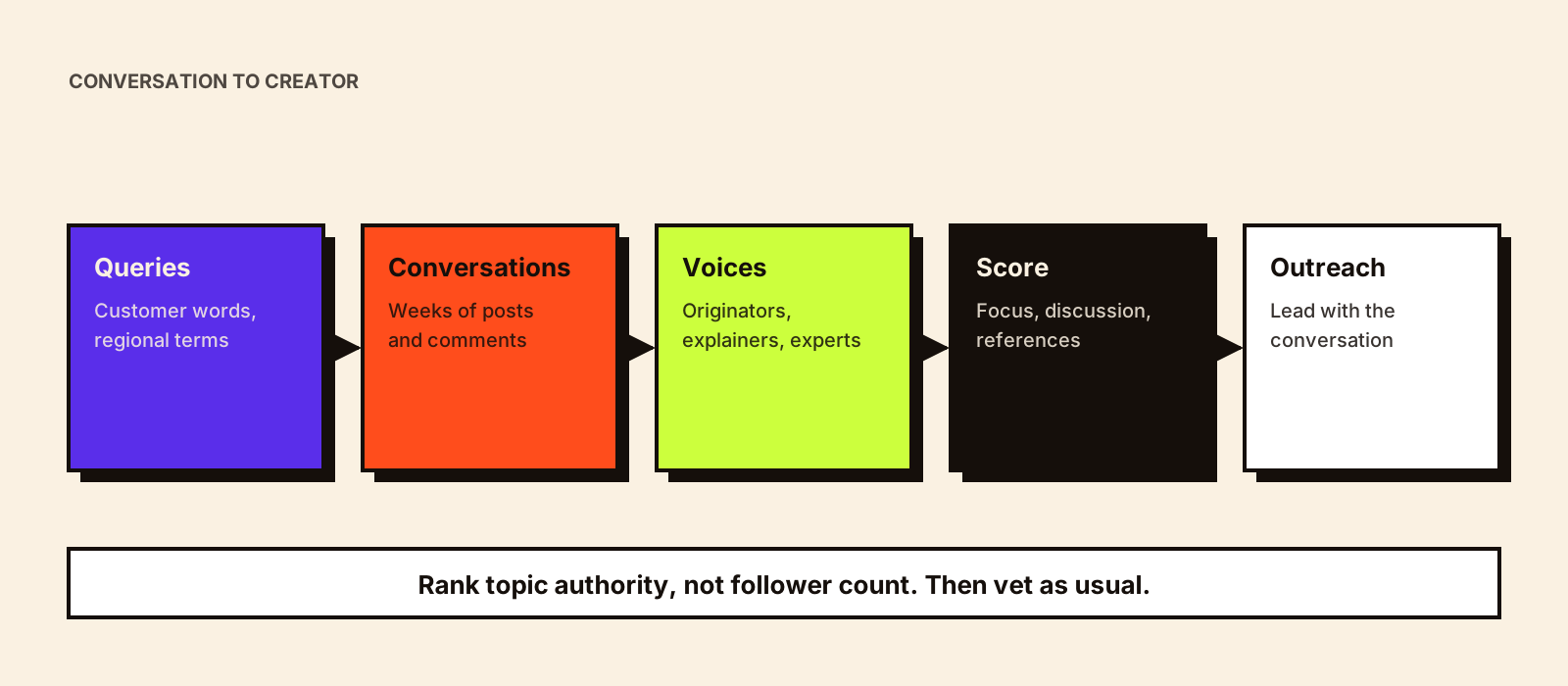
Database search starts with creators and asks what they talk about. Listening-led discovery starts with what your customers talk about and asks who shapes those conversations. It finds a different kind of creator: the person people quote, tag and ask for advice when a topic comes up, who may not look impressive on a follower filter at all.
Quick answer
Social listening helps influencer discovery by tracking conversations about your category's problems, questions and occasions, then identifying the creators who start, shape or get referenced in those conversations. Build queries in customer language (and regional languages), collect posts and comments over a few weeks, rank voices by how often they're engaged with and referenced on the topic rather than by followers, then vet the strongest candidates as you would any creator. It is slower than filtering a database, and it finds creators with genuine topic authority.
For wider uses of listening (content angles, campaign monitoring, risk), see social listening for influencer marketing. For creators who mention your own brand, see brand mention monitoring.
Why conversations find different creators
| Database-first discovery | Conversation-first discovery | |
|---|---|---|
| Starting point | Creator profiles and filters | Topics customers discuss |
| Ranks by | Followers, engagement, estimated audience | Topic participation, being referenced, discussion generated |
| Finds | Visible creators in a category | Topic authorities, community voices, emerging experts |
| Misses | Creators with thin data or unusual bios | Creators who don't post about the topic publicly |
| Speed | Fast | Slower; needs weeks of data |
Step 1: Build topic queries
PROBLEMS: 'healthy breakfast for diabetics', 'quick breakfast for office', 'kids won't eat breakfast'
QUESTIONS: 'is ragi good for weight loss', 'millet vs oats', 'millet recipes for beginners'
OCCASIONS: 'tiffin ideas', 'navratri fasting recipes', 'post-workout breakfast'
REGIONAL TERMS: ragi / nachni / mandua / kezhvaragu; jowar / jonna; bajra
EXCLUDE: job posts, wholesale listings, unrelated meanings
Regional terms matter. The same grain or dish has different names across Indian languages, and creators use the local term. A query set limited to English product language will miss many regional creators.
Step 2: Identify the voices
Collect posts and comments matching your queries for three to six weeks. Then look at who appears, and in what role:
| Voice type | How to spot them | Value for brands |
|---|---|---|
| Originator | Posts that start topic discussions; others respond and remake | Sets direction; often strong for launches |
| Explainer | Answers questions repeatedly; long comments threads under their posts | Trust builder for considered purchases |
| Referenced expert | Tagged or named in other people's posts and comments ('ask @…') | High credibility; may be a professional |
| Community connector | Active in many conversations; tags and recommends others | Good for seeding and ambassador programmes |
| Rising voice | Small but growing share of topic conversation | Early partnership opportunity |
Step 3: Score conversation influence
TOPIC FOCUS ....... Share of their recent posts on this topic
DISCUSSION ........ Comments and replies their topic posts generate (substance, not count)
REFERENCES ........ How often others tag, quote or recommend them on the topic
CONSISTENCY ....... Participation over weeks, not one viral post
AUDIENCE MATCH .... Language, region and audience type match your customer (provisional; verify later)
This ranks topic authority, not reach. Combine it with reach and cost later when you rank creators for a specific campaign; influencer ranking explains how.
Step 4: Vet and verify
- Watch 10–15 recent posts to confirm the topic focus isn't a coincidence.
- Check audience quality and request audience insights before booking.
- Check past sponsorships for competitor conflicts and disclosure habits.
- Check stance: a creator often discussing supplements may be a critic of the category.
- Run brand-safety checks as usual.
How to vet influencers has the full checklist.
Step 5: Reach out with the conversation as context
Listening gives you a specific, honest reason for contacting someone: 'Your post comparing ragi and oats answered a question our customers ask us every week.' That's stronger than generic praise and tells the creator you understand their work. Influencer outreach automation covers channels and follow-ups.
Where listening-led discovery works best
- Considered purchases where trust matters: health, finance, parenting, skincare, education.
- Niche and regional categories where databases are thin.
- Professional and expert voices (doctors, chartered accountants, engineers, chefs) who don't market themselves as influencers.
- B2B categories where conversations happen on LinkedIn and X.
- Finding rising creators before they're widely booked.
Limits
- Listening tools cover public conversation only; Stories, closed groups and WhatsApp are mostly invisible.
- Coverage varies by platform; some platforms are much more listenable than others.
- Spoken mentions in video may be missed unless the tool transcribes audio.
- It takes weeks to see patterns; it's not a same-day shortlist method.
- Regulated professionals (doctors, financial advisers) may have rules on endorsements; check before approaching.
Hypothetical walkthrough
Hypothetical: a pet-food brand wants creators for a Bengaluru and Chennai launch. Five weeks of listening on terms like 'indie dog diet', 'homemade dog food', 'dog food for Indian summers' and their Kannada and Tamil equivalents surfaces about 300 authors. Sorting by topic focus and references narrows that to 35. Twelve are vets or trainers others tag for advice, eight are rescue and adoption voices whose posts generate long discussions, and the rest are pet owners with small, engaged followings. After vetting, the shortlist mixes two vets for credibility, three rescue voices for trust and four local pet owners for everyday use content. None of the vets appeared in the brand's earlier database search under 'pet influencer'.
Where conversations happen
| Category | Where to listen first | Notes |
|---|---|---|
| Beauty and personal care | Instagram comments, YouTube review comments | Questions cluster under tutorials |
| Food | Instagram, YouTube recipe comments | Regional terms essential |
| Personal finance | YouTube, X, LinkedIn | Many experts are professionals first |
| Tech and gadgets | YouTube, X | Comparison discussions are rich |
| B2B and SaaS | LinkedIn, X | Practitioners rarely call themselves influencers |
Keep it running
Keep the core queries live after the first project. A monthly review adds rising voices to your watchlist, spots new sub-topics and keeps the shortlist pipeline full. Over time, listening data also feeds your influencer market map and influencer trend analysis.
Common mistakes
- Queries in product language instead of customer language.
- Ranking listening results by follower count, which defeats the point.
- Mistaking critics for advocates.
- Skipping audience verification because the creator 'clearly knows the topic'.
- Running listening once instead of keeping queries live.
Conclusion
Listening-led discovery finds creators who already shape your customers' conversations. Build queries in customer and regional language, identify originators, explainers, referenced experts and rising voices, score topic influence rather than reach, then vet and reach out with the conversation as context. It works especially well alongside database search; influencer search tools covers the database side.