Influencer Ranking: How Brands Can Prioritize Creators for Campaigns
A transparent ranking model that combines creator quality, campaign fit, expected value and risk into priority tiers, then balances the final mix across roles, markets and budget instead of picking the top N.
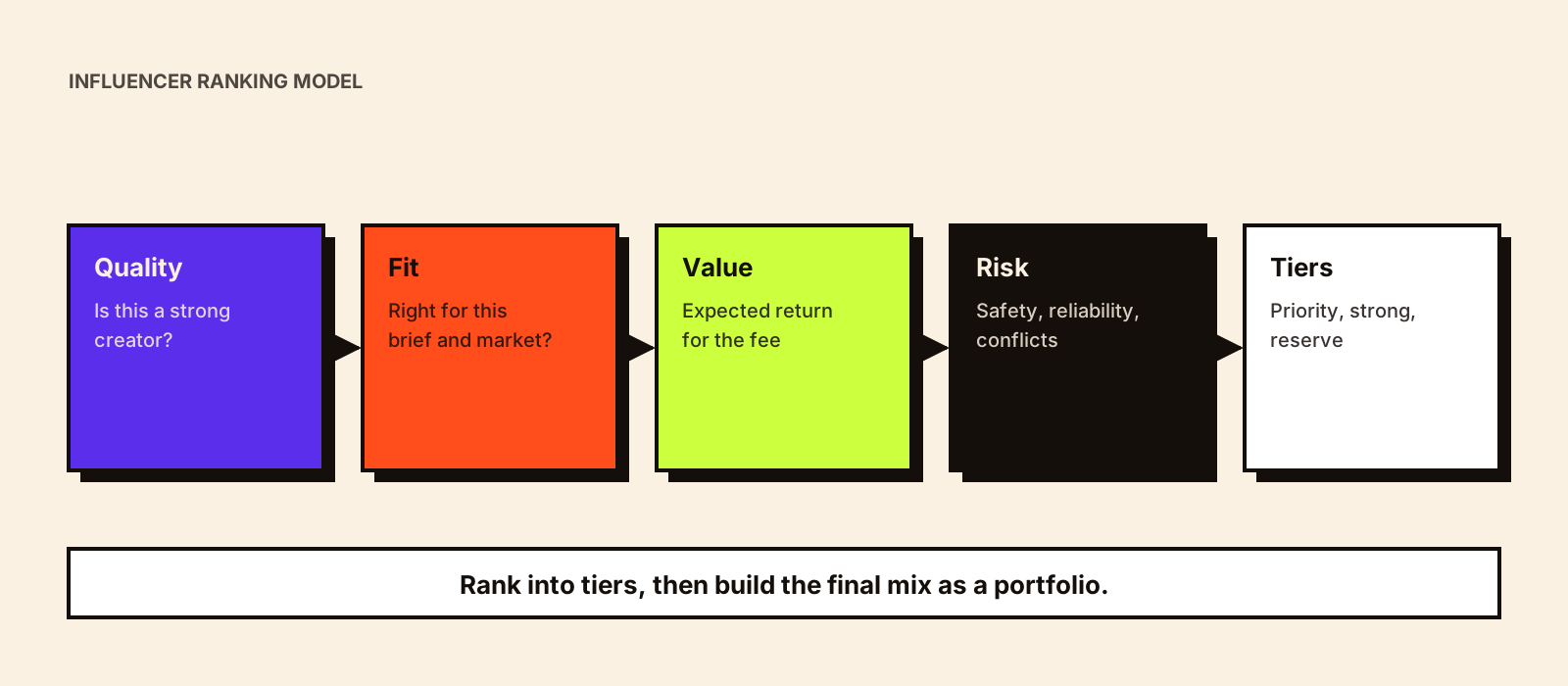
Once you have a vetted shortlist of 25 creators and budget for 10, someone has to decide the order. In many teams that order is follower count, the founder's favourite or whoever replied first. Each produces a predictable problem: the budget goes to reach you didn't need, to a creator who fits one person's taste, or to whoever is quickest rather than best.
Quick answer
Rank creators with a transparent model that combines four things: creator quality (is this a strong creator?), campaign fit (are they right for this brief and audience?), expected value (what do we expect for the cost?) and risk (brand safety, reliability, conflicts). Group the results into priority tiers rather than a strict 1-to-25 list, then build the final selection as a portfolio that covers the roles, markets and formats the campaign needs. Document the reason for each tier so the ranking can be challenged and improved.
Why follower count is a poor ranking
- It measures audience size, not whether the audience is yours.
- It says nothing about views; many accounts reach a fraction of their followers.
- It ignores cost. A bigger creator at a much higher fee may be worse value.
- It favours accounts with inflated or inactive followings.
- It pushes every brand towards the same handful of creators.
The ranking model
| Component | Question | Inputs | Who scores it |
|---|---|---|---|
| Quality | Is this a strong creator regardless of our brief? | Creator quality score: content, audience quality, engagement quality, consistency, professionalism | Team, with data |
| Fit | Are they right for this brief, audience and market? | Audience match, topic fit, format fit, language | Team, AI-assisted |
| Expected value | What do we expect for the cost? | Median views, past results, quoted fee, expected cost metric | Analyst |
| Risk | What could go wrong? | Brand safety, reliability history, exclusivities, sponsored-post fatigue | Team |
PRIORITY = (Quality × wQ) + (Fit × wF) + (Expected value × wV) − (Risk penalty)

Score Quality, Fit and Value 1–5. Risk penalty: 0 (low), 0.5 (medium), 1.5 (high), or EXCLUDE (unacceptable).
Example weights (adjust per objective): Quality 30% · Fit 40% · Value 30%
Fit usually deserves the largest weight because a strong creator for the wrong audience is still the wrong booking. But weights must change with the objective: a UGC brief cares more about quality of production than audience fit, a regional launch cares more about market fit than anything else. Creator quality score and AI influencer matching explain how the quality and fit components are built.
Estimating expected value without false precision
Expected value isn't a forecast of exact results. It's a rough estimate of what the fee buys, based on evidence you have:
- Expected CPM: quoted fee ÷ median views over the last 10–15 comparable posts × 1,000.
- If you've worked with them: their campaign index from past scorecards.
- If you haven't: how their sponsored posts perform relative to their organic posts.
- Score in bands relative to your baseline (better, similar, worse), not as a predicted number.
Your baselines come from influencer benchmarking.
Use tiers, not a strict order
| Tier | Meaning | Action |
|---|---|---|
| Tier 1: Priority | Strong on fit and value, low risk | Approach first |
| Tier 2: Strong alternatives | Good, with one weaker component | Approach if Tier 1 declines or for coverage |
| Tier 3: Reserve | Acceptable; useful backups | Hold for replacements |
| Excluded | Unacceptable risk or poor fit | Record reason |
The difference between the 4th and 6th creator in a scored list is usually within the noise of the scoring. Tiers acknowledge that and make replacements faster.
Build the final selection as a portfolio
Picking the top ten by score often produces ten similar creators: same city, same format, same style. Before confirming, check the selection against what the campaign needs:
- Roles: enough reach drivers, trust builders, converters or content producers for the objective.
- Markets and languages: every priority region covered.
- Formats and platforms: the mix the plan calls for.
- Audience overlap: not paying several creators to reach the same people (unless frequency is the goal).
- Budget spread: not most of the budget on one creator unless that's deliberate.
- Test slots: one or two creators from a segment you haven't tried, to learn something new.
Tie-breakers
- Past reliability with your brand.
- Usage rights availability for ads.
- Fewer recent sponsored posts in your category.
- Stronger comment substance on recent sponsored work.
- Availability within your go-live window.
Hypothetical example
Hypothetical: a snack brand ranks 22 creators for a Gujarat and Maharashtra launch. The top five by score are all Mumbai-based Hindi and English creators. Portfolio checks show no Gujarati creator in Tier 1 and only one Marathi creator. The team keeps three Mumbai creators for reach, promotes two Gujarati creators and one Marathi creator from Tier 2 for market coverage, and reserves one slot to test a Pune-based food creator with a smaller but highly local audience. The scores informed the decision; the plan made it.
Weights by objective
| Objective | Quality | Fit | Value | Typical risk tolerance |
|---|---|---|---|---|
| Awareness at scale | 25% | 35% | 40% | Medium |
| Consideration / education | 35% | 45% | 20% | Low |
| Sales | 20% | 40% | 40% | Medium |
| Premium launch | 40% | 45% | 15% | Very low |
| UGC for ads | 50% | 15% | 35% | Medium |
These are illustrations, not standards. The useful habit is agreeing weights before scoring, and showing them on the ranking sheet.
Presenting a ranking to stakeholders
- Show tiers, not decimal scores.
- One line per creator: role, why they fit, main risk, expected cost metric.
- Show the portfolio view: roles, markets, formats and budget covered.
- Show the weights, so disagreements are about priorities rather than names.
- Include reserves, so a decline doesn't need another approval round.
When to re-rank
- A Tier 1 creator declines or quotes far above expectation.
- New audience data changes a creator's fit.
- The brief changes: new market, new objective, new budget.
- A competitor books creators you'd prioritised.
Repeat creators vs new creators
Repeat creators bring evidence: scorecards, reliability, known audiences. New creators bring reach you haven't bought yet and the chance to find better partners. A ranking that always favours repeats stops learning; one that ignores history wastes it. Many brands reserve a fixed share of each campaign for new creators. Creator performance scorecard explains how repeat-creator evidence is recorded.
Common mistakes
- Ranking by followers or engagement rate alone.
- Treating small score differences as meaningful.
- Picking the top N without checking roles, markets and overlap.
- Hiding the weights, so stakeholders can't see why a creator ranked where they did.
- Not feeding results back into future rankings.
Conclusion
Rank influencers on quality, fit, expected value and risk with visible weights, group them into tiers and build the final selection as a portfolio. That keeps the decision explainable, makes replacements fast and stops budget from drifting towards the biggest or most familiar names. For the steps before ranking, see influencer shortlisting.