AI Influencer Matching: How Technology Can Improve Creator-Brand Fit
How to use AI match scores without handing over the decision: building a Creator Fit Score, setting weights, testing the AI against your team's picks and spotting when a match is wrong.
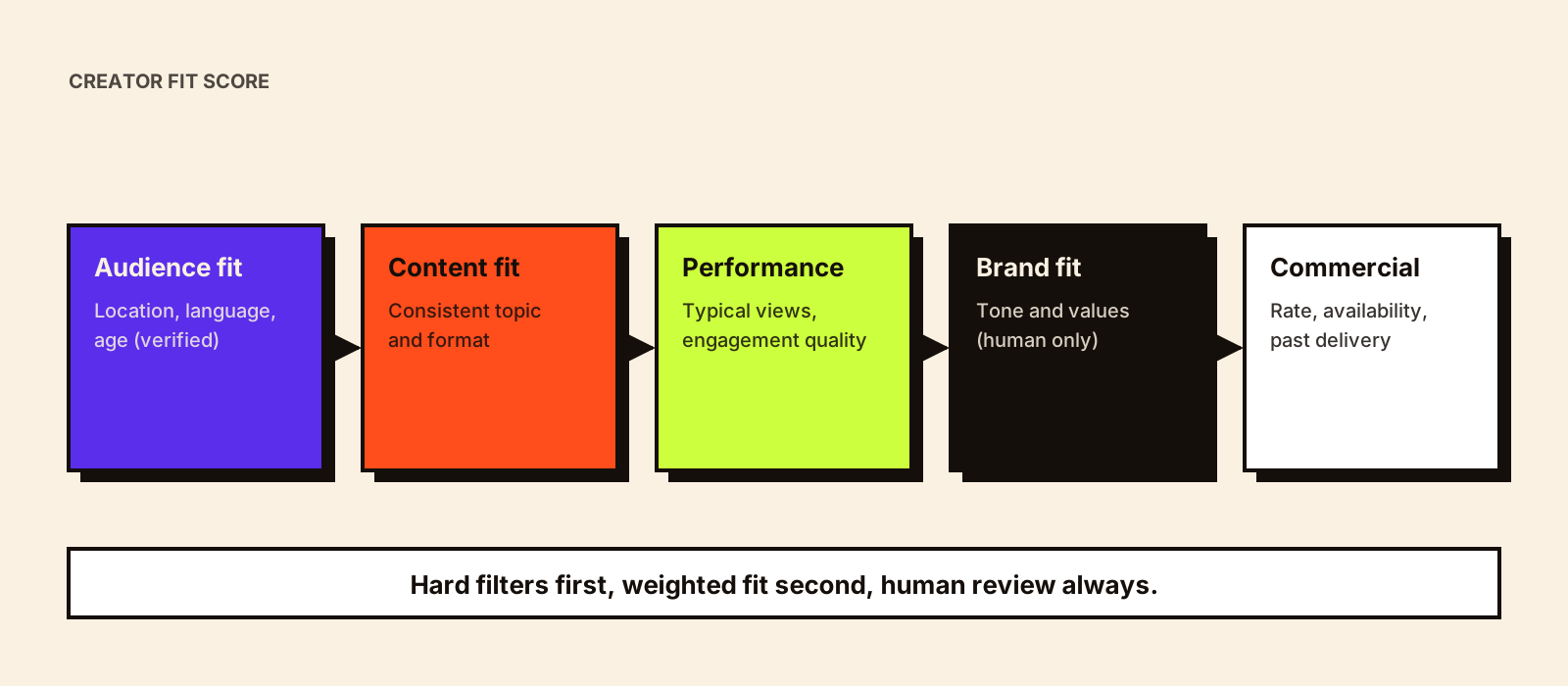
Matching is the step between 'here are 150 creators who make content in our category' and 'here are the eight we should book'. It's also where most influencer campaigns are won or lost. AI matching tools promise to rank creators by fit. Some do that well. The useful question for a brand isn't whether to use them, but how to set them up so the ranking reflects your brand rather than the tool's defaults.
Quick answer
AI influencer matching scores and ranks creators against a campaign using signals such as audience fit, content fit, performance, brand safety, past collaborations and price. It improves creator-brand fit when you control the weights, see why each creator ranks where they do, and test the AI's top picks against your team's judgment. It goes wrong when the score is treated as a verdict, built on estimated audience data, or tuned toward engagement alone. Use AI to rank and explain; use people to decide.
For how matching systems work under the hood (rule-based filters, weighted scoring, similarity models, two-sided marketplaces), see creator matching. This guide is about using those systems as a brand.
What 'fit' actually means
Creator-brand fit has five parts. AI is good at measuring some and poor at others, which is the main reason a single match score can mislead.
| Fit dimension | Question it answers | How well AI measures it |
|---|---|---|
| Audience fit | Are the creator's viewers our customers (location, language, age, interests)? | Moderately; depends on whether audience data is first-party or estimated |
| Content fit | Does the creator consistently make content where our product belongs? | Well, through content and transcript analysis |
| Performance fit | Will this creator deliver the views, engagement or clicks the objective needs? | Reasonably for past averages; poorly for predicting a single post |
| Brand fit | Does the creator's tone, values and aesthetic suit the brand? | Poorly; needs human viewing |
| Commercial fit | Is the creator available, affordable and free of conflicts? | Barely; needs direct conversation |
Build a Creator Fit Score you control
Whether your tool has a built-in score or you're working in a spreadsheet, define your own scoring model first. That way you can check whether the AI's ranking matches your priorities, and you have a consistent way to compare creators across campaigns.
HARD FILTERS (fail any = exclude)
□ Audience mainly in target markets (creator-provided data where possible)
□ Content language matches campaign
□ No competitor exclusivity in campaign window
□ Passes brand-safety review
□ Within budget band

WEIGHTED SCORE (1–5 each)
Audience fit ......... weight 30%  (AI-assisted, verify with creator insights)
Content fit .......... weight 25%  (AI-assisted, confirm by watching 5–10 posts)
Performance fit ...... weight 15%  (AI: typical views and engagement quality, not followers)
Brand fit ............ weight 20%  (human only)
Commercial fit ....... weight 10%  (human: rate, availability, past delivery)

FIT SCORE = Σ (score × weight)
WRITE ONE LINE: why this creator, for this brief
The weights above suit a consideration campaign. For a pure awareness push you might raise performance fit; for a premium launch, brand fit. The one-line rationale matters as much as the number: if nobody can explain why a creator fits in a sentence, the score is probably hiding a weak match. How to choose the right influencer for your brand has a fuller manual scoring version.
How to test an AI matching tool before trusting it
Before using AI rankings on a live campaign, run a blind comparison. It takes a few hours and tells you more than any demo.
- Take a past campaign where you know which creators performed and which didn't.
- Give the tool the same brief and the same candidate pool you had then.
- Compare its top 15 with your actual top performers. Does it rank the winners high and the disappointments low?
- Ask your team to independently rank the same pool, then discuss every creator where the AI and the team disagree by more than ten places.
- Check the explanations. Are the reasons specific ('62% audience in Karnataka, Kannada content, two kitchen-appliance collaborations') or generic ('high engagement')?
- Repeat with a regional-language brief. Many tools perform noticeably worse outside English.
Signals AI matching often gets wrong
Engagement without trust
A creator with a high engagement rate driven by giveaways, controversy or relatable-meme content may score well and still sell very little. Read the comments: are people asking where to buy and how it worked, or tagging friends for a contest?
Topic overlap without context
A creator who mentions protein powder in a video criticising supplement marketing will look like a strong content match for a supplement brand. Semantic search captures topics, not stance.
Audience estimates at the wrong resolution
A tool may say 70% of a creator's audience is in India, which is true but useless for a campaign targeting Gujarat. Audience fit for regional and city campaigns needs creator-provided state and city data. Influencer audience quality explains what to ask for.
The same creators for everyone
If similarity and past performance drive rankings, the same creators top every brand's list in a category. Their content gets crowded with sponsorships and their audiences tune out. Deliberately include some lower-ranked creators with strong content fit, and measure whether they outperform expectations.
Where AI matching adds the most value
- Large candidate pools: ranking 200 creators consistently is where people get tired and inconsistent.
- Multi-market campaigns: applying the same criteria across ten cities or five languages.
- Scaling from winners: finding more creators like those who already delivered.
- Always-on and ambassador programmes: re-ranking a creator roster each quarter as data changes.
- Explaining shortlists to stakeholders: clear reasons per creator speed up approvals.
A shortlist presented with reasons gets approved faster. Influencer shortlist covers how to present one, and brand safety screening, which no matching score replaces, is in influencer brand safety.
A worked example
Illustrative example, not a real campaign: a Pune-based home-cleaning products brand wants Marathi and Hindi creators for a Maharashtra launch. The AI tool ranks a Mumbai lifestyle creator first on engagement and topic overlap. The team's review finds most of her recent content is fashion, her home content is occasional, and her audience is spread nationally. The tool ranked a Nagpur home-organisation creator 23rd because of lower follower count. Her insights show 58% Maharashtra audience, her comments are full of product questions, and every recent video is about running a household. After re-weighting audience fit and content consistency, she moves into the top five. The AI did its job (both were on the list); the human review fixed the order.
Setting weights by campaign objective
The right weights change with the objective. These are starting points to adjust, not rules:
| Objective | Audience | Content | Performance | Brand | Commercial |
|---|---|---|---|---|---|
| Awareness in new markets | 35% | 15% | 25% | 15% | 10% |
| Consideration / education | 25% | 30% | 10% | 25% | 10% |
| Sales with codes or links | 30% | 20% | 25% | 10% | 15% |
| Premium or luxury launch | 20% | 20% | 10% | 40% | 10% |
| UGC for paid ads | 5% | 35% | 5% | 30% | 25% |
For UGC, audience barely matters because the content runs on your ad account; production quality and rights terms matter far more. For a premium launch, brand fit dominates because one off-tone creator can undo the positioning.
Feed results back into the model
Matching only improves if outcomes are recorded against the scores that predicted them. After each campaign, add three things to every booked creator's record: their fit score at booking, their actual result on the primary KPI and a one-line reason for any big gap. Over a few campaigns, patterns appear. You might find audience fit predicted sales far better than engagement did, or that a particular content style consistently outperformed its score. Adjust the weights accordingly.
Keeping this history is one of the main jobs of an influencer marketing CRM.
Common mistakes
- Accepting the tool's default weights rather than setting them per campaign.
- Using a single fit score to compare creators across very different objectives.
- Skipping the content review for creators at the top of the ranking.
- Never feeding campaign results back, so the ranking never improves.
- Not recording why a creator was chosen, so nobody can learn from the outcome.
Fit is one part of the decision. Creator quality score covers the brand-agnostic quality side, and influencer ranking shows how fit, quality, value and risk combine into priority tiers.
Conclusion
AI matching improves creator-brand fit when it's your scoring model running faster, not a black box running instead of you. Define the fit dimensions, set weights per campaign, insist on explanations, test the tool against past results and keep brand and commercial fit human. Once creators are selected, AI influencer campaign management covers where AI helps with the work that follows.