AI for Influencer Discovery: How Brands Can Find Better Creators Faster
How AI-assisted creator search works (content search, visual recognition, lookalikes, audience matching), what it misses, and a discovery workflow that pairs AI speed with human review.
Traditional creator search starts with hashtags, bios and follower counts. All three are poor proxies for what a brand needs: creators who consistently make content your customers watch. AI-assisted discovery changes the search unit from 'what the creator says about themselves' to 'what the creator actually posts, and who watches it'. That's a real improvement, with some limits worth understanding before you rely on it.
Quick answer
AI helps influencer discovery by indexing creator content (captions, spoken words, on-screen text and visuals) so you can search by topic, by finding creators similar to ones who already worked for you, and by estimating which creators' audiences resemble your customers. It is fastest at building a relevant long list. It is weakest at verifying audience data, covering small regional-language creators and judging brand fit, so every AI-built list still needs human review and creator-provided insights before booking.
How AI-assisted discovery works
| Method | What the AI does | Best used for | Watch out for |
|---|---|---|---|
| Semantic content search | Understands the meaning of captions and transcripts, so 'budget meal prep' also finds 'cheap tiffin ideas' | Finding niche creators who don't use your keywords | Transcription errors in Hinglish and regional languages |
| Visual recognition | Identifies products, settings and styles in images and video frames | Finding creators who already use your category (gym equipment, kitchen gadgets, sarees) | Can't tell whether the creator likes the product or was paid |
| Lookalike search | Finds creators whose content and audience resemble a reference creator | Scaling a campaign from creators who performed | Repeats the same profile, cities and style; reduces variety |
| Audience-based search | Ranks creators by estimated audience location, age, gender and interests | Matching a defined customer profile | Most audience data is estimated unless the creator connected their account |
| Natural-language queries | Turns a sentence ('Kannada fitness creators in Bengaluru with mostly women viewers') into filters | Faster first searches for non-specialists | Silently drops criteria it can't map; check the filters it applied |
| Brand-mention detection | Finds creators who have mentioned or tagged your brand or competitors | Spotting existing fans and category experience | Misses untagged mentions and spoken mentions in some tools |
These methods sit on top of a creator database. How good the results are depends on that underlying data: where it came from, how often it refreshes and which creators it covers. Creator discovery platforms explains data sources in detail.
What's changed in native platform discovery
The social platforms now offer their own AI-assisted discovery, which is worth trying before paying for anything. Instagram's creator marketplace launched in India in February 2024 with machine-learning recommendations for brands, and Meta added keyword search and AI-powered recommendations in 2025. YouTube runs its brand–creator matching through YouTube Creator Partnerships (formerly BrandConnect), which is available in India for eligible creators and brands.
Native tools have a key advantage: audience data for creators who have opted in comes from the platform itself rather than estimates. Their limits are that they cover only their own platform, only eligible creators who have joined, and they won't compare creators across Instagram and YouTube for you.
Where AI discovery falls short
- Coverage bias. Tools usually index large and English-language creators more thoroughly. Nano and micro creators in Tamil, Telugu, Marathi or Bhojpuri may be missing or carry thin data.
- Estimated audiences. Audience location and demographics are often modelled from follower profiles and engagement samples. They're useful directionally and unreliable at city level.
- Popularity bias. Ranking by engagement or similarity pushes the same well-known creators to the top of every brand's list, which raises their prices and lowers distinctiveness.
- No sense of availability or interest. AI can't tell you that a creator has an exclusivity with a competitor or has stopped doing paid work.
- No judgment of taste. It finds creators who talk about skincare; it can't tell you whether their tone suits a clinical brand or a playful one.
A creator discovery framework that uses AI well
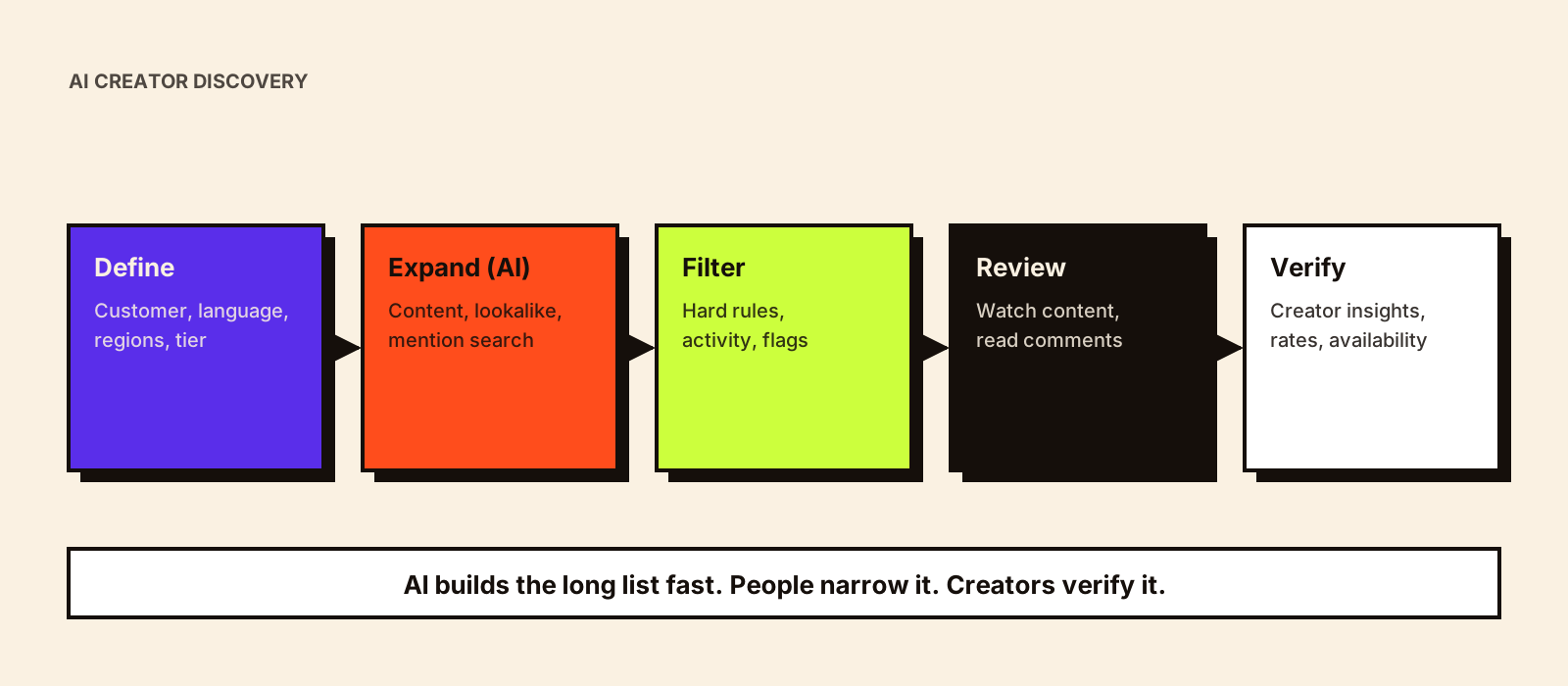
The aim is to let AI do the broad, fast part and keep people on the narrow, careful part. A five-step version:
1. DEFINE: Write the customer profile and hard filters: platform, languages, audience regions, creator tier, category, budget band, brand-safety exclusions.

2. EXPAND (AI): Run three searches in parallel: semantic content search on customer problems (not product names), lookalike search from 2–3 past creators who performed, and brand/competitor mention search. Merge into a long list of 100–200.

3. FILTER (AI + rules): Apply hard filters. Remove duplicates, inactive accounts and anyone flagged for unusual growth. Target 40–60.

4. REVIEW (human): Watch 5–10 recent posts per creator. Read comments. Score brand fit, content quality and audience trust. Target 15–25.

5. VERIFY (creator): Request current audience insights, rates and availability from the shortlist before anyone is presented for approval.
Step 4 is the one teams most often skip under deadline pressure, and it's where most bad bookings could have been caught. How to vet influencers covers it in detail, and the audience checks in step 5 are in influencer audience quality.
Search prompts that work better than product names
Content search works best when you describe the customer's situation rather than your product. Creators talk about problems and routines, not SKUs. Some examples for different categories:
| Brand | Weak search | Better searches |
|---|---|---|
| Millet-based snacks | millet snacks | healthy tiffin ideas for kids; evening snacks for diabetics; office snack haul |
| Two-wheeler accessories | bike accessories | daily commute Bengaluru rain; long ride packing; scooter maintenance tips |
| Personal finance app | investment app | first salary planning; SIP for beginners in Hindi; saving tips for students |
| Ethnic wear label | kurta brand | office wear for Navratri; wedding guest outfit under budget; handloom styling |
Using AI discovery for regional and small-town campaigns
For campaigns aimed at tier 2 and tier 3 markets, AI discovery works best as a starting point combined with local signals. Search in the regional language and script as well as in English transliteration (people write 'recipe' in Tamil script and in Roman script). Look at who local creators collaborate with, since regional creator communities are often tightly connected. Ask creators you've booked who else they'd recommend. Influencer marketing in tier 2 and tier 3 cities and micro influencers in India cover the wider strategy.
How to judge an AI discovery tool
- Coverage test: search for 20 creators you already know in your categories and languages. How many appear, and is their data roughly right?
- Content test: search a customer problem in plain words. Are the results creators who actually make that content, or just mention the words in a bio?
- Data labelling: does the tool show which audience figures are first-party (creator-connected) and which are estimated?
- Explainability: can you see why a creator was suggested?
- Freshness: how often are follower counts, views and audience estimates updated?
- Export and notes: can you save lists, annotate and move them into your CRM or tracker?
A wider checklist for AI tools, including pricing and data protection questions, is in AI-powered influencer marketing tools. For non-AI search methods (native search, Google operators, location tags), see influencer search tools.
AI discovery by campaign type
The best mix of AI search methods depends on what the campaign is for. A rough guide:
| Campaign type | Lead with | Add | Human focus |
|---|---|---|---|
| Product launch | Content search on the customer problem | Competitor mention search | Brand fit and embargo reliability |
| Regional or vernacular campaign | Regional-language content search | Referrals from booked creators | Audience location from creator insights |
| Scaling a programme that works | Lookalike search from top performers | Content search to add variety | Avoiding a roster of near-identical creators |
| UGC for ads | Visual search for production style | Content search for product category | On-camera presence and editing quality, not follower count |
| Seeding and gifting | Brand and category mention search | Audience-based search | Genuine product interest; disclosure habits |
For UGC-focused sourcing, where follower count matters far less than production quality, see how to find UGC creators.
What to ask creators after AI finds them
AI discovery gives you a list; only creators can confirm the facts that decide a booking. Send shortlisted creators a short, consistent request:
Hi [name], we're shortlisting creators for a [category] campaign in [month]. If you're open to it, could you share:
1. Audience screenshots from the last 30 days: top cities/states, age and gender
2. Reach or views for your last 5 Reels/videos
3. Your rate for [deliverable], and whether usage rights for paid ads are available
4. Any category exclusivities in [month]
No commitment either way. We'll confirm within [x] days.
Asking the same questions of every creator makes their answers comparable and keeps your database consistent.
Common mistakes
- Booking from the tool's top ten without watching the content.
- Using lookalike search exclusively, so every campaign recruits the same type of creator.
- Trusting city-level audience estimates for a local campaign without asking for the creator's insights.
- Searching only in English for a vernacular campaign.
- Ignoring creators who aren't in any tool. For many regional categories, the best creators are found by asking around.
Conclusion
AI discovery is genuinely faster and finds creators that keyword search misses, especially through content and lookalike search. Its blind spots are estimated audiences, thin regional coverage and no sense of fit or availability. Use it to build the long list, then let people narrow it and creators verify it. Once you have candidates, AI influencer matching explains how to rank them consistently, and find Indian influencers covers the manual methods that still matter.