AI-Powered Influencer Marketing Tools: What Brands Should Look For
How to evaluate AI features in influencer marketing tools: the questions that expose weak AI, data and privacy checks for India, a scoring checklist and when a general AI assistant is enough.
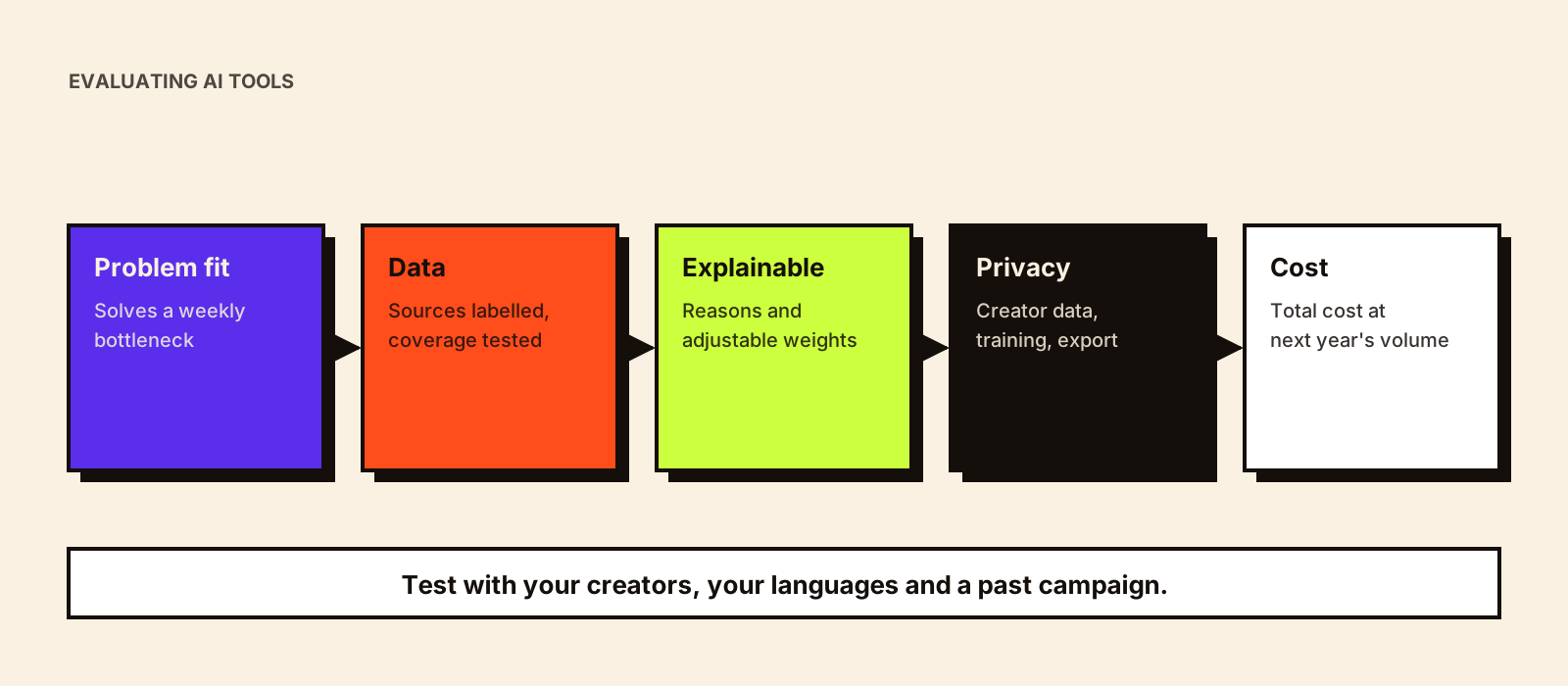
Almost every influencer marketing tool now describes itself as AI-powered. The label covers everything from a genuinely useful content search engine to a chatbot bolted onto an old database. For a brand choosing a tool, the job is to work out which AI features solve a problem you actually have, and whether they work on your categories, languages and creators.
Quick answer
Look for AI features tied to a specific task you do often (creator search, ranking, fraud signals, draft checks, reporting), built on data the vendor can explain, with visible reasons for each output. Test coverage with creators you know in your languages, check how creator personal data is handled, confirm you can export your data, and compare against a general AI assistant plus templates, which is enough for many brands running a few campaigns a quarter.
The main types of AI features
| AI feature | What it should do | The question that tests it |
|---|---|---|
| Content and semantic search | Find creators by what they post, not just bios and hashtags | Search a customer problem in plain words. Are results genuinely on-topic? |
| Lookalike recommendations | Suggest creators similar to ones who performed | Do suggestions vary, or is it the same 20 creators every time? |
| Match or fit scores | Rank creators against your brief | Can I see and change the weights, and see why each creator scored as they did? |
| Audience estimation | Estimate audience location, age, gender, interests | Which figures are first-party and which estimated? What's the error at state level? |
| Fraud and authenticity signals | Flag suspicious growth and engagement | Does it show the evidence behind a flag, or just a score? |
| Brief and message drafting | Draft briefs and outreach | Does it use creator-specific details, and can we control tone and claims? |
| Content review assistance | Check drafts against brief and disclosure requirements | Does it handle Hindi and regional-language audio? |
| Performance prediction | Forecast views or results | What's it trained on, and how accurate was it on past campaigns? |
| Reporting and summaries | Summarise results and comments | Can I trace every number in the summary back to source data? |
Start with your bottleneck, not the feature list
List the three tasks that consume most of your team's time or cause most of your mistakes. If it's finding relevant regional creators, prioritise search and coverage. If it's chasing drafts and approvals, AI features matter less than solid workflow management. If it's explaining results to leadership, look at reporting. Buying a tool for its most impressive AI demo when your real bottleneck is elsewhere is the most common and expensive mistake.
If you're not yet sure where AI fits in your process, AI influencer marketing maps it stage by stage. For the non-AI features any tool needs, see influencer marketing software.
Questions to ask any AI tool vendor
- Where does your creator data come from: creator-connected accounts through official APIs, public data, or estimates? Is each figure labelled?
- How often is the data refreshed, and how do you handle deleted or private accounts?
- How many creators do you cover in [our languages] and [our categories], and can we test that ourselves during a trial?
- What does your AI score actually measure, and can we change the weighting?
- Which AI models do you use, and is our data (briefs, creator lists, results) used to train them?
- Where is data stored and processed, and how do you handle creators' personal data under Indian law?
- Can we export everything (lists, notes, contacts, campaign data) in a standard format if we leave?
- What happens to pricing as we add seats, searches, creators tracked or campaigns?
Data, privacy and creator consent in India
AI tools hold personal data: creator names, contact details, rates, sometimes audience information. India's Digital Personal Data Protection Rules were notified in November 2025, with most obligations for businesses phasing in by May 2027. That makes now a sensible time to ask vendors how they collect creator data, whether creators can see and correct it, how long it's kept and how breaches are handled, and to keep your own creator records lean.
Also check platform terms. Tools that collect data in ways a platform doesn't permit can lose access suddenly, and your saved lists and history go with it.
Evaluation checklist
PROBLEM FIT
□ Solves one of our top-three bottlenecks
□ Used weekly, not once a quarter

DATA
□ Data sources explained and labelled (first-party / public / estimated)
□ Coverage test passed: ≥ 15 of 20 known creators found in our languages and categories
□ Refresh frequency acceptable

AI QUALITY
□ Results explainable (reasons per creator or flag)
□ Weights adjustable
□ Blind test against a past campaign passed
□ Regional-language test passed

WORKFLOW
□ Fits how we work (lists, notes, approvals, exports)
□ Connects to our CRM, tracker or analytics

RISK
□ Data processing and storage terms acceptable
□ Our data not used to train shared models without consent
□ Full export available

COST
□ Total annual cost at our expected volume
□ Compared against a general AI assistant + templates
Run a real trial
A sales demo uses the vendor's best examples. A trial should use yours. In two weeks you can learn most of what matters:
- Day 1–2: run the coverage test with 20 creators you know, across your languages and tiers.
- Day 3–5: rebuild the shortlist for a past campaign and compare it to the creators who actually performed.
- Day 6–8: use the tool on a live brief alongside your usual method. Count how many genuinely new, usable creators it finds.
- Day 9–10: test the AI drafting and review features on real content, including a Hindi or regional-language draft.
- Day 11–14: export everything you created and check it's complete and usable outside the tool.
When a general AI assistant is enough
If you run a handful of campaigns a quarter with up to 15–20 creators each, a general AI assistant, a well-built spreadsheet or tracker and the free native tools from Instagram and YouTube may cover most needs. You'd use the assistant for research synthesis, brief versions, outreach drafts and report narratives, and native marketplaces for discovery. Specialist AI tools earn their cost when volume grows, when you need cross-platform search at scale, or when multiple people need shared creator records.
Questions for your own team before buying
- Who will use the tool every week, and have they tried it?
- What will we stop doing, or stop paying for, once it's in place?
- Do we have clean past campaign data for AI features to learn from?
- Who checks AI outputs before they reach creators or leadership?
- What's our plan if the vendor's data access to a platform changes?
Where an agency fits alongside AI tools
AI tools make experienced people faster; they don't supply the experience. If your team is new to creator marketing, short on time, or moving into categories and regions it doesn't know, tools can produce long lists nobody has the capacity to vet properly. Many brands combine a light tool setup with an agency that handles discovery, vetting and campaign management, keeping strategy and approvals in-house. Influencer marketing agency vs in-house compares the models.
Red flags
- A single 'quality' or 'authenticity' score with no breakdown or evidence.
- Audience figures to one decimal place with no indication they're estimates.
- Claims of predicting campaign ROI without explaining what the prediction is based on.
- No trial, or a trial limited to pre-selected demo searches.
- Vague answers about data sources, platform terms or model training.
- Contracts that make export difficult or charge for it.
Fraud and authenticity features deserve their own scrutiny; influencer fraud detection tools explains how to read their signals. For a broader view of where any AI tool fits alongside CRM, tracking and reporting, see the influencer marketing technology stack.
Conclusion
Judge AI influencer tools on whether they solve your actual bottleneck with data you can trust and outputs you can explain. Test with your own creators and languages, check privacy and export terms, and compare the cost with a simpler setup. The best tool is the one your team uses every week and still questions when the answer looks too neat.