Influencer Fraud Detection Tools: How Technology Helps Brands Identify Suspicious Creators
How influencer fraud detection tools work (follower sampling, growth anomalies, engagement patterns, comment analysis), how to read their scores, false positives and negatives, and a fraud detection checklist that combines tools with human review.
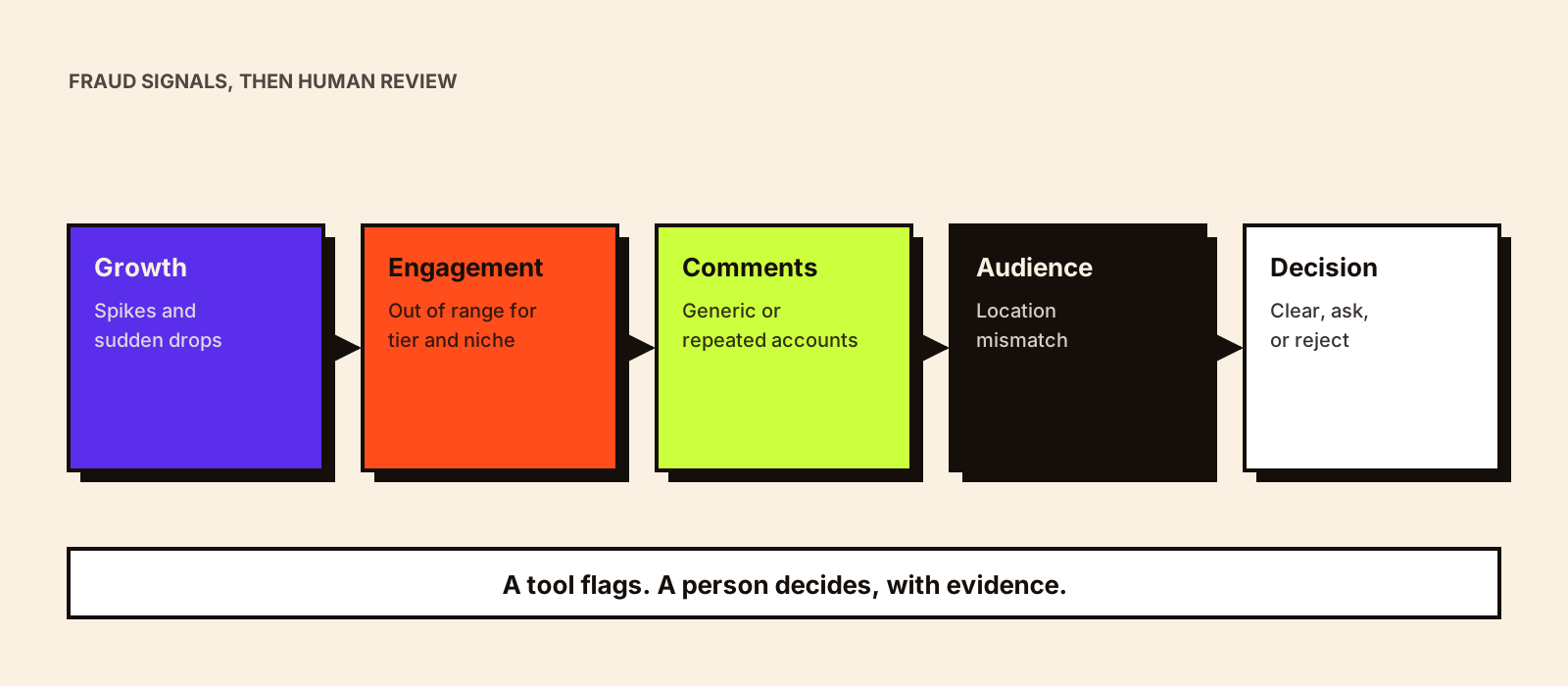
Fake followers, bought engagement and engagement pods make some creators look more influential than they are. Fraud detection tools promise to catch this at scale. They're genuinely useful for screening long lists, and genuinely risky when a single 'authenticity score' is treated as a verdict. This guide explains what the tools measure, how to read them and where human review has to take over.
Quick answer
Influencer fraud detection tools analyse signals such as follower growth history, the share of followers that look inactive or automated, engagement relative to audience size, consistency of engagement across posts, comment patterns and audience location mismatches. They help brands screen many creators quickly and flag who needs a closer look. They can't prove fraud on their own: estimates vary between tools, legitimate events (a viral post, a giveaway, press coverage) can look suspicious, and sophisticated fraud can pass. Use tools to flag, then confirm with manual review and the creator's own insights.
For the manual signs you can check without any tool, see how to identify fake followers and fake engagement.
What the tools look at
| Signal | What it can indicate | Innocent explanations |
|---|---|---|
| Sudden follower spikes | Bought followers | Viral post, collaboration with a bigger creator, media coverage, giveaway |
| Follower drops after a spike | Platform removing fake accounts | Unfollows after a giveaway ends |
| High share of suspicious followers | Bought or bot followers | Older accounts accumulate inactive followers naturally |
| Engagement far below size | Inactive or fake audience | Platform reach changes; creator shifted content focus |
| Engagement far above typical | Engagement pods or bought likes | Genuinely loyal niche audience; viral content |
| Uniform engagement across posts | Automated engagement | Very consistent audience and content |
| Generic or repetitive comments | Pods, bots or bought comments | Emoji-heavy fan culture; giveaway entries |
| Audience location mismatch | Bought followers from other countries | Diaspora audience; global-interest content |
| Likes high, views low (video) | Bought likes | Measurement differences between formats |
The third column is why scores need interpretation. Every signal has legitimate causes, and the useful question is whether several signals point the same way.
How to read an authenticity score
- Find out what the score is made of. A score that blends follower quality, engagement and growth is harder to interpret than separate figures for each.
- Check the evidence. Good tools show the growth chart, the engagement trend and examples of flagged comments or accounts.
- Remember it's an estimate. Tools typically sample followers and engagers; different tools can give the same creator different results.
- Compare within tier and niche. A meme page and a skincare educator have very different normal engagement patterns.
- Look at the trend. A creator who had a suspicious spike three years ago and clean growth since is different from one with repeated recent spikes.
False positives and false negatives
False positives (genuine creators flagged as suspicious) hurt you by removing good creators from consideration and can be unfair to the creator. They're common after viral moments, giveaways and for creators with large diaspora audiences. False negatives (fraud that passes) happen when fraud is gradual, mixes real and fake engagement, or uses accounts that look human. Engagement pods, where creators coordinate to engage with each other's posts, are particularly hard for tools to separate from genuine community activity.
Fraud detection checklist
TOOL SCREEN (every creator on the long list)
□ Follower growth chart: any spikes? Explained by a viral post or collaboration?
□ Suspicious follower share: above the norm for this tier and niche?
□ Engagement vs size: in range for tier and format?
□ Engagement consistency: natural variation across posts?
□ Audience location: matches the creator's language and content?

HUMAN REVIEW (anything flagged + every shortlisted creator)
□ Read 50+ comments across 5 recent posts: specific and relevant, or generic?
□ Check who's commenting: real profiles, or the same accounts on every post?
□ Compare views on Reels/videos with likes and comments
□ Look at the creator's history: niche consistency, past collaborations

CREATOR VERIFICATION (shortlist)
□ Request insights screenshots (reach, views, audience location and age) dated within 30 days
□ Compare with tool estimates; ask about large gaps

DECISION
□ Clear / Clear with note / Ask creator / Reject (record reason)
How to vet influencers places fraud checks within the full vetting process, and influencer audience quality covers what to request from creators.
Fraud beyond fake followers
- Manipulated insights screenshots: ask for screen recordings or connected-account data for high-value deals.
- Inflated views from paid promotion presented as organic reach: ask whether posts were boosted.
- Fake or manipulated affiliate conversions: watch for unusual order patterns, high cancellation or return rates and many orders from few addresses.
- Impersonators: people posing as a creator's manager. Confirm contact details through the creator's official profile.
- Recycled content: creators reposting old sponsored content as new deliverables.
Protect yourself contractually
Tools reduce risk; contracts manage what's left. Include a warranty that the creator hasn't bought followers or engagement, a requirement to share platform insights after posting, and a right to withhold or recover payment if deliverables or reported results are found to be manipulated. Paying partly on verified results rather than entirely upfront also lowers exposure. Influencer marketing contract covers these clauses.
Choosing a fraud detection tool
- Shows evidence behind each flag, not only a score.
- Covers the platforms you use, with history long enough to see growth patterns.
- Explains its method and sample size in plain language.
- Performs reasonably on regional-language creators and audiences; test with creators you know well.
- Lets you record your own decision and notes alongside the tool's output.
- Re-checks creators over time, since a clean creator can buy followers later.
If fraud screening is one feature in a broader AI tool, the wider evaluation in AI-powered influencer marketing tools applies too.
When a tool flags a creator you like
- Look at the evidence, not the score: which signal triggered the flag, and when?
- Check for innocent explanations: a viral post, a collaboration, a giveaway, press coverage.
- Read comments on recent posts for specificity and real profiles.
- Ask the creator, politely, about the spike or audience mix and request current insights.
- If it's explained and recent data looks healthy, record the reason and proceed.
- If it isn't, decline without accusation; you don't need to prove fraud to choose not to book.
Fraud risk by campaign type
| Campaign type | Main fraud risk | Extra check |
|---|---|---|
| Flat-fee awareness | Inflated followers and views | Insights screenshots or connected-account data before payment |
| Engagement-led consideration | Engagement pods and bought likes | Comment quality review across several posts |
| Affiliate or CPA | Fake or self-generated orders | Delivered-order and return-rate checks; payout after return window |
| Giveaways and contests | Bot entries | Entry rules; sample-check entrants |
| Regional micro creators at scale | Cheaply inflated small accounts | Tool screen every creator; manual review of the shortlist |
Common mistakes
- Rejecting creators on a score without looking at the evidence.
- Approving creators on a clean score without reading comments.
- Checking once at onboarding and never again.
- Treating engagement rate alone as proof of authenticity.
- Paying 100% upfront on high-value deals with unverified insights.
Fraud screening tells you whether engagement is real; influencer engagement quality tells you whether real engagement is worth anything to your brand.
Conclusion
Fraud detection tools are good at screening many creators and pointing to the ones that need a closer look. They aren't judges. Combine a tool screen with comment review, creator-provided insights, sensible contract terms and periodic re-checks, and record the reason for every decision. Keeping those results in your influencer database means you don't have to start from scratch next time.