Influencer Database: How Brands Can Build and Maintain a Reliable Creator Database
How to build your own creator database: what to capture, where the data comes from, how to keep it fresh, a creator data quality checklist, India-specific fields, and when to rely on a bought database instead.
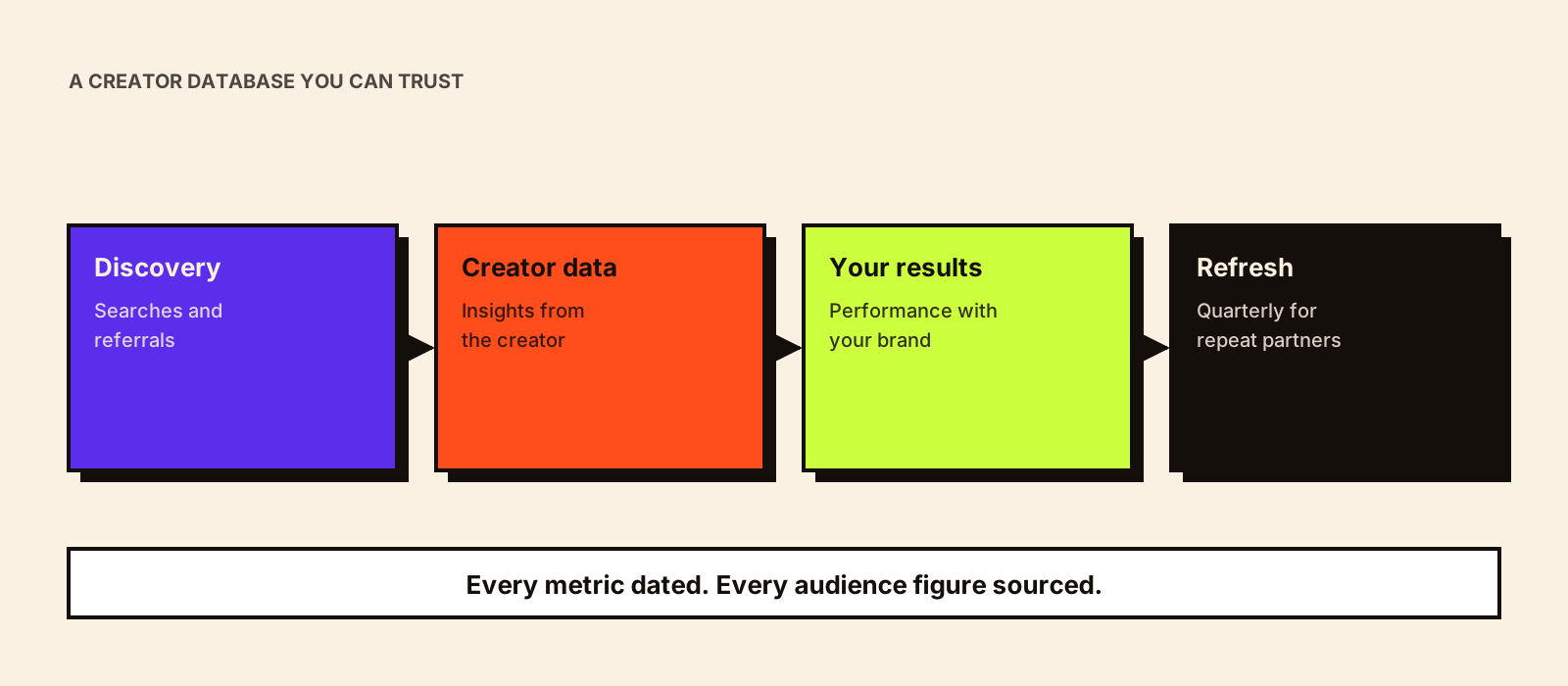
Every brand that runs creator campaigns ends up with a database of some kind, even if it's three spreadsheets and a folder of screenshots. The difference between a useful one and a useless one is not size. A list of 5,000 handles with follower counts from last year is less useful than 300 creators with dated, verified audience data, notes from someone who watched their content and a record of how they performed.
Quick answer
An influencer database is a structured record of creators your brand might work with: their platforms, niche, languages, location, audience, typical performance, rates and fit notes. Build it from discovery searches, creator-provided insights and your own campaign results. Date every metric, separate verified data from estimates, refresh active creators at least quarterly, and record why each creator is in the database. Buy or subscribe to a third-party database when you need breadth; build your own when you need depth and reliability for the creators you actually use.
Database vs discovery platform vs CRM
An influencer discovery platform is a search engine over a very large third-party database, usually millions of profiles with public and estimated data. Your own influencer database is smaller, curated and enriched with information only you have: who you've vetted, what they charged, how they performed. A CRM adds the relationship history. Many brands use a discovery platform to find creators and their own database to keep the ones worth remembering.
Creator discovery platforms explains how third-party databases source their data. Influencer marketing CRM covers the relationship layer.
Fields to capture
| Group | Field | Why it matters |
|---|---|---|
| Identity | Name, handles per platform, profile URLs | Creators change handles; URLs and IDs prevent duplicates |
| Content | Primary categories, formats (Reels, long-form, Shorts, live), posting frequency | Content fit |
| Language | Primary language, secondary languages, script used in captions | Essential for regional campaigns |
| Location | Creator city and state; audience top states/cities (with source and date) | Creator location ≠ audience location |
| Size and reach | Followers, median views per post or video (last 10–15 posts), date captured | Typical reach beats follower count |
| Engagement quality | Engagement rate (method stated), comment quality note | Interaction quality |
| Audience | Age and gender split, top locations (source: creator insights or estimate) | Audience fit |
| Commercial | Indicative rates by deliverable (dated), manager, availability notes | Planning budgets |
| Vetting | Authenticity check date and result, brand-safety notes | Risk |
| Fit | Tier, tags (e.g. 'parent creator', 'budget tech'), one-line fit note, added by, date added | Why they're here |
Where the data should come from
| Source | Use it for | Reliability |
|---|---|---|
| Creator-provided insights (screenshots or connected accounts) | Audience demographics, reach, views | High if recent; always record the date |
| Your own campaign results | Actual performance with your brand | Highest for prediction |
| Public profile review | Content, posting frequency, public engagement, comments | Accurate for what's visible |
| Discovery tools | Broad search, estimated audience, growth history | Useful directionally; label as estimates |
| Native platform marketplaces | Opted-in creators' platform-reported data | High within that platform |
| Referrals from creators and managers | Finding regional and niche creators tools miss | Needs vetting like any other source |
The most important habit is labelling. Every audience field should say whether it came from the creator, a platform or an estimate, and when. Influencer audience quality explains what to request from creators.
Creator data quality checklist
□ Every metric has a capture date
□ Every audience field has a source (creator / platform / estimate)
□ Median views calculated from the last 10–15 posts, not one viral post
□ Engagement rate method stated (e.g. engagements ÷ followers, or ÷ views)
□ Profile URL stored, not only handle
□ No duplicate creators (check URL, not name)
□ Languages and audience regions filled for every creator
□ Rates dated and marked 'quoted' or 'paid'
□ Authenticity check result and date recorded
□ 'Added by' and one-line fit note present
□ Inactive creators (no posts in 60+ days) flagged
Keeping it fresh
Creator data decays quickly. Audiences shift, view counts move with platform changes, rates go up after a creator's breakout year and some creators stop posting. A simple refresh rhythm keeps the database trustworthy:
| Creator group | Refresh | What to update |
|---|---|---|
| Shortlisted for a live campaign | Before booking | Audience insights from creator, rates, availability, brand-safety check |
| Repeat partners | Quarterly | Median views, audience split, rates, reliability notes |
| Vetted but not yet used | Every 6 months | Activity, median views, authenticity flags |
| Unvetted prospects | When considered | Treat all data as provisional |
Re-run authenticity checks before every booking, not just once. A creator who was clean last year may have bought followers since. Influencer fraud detection tools covers the signals to watch.
Fields that matter more in India
- Language and script: a Hindi creator writing captions in Roman script reaches a different reader than one writing in Devanagari.
- Audience state and city: for regional launches, national-level audience data is not enough.
- Tier of audience market: whether the audience skews metro, tier 2 or tier 3, which affects price sensitivity and product fit.
- Manager or agency: many creators are represented, and some managers handle dozens.
- Platform mix: some creators are strongest on YouTube in a regional language and only lightly active on Instagram, or vice versa.
- GST registration (held by finance, not the marketing database): affects invoicing and payments.
Regional influencer marketing in India covers planning by language and market.
Build your own or buy access?
| Build your own | Third-party database or platform | |
|---|---|---|
| Breadth | Limited to creators you've found | Very large |
| Depth and accuracy | High for creators you've vetted | Varies; much is estimated |
| Cost | Team time | Subscription |
| Regional coverage | As good as your sourcing | Varies; test before buying |
| Ownership | Yours | Access ends with subscription; check export |
Most brands need both: a third-party tool or native marketplace to search widely, and their own database for the creators they've verified and want to remember. If you're using a third-party tool, export your shortlists and notes into your own database so the knowledge stays with you. Influencer search tools covers ways to find creators to add.
Privacy and platform terms
Creator databases contain personal data. Store only what you need for business purposes, keep contact details limited to those shared for work, restrict access to payment and identity information and be ready to correct or remove a creator's data if asked. India's DPDP Rules phase in most business obligations by May 2027. Avoid building your database by scraping platforms in ways their terms prohibit; it risks your accounts and the data's lawfulness.
A tagging system that makes the database searchable
Fields hold facts; tags make creators findable for the next brief. Keep tags to a controlled list so they don't multiply into near-duplicates:
| Tag group | Examples |
|---|---|
| Content style | tutorial, review, comedy/skits, day-in-the-life, aesthetic, talking head, voiceover |
| Audience life stage | students, young professionals, new parents, homemakers, retirees |
| Price positioning | budget, mid-market, premium |
| Strengths | strong hooks, long-form explainer, product demos, on-camera presence, editing quality |
| Use cases | launch, seeding, UGC for ads, ambassador candidate, regional campaign |
| Status | vetted, worked with, do not rebook |
When the next brief arrives (for example, 'new parents in tier 2 Gujarat, product demos, budget positioning'), tags plus language and audience fields produce a first list in minutes.
Who owns the database
Databases decay without an owner. Name one person responsible for field definitions, tag lists, de-duplication and the refresh schedule, even if many people add creators. In smaller teams this is often the campaign lead; in larger ones, a marketing operations role. If an agency sources creators for you, agree in the contract that shortlists, notes and audience data are shared in a format you can import.
Common mistakes
- Collecting thousands of handles with no fit notes, so the database can't answer 'who should we use?'
- Undated metrics that look current but are a year old.
- Mixing estimated and creator-provided audience data without labels.
- Storing only follower counts, not typical views.
- Letting the database live in one person's file.
For the full set of data worth collecting beyond discovery fields, see influencer marketing data; for using it to make and explain decisions, see creator intelligence.
Conclusion
A reliable influencer database is curated, dated and labelled. Capture the fields that predict fit and performance, record where every number came from, refresh on a schedule and add your own campaign results over time. That combination is something no third-party tool can sell you, and it makes every future shortlist faster and better. If you'd rather not build the shortlist yourself, Kudozz's creator discovery service delivers vetted shortlists with dated audience data and a written reason for each creator.