Influencer Marketing CRM: How Brands Can Manage Creator Relationships at Scale
What an influencer CRM should track for brands, how it differs from a database and campaign tracker, relationship stages from prospect to ambassador, the fields that matter and how to choose between a spreadsheet, general CRM or influencer software.
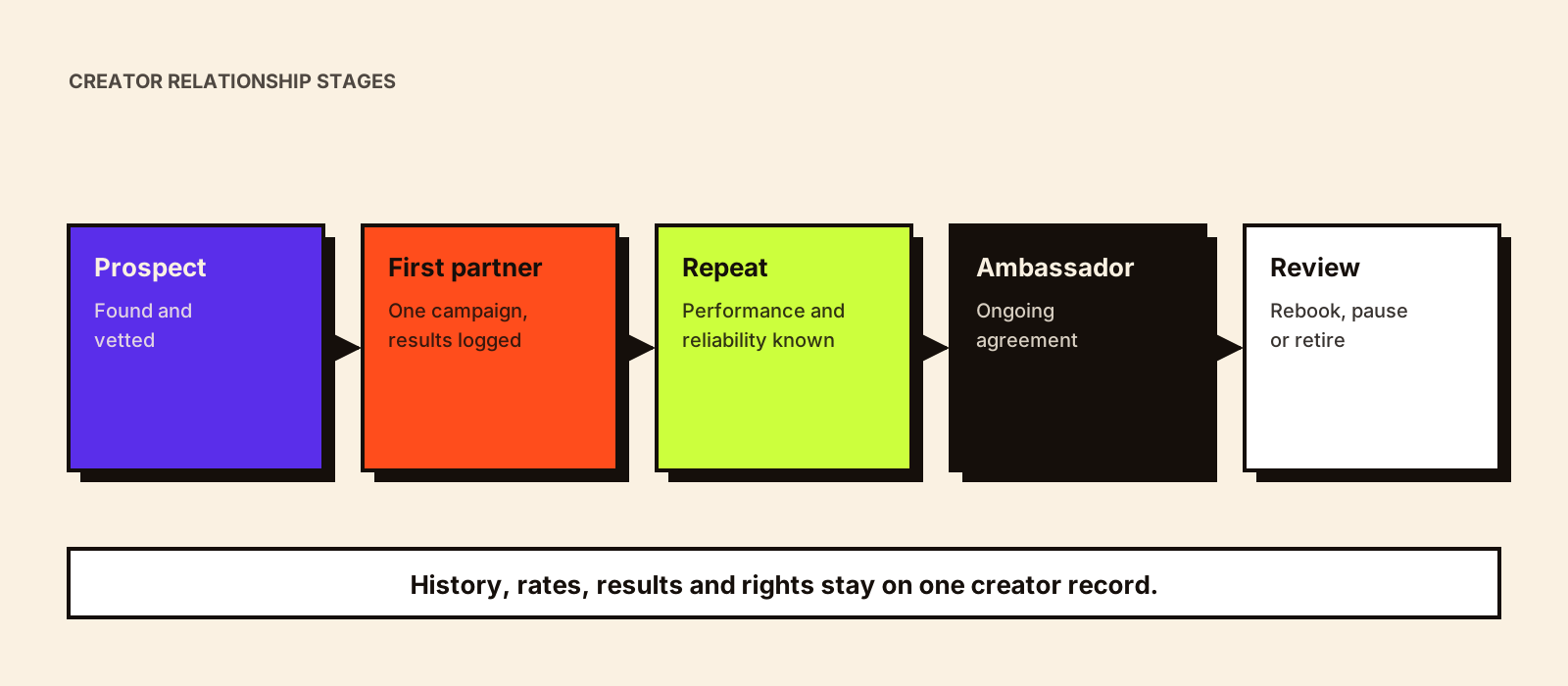
Most brands lose creator knowledge every time a campaign ends. The person who ran it moves on, the WhatsApp group goes quiet and the spreadsheet sits in someone's drive. Next quarter, the team contacts the same creators from scratch, renegotiates rates it already knew and occasionally rebooks someone who missed every deadline last time. An influencer CRM fixes that by treating creators as relationships with a history, not names on a campaign list.
Quick answer
An influencer marketing CRM is a system for managing a brand's relationships with creators over time. It should track who each creator is (handles, languages, regions, category, contacts and manager), every interaction, every campaign they've done with you, what they were paid, how they performed, how reliable they were, what rights you hold to their content and whether you'd work with them again. It differs from a creator database (who exists) and a campaign tracker (what's happening now) by holding the history that informs future decisions.
If you're a creator looking for a CRM to manage brand deals, see creator CRM, which is written for that side of the relationship.
CRM vs database vs campaign tracker
| Creator database | Influencer CRM | Campaign tracker | |
|---|---|---|---|
| Question it answers | Who could we work with? | Who have we worked with, and how did it go? | What's the status of this campaign? |
| Main records | Creator profiles and audience data | Creators, contacts, interactions, campaign history, rights | Creator participation in one campaign |
| Time horizon | Present | Past and future | Now, until campaign ends |
| Typical owner | Discovery or strategy | Programme lead | Campaign manager |
In practice, many teams run all three in one system with linked records. The distinction still matters because it tells you what data to keep and who maintains it. Influencer database covers the discovery side.
What should an influencer CRM track?
| Area | Fields |
|---|---|
| Identity | Name, handles per platform, profile links, primary and secondary languages, city and state, categories |
| Contacts | Business email, phone (only if shared for work), manager or agency, preferred channel |
| Relationship | Stage, owner on your team, first contact date, last contact date, notes on preferences (formats, topics they won't cover) |
| Commercial | Rates quoted by deliverable and date, fees paid, payment terms, GST/TDS details held by finance |
| History | Campaigns, deliverables, dates, links to live content |
| Performance | Per-campaign results with capture date: views, engagement, clicks, conversions, cost metrics |
| Reliability | On-time drafts, revision rounds, brief adherence, communication quality (simple 1–5) |
| Rights and exclusivity | Usage rights held, expiry dates, whitelisting permissions, exclusivity periods |
| Risk | Brand-safety notes, disclosure compliance, any issues |
| Next step | Rebook, ambassador candidate, pause, do not rebook (with reason) |
Usage rights and exclusivity are the fields most often missing and most often regretted. Without expiry dates, brands either stop using good content too early or keep running it in ads after rights have lapsed. Influencer usage rights explains what to record.
Relationship stages
PROSPECT ........ Identified, not contacted
CONTACTED ....... Outreach sent, awaiting response
IN DISCUSSION ... Interested; rates or fit being discussed
FIRST PARTNER ... One completed collaboration
REPEAT PARTNER .. Two or more; performance and reliability known
AMBASSADOR ...... Ongoing agreement (retainer or programme)
PAUSED .......... Good relationship, not active now
DO NOT REBOOK ... With a recorded reason
Moving creators from first partner to repeat partner to ambassador is where a CRM pays for itself. You can see who performed and was easy to work with, and approach them before competitors do. How to build a long-term influencer partnership programme covers the commercial side, and brand ambassador programme covers structured ongoing arrangements.
Relationship habits a CRM should support
- Post-campaign note within a week: what worked, what didn't, would we rebook.
- Quarterly review of repeat partners: performance trend, audience changes, rate changes.
- Light-touch contact between campaigns for top creators: product launches, early access, a thank-you when their content performs.
- Feedback to creators: sharing results with them builds trust and better future content.
- Clear ownership: every active relationship has a named person on your side.
Spreadsheet, general CRM or influencer software?
| Option | Good for | Limitations |
|---|---|---|
| Structured spreadsheet | Under ~50 active creators, one or two people | No interaction history, weak access control, breaks with multiple editors |
| Database or project tool with linked records | Growing teams that want flexibility and automations | You design and maintain the structure |
| General sales CRM | Brands already using one company-wide | Built for sales pipelines; needs customisation for deliverables, rights and performance |
| Influencer marketing software with CRM features | Many creators, multiple campaigns, need for discovery and reporting in one place | Cost; data structure set by vendor; check export |
Whichever you pick, make sure performance and rights live on the creator record, not in separate reports. For a full feature checklist, see influencer marketing software.
Creator data is personal data
A CRM holds creators' personal information: names, contact details, payment details, sometimes notes about them. Under India's data protection framework, with most business obligations from the DPDP Rules applying by May 2027, brands should collect only what they need, restrict who can see payment and identity documents, keep notes factual and professional, and be able to correct or delete a creator's data on request. A good rule: never write anything in a CRM note you'd be uncomfortable with the creator reading.
Set it up in a week
DAY 1: Agree the fields and relationship stages above. Decide what stays out (personal notes, unneeded IDs).
DAY 2: Pick the tool. Create creator, contact and campaign-participation records, linked.
DAY 3: Import creators from the last 12 months of campaigns. De-duplicate by profile URL.
DAY 4: Backfill fees, deliverables and results for each past campaign, with dates.
DAY 5: Add rights and exclusivity expiry dates for content still in use.
DAY 6: Assign an owner to every active relationship. Set the post-campaign note rule.
DAY 7: Review with the team. Retire old trackers or mark them read-only.
An example creator record
Creator: [name] · Instagram + YouTube · Hindi and English · Jaipur (audience: Rajasthan 41%, Delhi NCR 18% per creator insights, 2026-08)
Category: home cooking, budget kitchen tools · Tier: micro
Manager: none · Preferred channel: email
Stage: Repeat partner · Owner: [team member]
History: 2 campaigns (Mar 2026 Reel + Stories; Aug 2026 YouTube integration)
Rates: Reel ₹[x] (quoted 2026-07) · YouTube integration ₹[y] (paid 2026-08)
Results: Aug 2026, 7-day views [n], CPE [n], 63 orders via code
Reliability: 5/5 drafts on time · 1 revision round each
Rights: Aug video licensed for paid ads until 2027-02-28
Notes: prefers recipe-led integrations; declines weight-loss claims
Next step: ambassador candidate, Q1 2027 review
Every figure has a date, every rights entry has an expiry and the note tells the next person something useful.
How to tell if your CRM is working
- Rebooking decisions are made from the record, not from memory.
- Rate negotiations start from dated history.
- No content is used in ads after its rights expire.
- A new team member can see the full history of any creator in minutes.
- Post-campaign notes exist for most bookings.
Common mistakes
- Treating the CRM as a contact list without performance or reliability history.
- Recording rates without dates, so old prices mislead negotiations.
- No usage-rights expiry dates.
- Interactions spread across personal WhatsApp chats that never reach the CRM.
- Nobody owns data quality, so the CRM slowly becomes unreliable.
A creator performance scorecard gives the CRM a consistent record of how each collaboration went.
The CRM holds the records; influencer relationship management covers the habits that make creators want to keep working with you.
The CRM holds long-term creator history; influencer campaign documentation covers the campaign files it draws from.
Conclusion
An influencer CRM turns one-off campaigns into an asset: a growing record of which creators fit, perform and are good to work with. Track identity, contacts, history, performance, reliability and rights on one creator record, give each relationship an owner and review your best partners regularly. That history is what makes the next campaign faster and the best creators more likely to say yes. For keeping the CRM up to date automatically, see influencer outreach automation and influencer campaign automation.