Influencer Marketing Data Privacy: How Brands Should Handle Creator and Audience Data in India
A practical guide to creator and audience data under India's DPDP Act and Rules: what personal data campaigns collect, who is responsible when an agency is involved, access, retention and deletion, breaches, giveaways and lead forms, and a governance checklist.
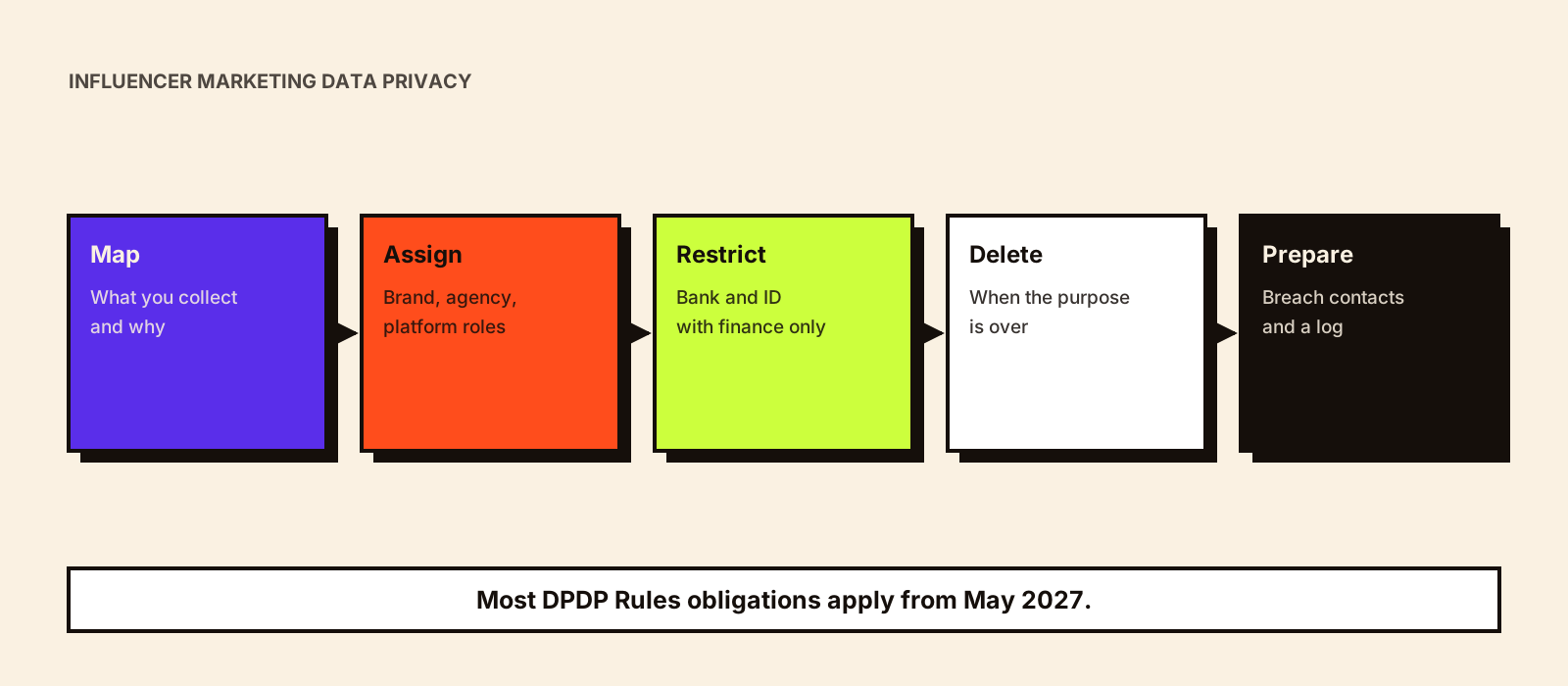
Influencer marketing runs on personal data: creators' phone numbers, addresses, PAN and bank details, and sometimes data about their audiences from giveaways and lead forms. It's usually scattered across spreadsheets, inboxes, WhatsApp groups and agency tools. India's Digital Personal Data Protection (DPDP) Act, 2023 and the DPDP Rules, 2025 make that harder to ignore. This guide explains the practical steps for marketing teams. It's general information, not legal advice.
Quick answer
Treat creator and audience data as personal data. Collect only what each purpose needs, decide in writing who controls it when an agency is involved, restrict access to sensitive items such as bank and identity details, delete data when the purpose is over (keeping what other laws such as tax rules require), and know who does what if there's a breach. Most DPDP Rules obligations apply 18 months after the Rules were notified in November 2025, so May 2027, but building the habits now costs little.
What the law says, briefly
| Topic | What the Act and Rules require | Timing |
|---|---|---|
| Notice and consent | A clear, standalone notice of what data is collected and why; consent can be withdrawn | Rule 3 applies from May 2027 |
| Security safeguards | Measures such as encryption or masking, access control, logs and monitoring, backups, and security terms in contracts with data processors; logs kept for a year | Rule 6 applies from May 2027 |
| Breaches | Tell affected people without delay; tell the Data Protection Board without delay, with a detailed report within 72 hours | Rule 7 applies from May 2027 |
| Rights requests | Access, correction, update and erasure requests answered within 90 days | Rule 14 applies from May 2027 |
| Children | Verifiable consent from a parent or guardian | Rule 10 applies from May 2027 |
| Penalties | Up to ₹250 crore for failing to take reasonable security safeguards; up to ₹200 crore for breach-notification and children's data failures | Under the Act |
Sources: the DPDP Act, 2023, the DPDP Rules, 2025 (Rules 3, 5 to 16 and 22 to 23 apply 18 months after publication) and the government's November 2025 backgrounder on the Rules. Check the current position with counsel, as guidance may follow.
The personal data campaigns collect
| Data | Purpose | Sensitivity | Who needs access |
|---|---|---|---|
| Creator name, handle, email, phone | Outreach and coordination | Medium | Campaign team |
| Shipping address | Sending product | Medium | Whoever ships, for that shipment |
| PAN, GST number, bank details | Payments and tax | High | Finance only |
| Signed contracts and ID documents | Agreements, sometimes verification | High | Legal and finance |
| Audience demographics screenshots | Vetting | Low to medium (aggregate) | Campaign team |
| Giveaway entries and winner addresses | Running the contest and delivering prizes | Medium | Contest operator only |
| Leads from creator links or forms | Sales follow-up | Medium | Sales and CRM owners |
| Minors' data (child creators, young entrants) | Contracts, contests | High | As few people as possible |
Creator databases and CRMs hold most of this; see the data sections of influencer marketing CRM and influencer database.
Brands, agencies and creators: who is responsible
The Act separates the Data Fiduciary, which decides why and how personal data is processed, from the Data Processor, which processes it on the fiduciary's behalf under a contract. In creator campaigns the roles depend on the facts, so write them down rather than assume.
| Situation | Typical arrangement to agree | Put in the contract |
|---|---|---|
| Agency runs outreach and payments for a brand | Agency processes creator data on the brand's instructions, or acts for its own purposes for its own roster | Purpose, security, sub-processors, deletion at the end, breach notice to the brand |
| Creator runs a giveaway for the brand | Agree who collects entries, who picks winners and who holds addresses | Notice wording, data shared only for delivery, deletion after delivery |
| Creator sends leads to the brand's form | The brand collects through its own form and notice | No lists passed by creators; tracked links instead |
| Brand uses an influencer platform | Platform processes data under its terms | Check where data is stored, access controls and deletion |
Access, retention and deletion
- Keep bank and identity details in finance systems, not campaign trackers or chat groups.
- Use shared folders with named access, and remove people when they leave the team or the agency relationship ends.
- Set a retention period per data type. Payment and tax records are kept for as long as tax law requires; shipping addresses and giveaway entries can usually go once delivery is done.
- Delete or anonymize records of creators you no longer work with, unless you have a reason and a legal basis to keep them.
- Keep a log of who accessed sensitive records; the Rules expect logs to be kept for a year.
What to keep on file after a campaign is covered in influencer campaign documentation.
Giveaways, contests and lead forms
Contests create the riskiest audience data, because entries arrive through creators' comments and DMs. Collect winner details through a form that carries your notice, ask only for what's needed to deliver the prize, and delete it once delivered. Don't ask creators to forward lists of entrants or followers. If a contest may attract children, plan for parental consent or exclude minors. Creator giveaway rules and disclosure are covered in influencer marketing compliance.
If something goes wrong
- Name one person who decides whether an incident is a personal data breach (for example, a payment sheet shared in a public link).
- Contain it first: revoke links, change passwords, remove access.
- Agencies and vendors should tell you immediately, so you can meet the notification timelines.
- Tell affected creators what happened and what they should do, in plain language.
- Record what happened and what changed, in the campaign incident log.
Before you track a campaign
- Collect only what you need: creator links and codes rarely need any personal data in the URL. Never put names, emails or phone numbers in UTM values.
- Check consent for analytics and advertising cookies and pixels in each market you target, before creator traffic arrives.
- Give contests, giveaways and lead forms a clear notice of what's collected and why, and how long it's kept.
- Decide who can access creator and audience data, and remove access when people or agencies change.
- Set retention periods and delete data you no longer need.
- Check vendors (tracking tools, platforms, agencies) through data processing terms and security questions.
- Don't build ad audiences from data creators share about their followers.
Tracking setup is covered in influencer UTM tracking, and consented follow-up in influencer retargeting.
Outside India
| Market | Main law and regulator | Note for creator campaigns |
|---|---|---|
| UAE | Federal Decree-Law No. 45 of 2021 (Personal Data Protection Law), in force from 2 January 2022; DIFC has its own data protection law | Processing generally needs consent unless an exception applies; check free-zone rules where relevant |
| Saudi Arabia | Personal Data Protection Law, overseen by SDAIA | Take local advice on consent and cross-border transfers |
| United Kingdom | UK GDPR, the Data Protection Act 2018 and PECR, overseen by the ICO | Advertising cookies need consent; the ICO's April 2026 guidance sets the limited exceptions |
| Singapore | Personal Data Protection Act (PDPA), overseen by the PDPC | Do Not Call rules apply to marketing messages to Singapore numbers |
| Australia | Privacy Act 1988, overseen by the OAIC | Check obligations for collecting and using personal information in contests and lead forms |
Sources: the UAE government's page on data protection laws, SDAIA's Personal Data Protection Law, the ICO's UK GDPR guidance, the PDPC's PDPA overview and the OAIC's Privacy Act page. These are summaries for planning, not legal advice.
A governance checklist
1. Data map: what we collect, why, where it lives
2. Roles: brand, agency, platform, creators (in contracts)
3. Notices: outreach, contracts, giveaways, lead forms
4. Access: finance-only fields, named folder access, leaver process
5. Retention: period per data type, deletion owner
6. Vendors: security and deletion terms, breach notice
7. Children: parental consent or exclusion
8. Requests: who answers access, correction and erasure requests (90 days)
9. Breach: decision-maker, contacts, log
10. Review: twice a year, and before May 2027
Common mistakes
- Bank details and PAN in the same sheet as outreach notes.
- WhatsApp groups as the main record of creator details.
- Creators forwarding entrant lists to the brand.
- No deletion date for anything.
- Agency contracts that say nothing about data.
Conclusion
Good data governance in influencer marketing is mostly ordinary discipline: know what you hold, keep sensitive details with finance, agree roles with agencies and creators, delete what you no longer need, and plan for mistakes. The DPDP timetable gives teams until May 2027 for most obligations. Wider policies for creator programs are in influencer marketing governance.