How to Connect Influencer Campaigns With Retargeting and Follow-Up Marketing
Most people who see a creator's post don't buy that day. How to build retargeting audiences from creator traffic and engagement lawfully, what to show them, how to follow up by email and WhatsApp with consent, and how to measure it without double counting.
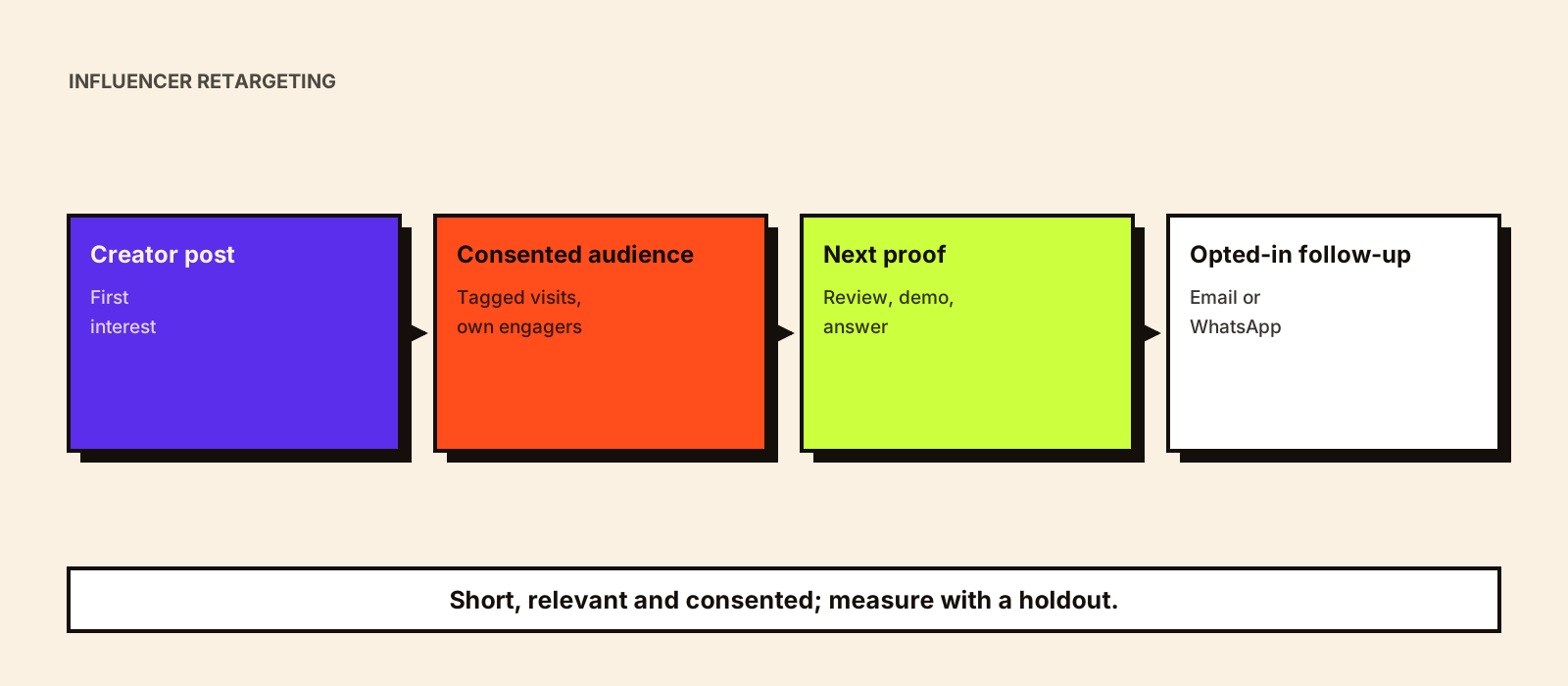
A creator's post is often the first time someone hears about a brand. They visit, look around and leave. Retargeting and follow-up give them a second, relevant reason to come back. Done badly, it follows people around with the same discount for weeks. Done well, it continues the conversation the creator started, with consent, in the right channel and for a limited time.
Quick answer
Build retargeting audiences from people who visited your site through creator links (with analytics and advertising consent where it's required), people who engaged with content on your own social accounts, and customers who've opted in. Show them creator content that answers the next question, such as a review, demo or comparison, rather than repeating the same ad. Follow up by email or WhatsApp only with opt-in. Cap frequency and duration, exclude recent buyers, and measure with a holdout so you don't credit retargeting for sales the creator already caused.
Paid amplification vs retargeting
| Paid amplification | Retargeting and follow-up | |
|---|---|---|
| Audience | New people who haven't seen the creator | People who already engaged, visited or opted in |
| Goal | More reach for proven creator content | Bring interested people back to complete an action |
| Content | The best-performing creator posts | The next piece of proof: reviews, demos, FAQs, offers |
| Main risk | Paying for reach that doesn't convert | Annoying people; consent and privacy breaches |
Running creator content as ads to new audiences is covered in influencer performance marketing.
Audiences you can build
| Audience | How it's built | Check before using |
|---|---|---|
| Creator-link visitors | Site visitors from tagged creator links, via your analytics and ad pixels | Cookie and advertising consent where required; tags that identify the creator source |
| Product viewers and cart abandoners | Visitors who viewed a product or added to cart after arriving from creators | Same consent; exclude people who bought |
| Social engagers | People who engaged with content on your own Instagram or Facebook accounts, using the ad platform's engagement audiences | Which sources Ads Manager offers for your content; whether engagement with partnership ads is available as a source in your account |
| Opted-in contacts | Email or WhatsApp subscribers who joined through a creator offer | Proof of opt-in; the creator source recorded on the record |
| Customer lists | Uploaded lists of existing customers, for exclusion or cross-sell | A lawful basis to use the data; opt-outs removed |
Meta's Custom Audience terms require advertisers to have the rights, permissions and lawful basis for audience and customer-list data, and to remove people who have opted out. Tagging creator links properly is covered in influencer UTM tracking.
Consent and privacy
- UK: advertising and retargeting cookies need consent; the ICO's April 2026 guidance on storage and access technologies keeps advertising outside the new consent exceptions.
- India: the Digital Personal Data Protection Act and Rules require clear notice and consent for personal data, with obligations phasing in; targeted advertising directed at children isn't allowed. Review consent flows with counsel.
- UAE, Saudi Arabia, Australia and Singapore have their own data protection laws; take local advice before building audiences from personal data.
- Don't build audiences from data creators share about their followers, and don't ask creators to collect contact details on your behalf without a proper notice and consent.
These notes are general information, not legal advice. See the ICO's storage and access guidance for the UK position.
What to show, and for how long
| Where they stopped | Next message | Window (starting point to test) |
|---|---|---|
| Watched the creator video, didn't visit | A second creator's demo or review of the same product | Up to two weeks |
| Visited, didn't view a product | Creator content showing the bestseller in use | One to two weeks |
| Viewed a product | A review or comparison answering the main objection | One to two weeks |
| Added to cart | Delivery, returns and the creator's offer, if still valid | A few days |
| Bought | Exclude from acquisition ads; show how-to content for retention | Ongoing, by opt-in |
- Cap frequency, and stop sooner if the audience is small and people see the same ad repeatedly.
- Use creator content only within the usage rights you agreed, including paid use and duration.
- Keep the creator's offer consistent: don't retarget with a deeper discount than the creator's audience got.
- Keep disclosure visible when creator content runs as an ad.
Usage terms for paid reuse are covered in influencer usage rights, and disclosure in influencer disclosure rules by platform and country.
Email and WhatsApp follow-up
Owned channels work best for follow-up, because people chose to hear from you. Offer something worth signing up for on the creator's landing page (a guide, a sample, early access), record the creator source on the subscriber, and send a short sequence that continues the creator's story: the product in use, an answer to the common question, then the offer. On WhatsApp, the WhatsApp Business Messaging Policy allows messages only to people who gave you their number and opted in to receive messages from you.
Measuring it honestly
- Report retargeting as its own line, not added to the creator's results; the same buyer can appear in both.
- Hold out part of the eligible audience from retargeting to see how many would have bought anyway.
- Compare cost per incremental order with your other retargeting, not with total attributed sales.
- Track opt-in rate from creator traffic as a result of the campaign in its own right.
Holdouts and incrementality are explained in influencer marketing incrementality, and e-commerce journeys in influencer marketing for e-commerce.
Common mistakes
- Retargeting without consent where it's required.
- Showing the same ad for weeks.
- Not excluding people who already bought.
- Running creator content beyond its licensed use.
- Adding retargeting sales to creator sales and counting buyers twice.
Conclusion
Retargeting turns creator interest into a second chance to convert, if it's consented, relevant and short. Build audiences from tagged creator traffic, your own engagers and opted-in contacts; show the next piece of proof rather than the same ad; follow up by email or WhatsApp only with opt-in; and measure with a holdout.