Influencer Marketing for Performance Marketing: How to Connect Creators With Paid Media
How performance teams and influencer teams work together: organic creator posts vs creator ads, when to use each, choosing creators for paid media, rights and permissions, the content-to-ads pipeline, testing hooks and creators, budgeting creator fees against media, and measuring CAC, ROAS and incrementality.
In many companies the influencer team and the performance team sit next to each other and rarely share a plan. One books creators for reach; the other runs ads and struggles to find fresh creative. Connecting them is one of the highest-value changes a brand can make: creators produce the creative performance teams need, and paid media gives the best creator content reach it would never get organically.
Quick answer
Influencer performance marketing means planning creator work with paid media in mind: choosing creators whose content is likely to perform as ads, agreeing usage rights and ad permissions upfront, running the best organic creator posts as creator ads (such as Instagram partnership ads), testing creators and hooks systematically, and judging the combined program on customer acquisition cost, return on ad spend and incremental lift. Organic sponsored posts still matter for reach, credibility and learning; creator ads matter for scale and targeting.
Organic creator posts vs creator ads
| Organic sponsored post | Creator ad (paid amplification) | |
|---|---|---|
| Who sees it | The creator's followers, as the algorithm allows | Audiences you target, beyond the creator's followers |
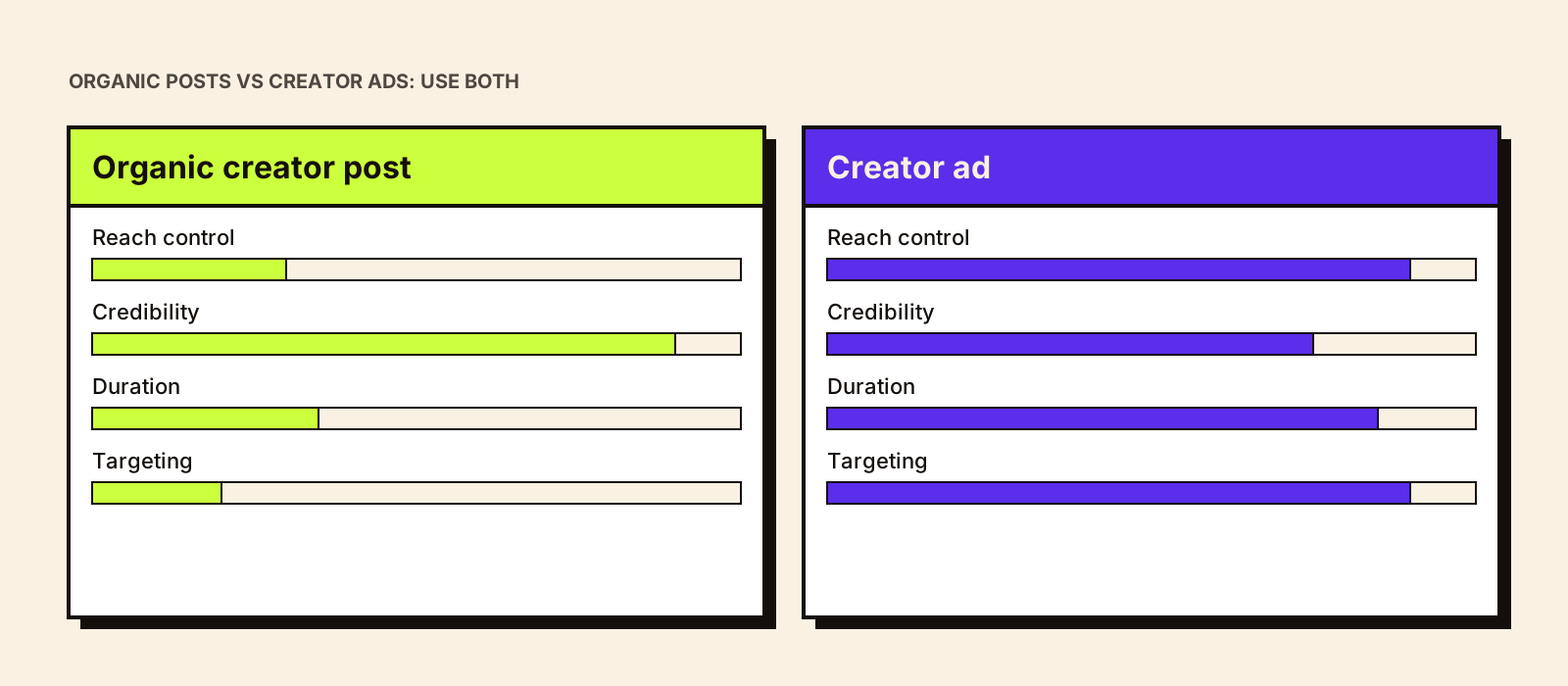
| Reach control | Low | High: budget, targeting, frequency |
| Duration | Mostly the first days after posting | As long as you run and refresh it |
| Cost | Creator fee | Creator fee plus usage fee plus media spend |
| Rights needed | Standard collaboration terms | Paid usage and, for handle-based ads, the creator's permission |
| Best for | Credibility, community response, learning what resonates | Scaling proven content, retargeting, conversion |
Most programs use both: organic posts to learn and earn credibility, creator ads to scale what worked. How Instagram's handle-based format works is explained in Instagram partnership ads, and whitelisting and licensing terms in whitelisting and creator licensing.
Choosing creators with paid media in mind
- Look for creators who explain clearly in the first seconds; hooks matter more in ads than on their own feed.
- Prefer creators whose content style feels native to the placement (Reels, Stories, Shorts).
- Include UGC creators for volume and variants alongside influencers for credibility.
- Check that the creator is comfortable with paid usage, and price it upfront.
- Avoid creators whose audience trust depends on never appearing in ads, if you need heavy amplification.
Rights and permissions, before the brief
| Term | What to agree |
|---|---|
| Paid usage | Platforms, duration, territory, whether edits and cut-downs are allowed |
| Handle-based ads | Permission to run ads through the creator's account, and for how long |
| Raw files | Access to unedited footage for new edits |
| Exclusivity | Whether the creator can promote competitors while your ads run |
| Approval | Whether the creator approves ad copy or edits |
| Fees | Usage fee separate from the content fee |
Rights pricing is covered in influencer usage rights.
The content-to-ads pipeline
1. Creator posts go live organically
2. After a few days, compare early signals: hold rate, saves, comments, clicks
3. Shortlist top posts; confirm rights and permissions are in place
4. Performance team launches them as creator ads with a test budget
5. Make variants: new hooks, cut-downs, captions, calls to action
6. Scale winners; pause losers; refresh before fatigue
7. Feed learnings back into the next creator brief
The editing and reuse side is covered in how to repurpose influencer content, and structured creative testing in UGC for paid social.
Budgeting creators and media together
| Budget line | Purpose |
|---|---|
| Creator content fees | Making the content |
| Usage and permission fees | Right to run it as ads |
| Test media | Finding which creators and hooks work |
| Scale media | Spending behind proven winners |
| Production of variants | Editing, cut-downs, new hooks |
The split depends on how much creative you need and how much media you can efficiently spend. Brands that spend heavily on creators but nothing on amplification often leave their best content under-seen; brands that spend heavily on media with too few creators hit creative fatigue quickly.
Measuring the combined program
| Level | Metrics |
|---|---|
| Creative | Hook and hold rates, click-through, cost per result by creator and variant |
| Channel | CAC, ROAS, conversion rate from creator ads vs other ads |
| Program | New customers, blended CAC, repeat purchase |
| Incrementality | Holdout audiences or regions, before-after comparisons |
Sales and acquisition measurement is covered in influencer marketing for sales.
Common mistakes
- Deciding to run creator content as ads after the rights conversation is over.
- Judging creators for paid use by follower count instead of creative performance.
- Running one creator ad until it fatigues, with no variants.
- Separate reporting for influencer and performance teams, so no one sees the whole picture.
- Heavy discounts in creator ads that train customers to wait.
Conclusion
Influencer performance marketing works when creator selection, rights, briefs and paid media are planned together. Use organic posts to learn and build trust, creator ads to scale what works, test creators and hooks deliberately, and judge the program on acquisition cost and incremental lift, not follower counts.