Influencer Content Performance: How Brands Can Identify High-Performing Creator Content
How to identify which creator content genuinely performed (by role and against the creator's baseline), analyse why it worked (hook, angle, format, proof, CTA), and what to do with winners: amplify, repurpose, rebrief and rebook.
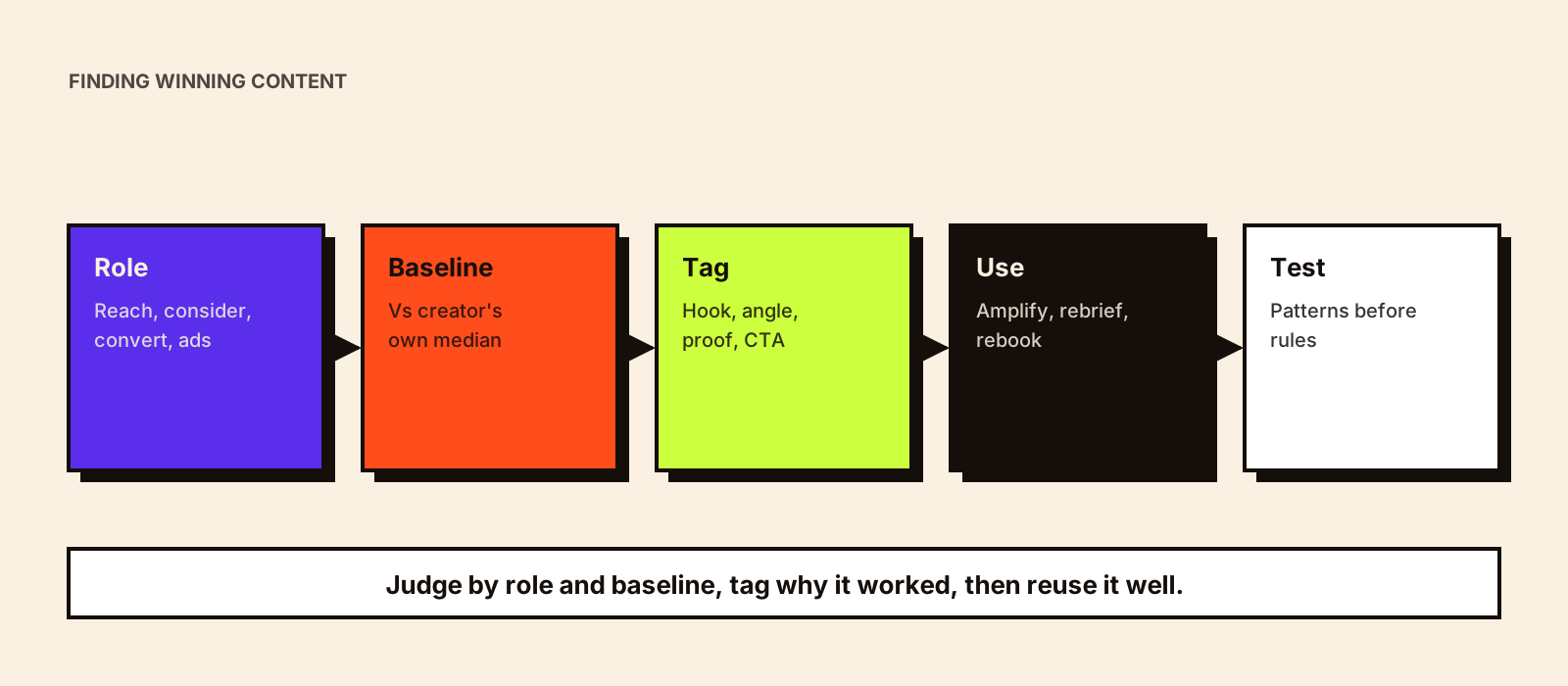
Every campaign has a few posts that clearly outperform the rest. Most brands notice them, maybe boost one, and move on. The bigger value is understanding why they worked, because that's what tells you how to brief, which creators to rebook and which content to put money behind next time.
Quick answer
High-performing creator content is content that did unusually well on the metric that matters for its role, compared with the creator's own baseline and with similar content in the campaign. Identify it with role-specific metrics and fixed capture days, then analyse why it worked by tagging hook, angle, product moment, proof, format, length, language and CTA. Use winners to amplify (with rights), repurpose, rebrief other creators and rebook the creators behind them.
Step 1: Define 'high-performing' for each role
| Content role | Strongest signals | Compare against |
|---|---|---|
| Reach | Views vs the creator's median; reach in target markets | Creator's own recent posts |
| Consideration | Saves, shares, substantive comments per view | Similar creators in the campaign |
| Conversion | Clicks, code use, orders per view; cost per order | Campaign median |
| Content for ads | Paid performance: hook rate, CTR, cost per result | Other creatives in the same ad set |
A post with modest views and many 'where can I buy?' comments may be the best content in a sales campaign. Influencer engagement quality explains how to read engagement properly.
Step 2: Analyse why it worked
Creator · Platform · Format · Length · Language
HOOK: problem / result / question / surprise / trend
PRODUCT MOMENT: first 3 seconds / middle / end
ANGLE: price / results / routine / comparison / story / tutorial
PROOF: demo / before-after / unboxing / testimony / none
TONE: educational / funny / emotional / aspirational
CTA: code / link / comment / none; where placed
RESULT on role metric vs creator baseline (index)
With a dozen or more posts tagged, patterns appear: perhaps posts that show the product within the first few seconds and include a demo consistently beat those that don't. Treat patterns from small samples as hypotheses to test, not rules. Influencer data analytics covers content and cohort analysis more broadly.
Questions to ask about a top post
- What happens in the first three seconds?
- When does the product appear, and how?
- Is there a clear, specific problem the product solves?
- Is there proof (a demo, a result, honest pros and cons)?
- What did the audience say in comments?
- Was it the creator's usual style, or something different?
- Did timing or a trend help?
- Would it work for a different creator, or is it about this creator's credibility?
The last question matters. Some content wins because of a format anyone can use; some wins because one creator's audience trusts them on the topic. The first suggests a brief change; the second suggests a rebooking.
Step 3: Use the winners
| Action | When | Check first |
|---|---|---|
| Amplify as a partnership ad | Strong organic engagement and fit with paid goals | Paid usage rights and permission in place |
| Repurpose on your channels | Content fits your feed or website | Usage terms; credit the creator |
| Rebrief other creators | A pattern that others can adapt in their own style | Share as insight, not a script |
| Rebook the creator | Performance came from their credibility and fit | Scorecard; availability; fair terms |
| Test the pattern | You're not sure the pattern holds | Design a small test |
Using creator content in ads is covered in UGC whitelisting and creator licensing, rights in influencer usage rights and testing in influencer marketing testing.
Organic winners vs paid winners
Content that does well organically doesn't always do well as an ad, and the reverse. Organic performance reflects the creator's relationship with their audience; paid performance reflects how the content works for strangers. If you plan to run creator content as ads, test several pieces in paid before scaling. UGC for paid social covers creative testing in ads.
Hypothetical example
Hypothetical: of 18 Reels in a skincare campaign, four stand out on saves and code use. Tagging shows all four open with the creator's skin concern, show application in the first five seconds, and are in Hindi or Tamil rather than English. The next brief suggests (not mandates) opening with a personal concern and showing the product early, and the next shortlist adds more Hindi and Tamil skincare creators. Two of the four winning creators are rebooked for a series.
Common mistakes
- Calling the post with the most views the winner, regardless of objective.
- Comparing a macro creator's views with a micro creator's.
- Copying a winning post's script into other briefs, losing what made it authentic.
- Boosting content without paid usage rights.
- Drawing rules from three posts.
Conclusion
Identify winning content by role and against each creator's baseline, tag what it did, ask why it worked, and use it: amplify with the right rights, rebrief others with insight rather than scripts, rebook the creators behind it and test patterns before treating them as rules.