Influencer Campaign Mid-Flight Optimization: What Brands Can Change While a Campaign Is Live
What brands can realistically change during a live creator campaign, organised by stage (before production, before publishing, after publishing) and by what needs creator approval, with early signals to watch and a mid-campaign checklist.
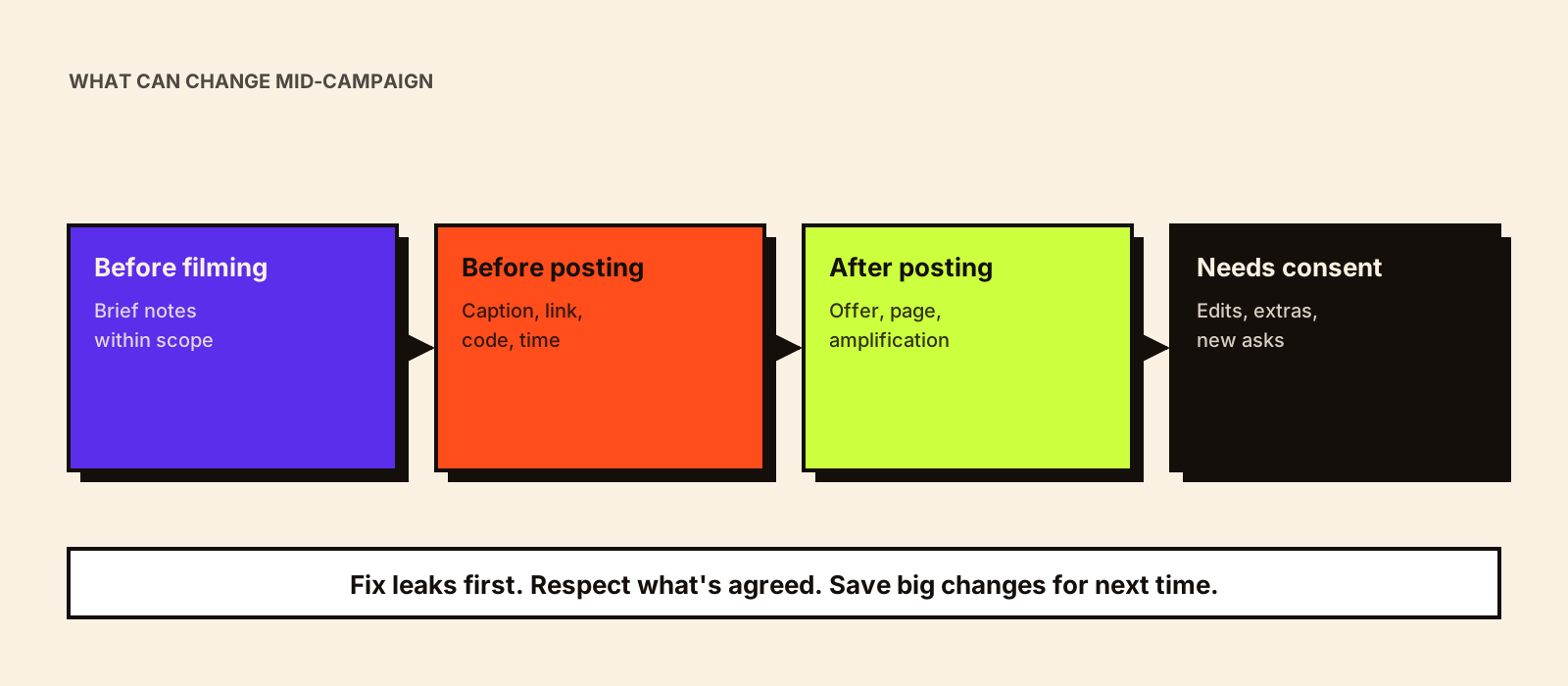
The first creator posts are live. One Reel is clearly working; two are quiet; ten creators haven't posted yet. This is the most useful moment in a campaign, because there's real evidence and still room to act. It's also when brands most often overreach, asking creators to reshoot published content or changing briefs in ways their agreements don't cover.
Quick answer
While an influencer campaign is live, brands can usually change the offer, links, codes, landing pages and stock; amplify strong posts where usage rights allow; shift remaining budget and reserve slots towards what's working; and give creators who haven't produced yet better brief notes based on early results. Changes to content that's already approved or published, extra deliverables or new requirements need the creator's agreement and often extra payment. Act on early signals, but don't judge slower-building formats too soon.
What can change, by stage
| Stage | Usually possible | Needs creator agreement |
|---|---|---|
| Before production (creator hasn't filmed) | Brief notes and emphasis within the agreed scope; hooks and angles suggested from early winners; product variant | New mandatory points, different concept, extra deliverables |
| Before publishing (draft approved, not live) | Caption, link, code, posting time within window | Re-editing or reshooting approved content |
| After publishing | Brand-side: offer, landing page, stock, replies to comments, amplification (with permission) | Editing the live post (beyond fixes for errors or compliance), adding Stories or reposts |
| Campaign level | Budget for unbooked or reserve creators; go-live order within windows; paid budget | Moving agreed go-live dates; cancelling booked creators (follow agreement terms) |
Compliance fixes (disclosure, unapproved claims) are always required, at any stage. Everything else should respect what was agreed. Creator non-compliance and influencer revision policy cover those boundaries.
Early signals worth watching
| Signal | Available | What it suggests |
|---|---|---|
| Views relative to the creator's usual | Within a day or two (creator insights) | Whether distribution and hook worked |
| Saves and shares per view | Within a day or two | Whether content is useful or worth passing on |
| Comment themes | Immediately | Interest, questions, objections |
| Link clicks | Same day (your analytics) | Whether the CTA works |
| Click-to-order rate | Within days | Whether the landing page and offer convert |
| Code use | Within days | Purchase intent from the creator's audience |
Compare against each creator's own baseline rather than across creators of different sizes. Long-form YouTube content and searchable posts can keep building for weeks, so give them longer before deciding. Influencer content performance covers reading these signals in more depth.
Practical mid-flight moves
Fix leaks first
Before changing anything creative, check what's on your side: broken links, expired codes, slow or wrong landing pages, out-of-stock variants, delivery not available in the regions creators reach. These are the fastest fixes and often the biggest.
Feed early learnings to creators who haven't produced yet
If posts that show the product in the first few seconds or answer a specific question perform better, share that as a suggestion with creators still in production, framed as optional insight, not a new requirement. Most creators appreciate useful data.
Amplify what works
Strong organic posts can be boosted as partnership ads where the creator has granted permission and usage terms allow. Check the agreement first; paid usage often has its own fee and duration. Influencer marketing for performance marketing and Instagram's partnership ad permissions explain how this works.
Rebalance remaining budget
If you kept reserve budget or slots, use them for the creator types, regions or formats that are working. Don't cancel booked creators to do it unless the agreement allows and you honour its terms.
Answer the audience
If comments keep asking the same question (price, suitability, delivery), answer from the brand account, add it to the landing page and mention it in remaining briefs.
Mid-campaign optimization checklist
LEAKS
□ Links and codes working for every live post
□ Landing page loads fast on mobile; right language; right product
□ Stock and delivery available in the regions creators reach

SIGNALS
□ Each live post compared with that creator's usual performance
□ Saves, shares and comment themes reviewed
□ Clicks and orders by creator checked

ACTIONS
□ Standout posts identified; amplification permissions and usage checked
□ Optional insights shared with creators still in production
□ Recurring audience questions answered and added to briefs/FAQ
□ Reserve budget or slots allocated to what's working
□ Compliance checked on every live post

GUARDRAILS
□ No changes to approved/published content without creator agreement
□ No new requirements without discussing scope
□ Decisions recorded with the reason
Hypothetical example
Hypothetical: a D2C footwear brand's first five Reels are live. Two Hindi creators' posts are drawing strong saves and code use; a Marathi creator's post has good views but almost no clicks. The team finds the Marathi creator's link went to the English homepage instead of the sale page, and fixes it. It shares a note with the eight creators still filming that showing the shoe on wet roads drew the most questions, and boosts the two strongest posts as partnership ads under the usage already agreed. No published content is touched.
Common mistakes
- Asking creators to edit or reshoot published posts because numbers are low.
- Judging slow-building formats in the first 24 hours.
- Changing the brief for creators already filming without discussing scope.
- Boosting content without paid usage rights.
- Optimising creative when the problem is the landing page.
Conclusion
Mid-campaign optimization works when it's realistic: fix brand-side leaks first, share early learnings with creators still in production, amplify what works within the rights you have, and move remaining budget towards the strongest segments. Respect what was agreed, and keep the bigger changes for the next campaign. Influencer campaign optimization covers the full cycle.