Creator Revision Policy: How Brands Can Set Clear Rules for Content Changes
How to set fair, clear rules for creator content revisions: what counts as a revision vs a reshoot vs a scope change, how many rounds to agree, turnaround times, when extra changes are paid, handling revisions without friction and a policy you can copy.
'Just one more small change' is how a two-round revision agreement becomes five rounds and a reshoot. Most revision disputes aren't about bad faith; they come from never defining what a revision is, how many are included and what happens when the brand changes its mind. A short, written policy fixes that before anyone picks up a camera.
Quick answer
A creator revision policy sets out how many rounds of changes are included (two is common for paid work), what counts as a revision (changes to bring content in line with the agreed brief, claims or disclosure), what doesn't (new requirements, a different concept or a reshoot caused by brand changes), turnaround times on both sides, and what happens beyond the included rounds (extra fee or agreed time). Put it in the agreement or brief, and apply it consistently.
Revision, reshoot or scope change?
| Type | Example | Included? |
|---|---|---|
| Edit | Change caption wording, fix a link, adjust on-screen text, trim a section | Yes, within rounds |
| Re-record a line | Correct a claim to approved wording; fix mispronounced product name | Usually yes, within rounds |
| Compliance fix | Add or move disclosure; remove unapproved claim | Yes, always (doesn't count against rounds if the brief was clear) |
| Reshoot due to creator error | Product shown wrongly; brief mandatory point missed | Yes, within reason |
| Reshoot due to brand change | New messaging, new product, different concept after filming | No: scope change, discuss fee and time |
| Taste-based change | 'Try a different background', 'more energy' | Optional; creator may decline |
| New deliverable | An extra Story or cut-down version | No: additional work |
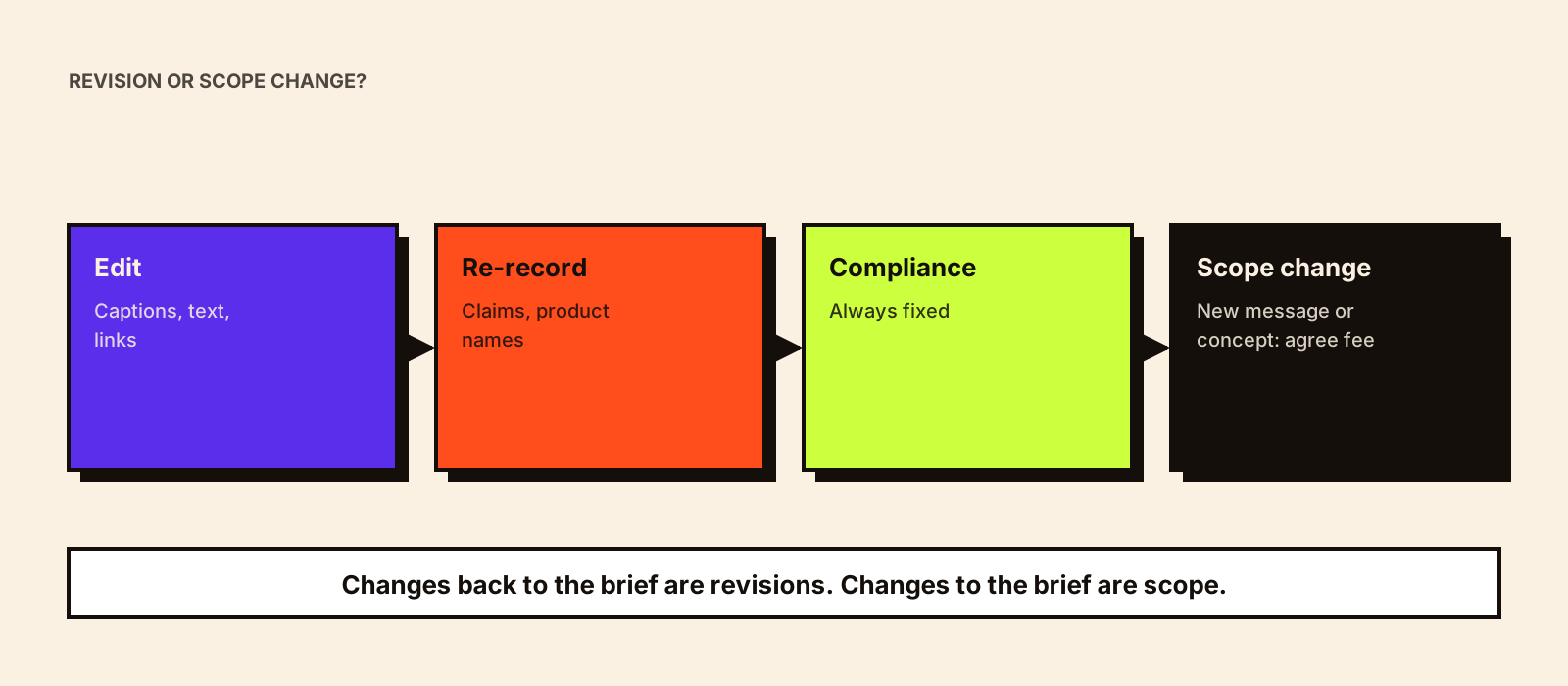
The key distinction is whose change it is. Changes that bring content back to what was agreed are revisions. Changes to what was agreed are scope changes.
How many rounds?
- Two rounds of revisions is a common default for paid creator content.
- Simple gifted or seeding posts often have none: the brand checks only compliance.
- Complex or regulated content may warrant a concept round before filming plus two rounds after.
- UGC for ads may have more structured rounds, priced into the fee.
Whatever you choose, agree it in writing before production, alongside fees and usage. Influencer payment terms and influencer marketing contract cover where it sits in the agreement.
Turnaround times, both ways
| Who | Commitment | Example |
|---|---|---|
| Brand | Consolidated feedback after each submission | Within 2 working days |
| Creator | Revised version after feedback | Within 2–3 working days |
| Brand | Final approval after last revision | Within 1 working day |
If the brand misses its turnaround, the creator's deadlines should move accordingly. A policy that only binds creators isn't fair and won't be respected.
A revision policy you can copy
INCLUDED: [2] rounds of revisions per deliverable, to align content with the agreed brief, approved claims and disclosure requirements.

A REVISION IS: edits to captions, text, links or cuts; re-recording lines to correct claims or product details; fixing missed mandatory points.

NOT A REVISION: new messages or products added after filming; a different concept; additional deliverables. These are scope changes and will be agreed separately (fee and/or time).

COMPLIANCE: disclosure and claims corrections are always required and don't count against rounds where the brief was clear.

TIMING: Brand feedback within [2] working days of each submission; creator revisions within [3] working days of feedback; if brand feedback is late, creator deadlines move by the same amount.

FEEDBACK: one consolidated message per round from [reviewer name], separating must-change items from optional suggestions.

EXTRA ROUNDS: beyond the included rounds, by agreement at [₹ / % of fee] or as agreed.
Handling revisions without friction
- Freeze the brief before filming; most extra rounds come from late changes.
- Use a concept or outline stage for complex content, so direction is agreed before production.
- Send consolidated, specific feedback with timestamps; see influencer feedback.
- Label suggestions as optional and respect a creator's choice to keep their version.
- If you need a scope change, say so plainly and offer fair compensation or time.
- Thank creators for quick turnarounds; it's noticed.
Influencer feedback covers writing the comments themselves, and influencer content approval covers the workflow revisions sit inside.
When revisions keep going wrong
| Pattern | Likely cause | Fix |
|---|---|---|
| Many creators miss the same point | Brief unclear | Rewrite that part of the brief |
| Every draft needs claims fixes | Approved wording not shared clearly | Give exact wording; concept stage |
| Third and fourth rounds common | Several reviewers; late brief changes | One reviewer; freeze brief |
| One creator always needs reshoots | Fit or reliability issue | Note on scorecard; reconsider for future |
The creator's view
Creators often publish their own revision terms, and many will push back on unlimited changes. That's reasonable: their time and creative voice are what you're paying for. Creator-side guidance on this, including how creators protect creative control, is in brand content approval and revisions for creators.
Common mistakes
- No defined number of rounds.
- Calling scope changes 'revisions'.
- Turnaround rules that apply only to creators.
- Taste-based changes presented as requirements.
- Feedback from multiple people each counting as a round.
Conclusion
A clear revision policy defines what's included, separates revisions from scope changes, sets turnaround times for both sides and prices extra work fairly. Agree it before production, apply it consistently and most revision friction disappears. To make sure revised content meets the standard before it goes live, see influencer content quality check.