Influencer Feedback: How Brands Can Give Creators Better Campaign Feedback
How to give creators feedback on drafts that is specific, objective, actionable, brand-relevant and respectful: what to comment on (and what to leave alone), consolidating reviewers, revision rounds, examples of bad and good feedback and a feedback template.
'Can you make it more premium?' 'It doesn't feel right.' 'Make this better.' Feedback like this is common, and it's one of the main reasons creator campaigns slip. The creator has to guess what you mean, makes a change you didn't want, and the second round begins. Good feedback is a skill, and most of it is about being specific and knowing what not to comment on.
Quick answer
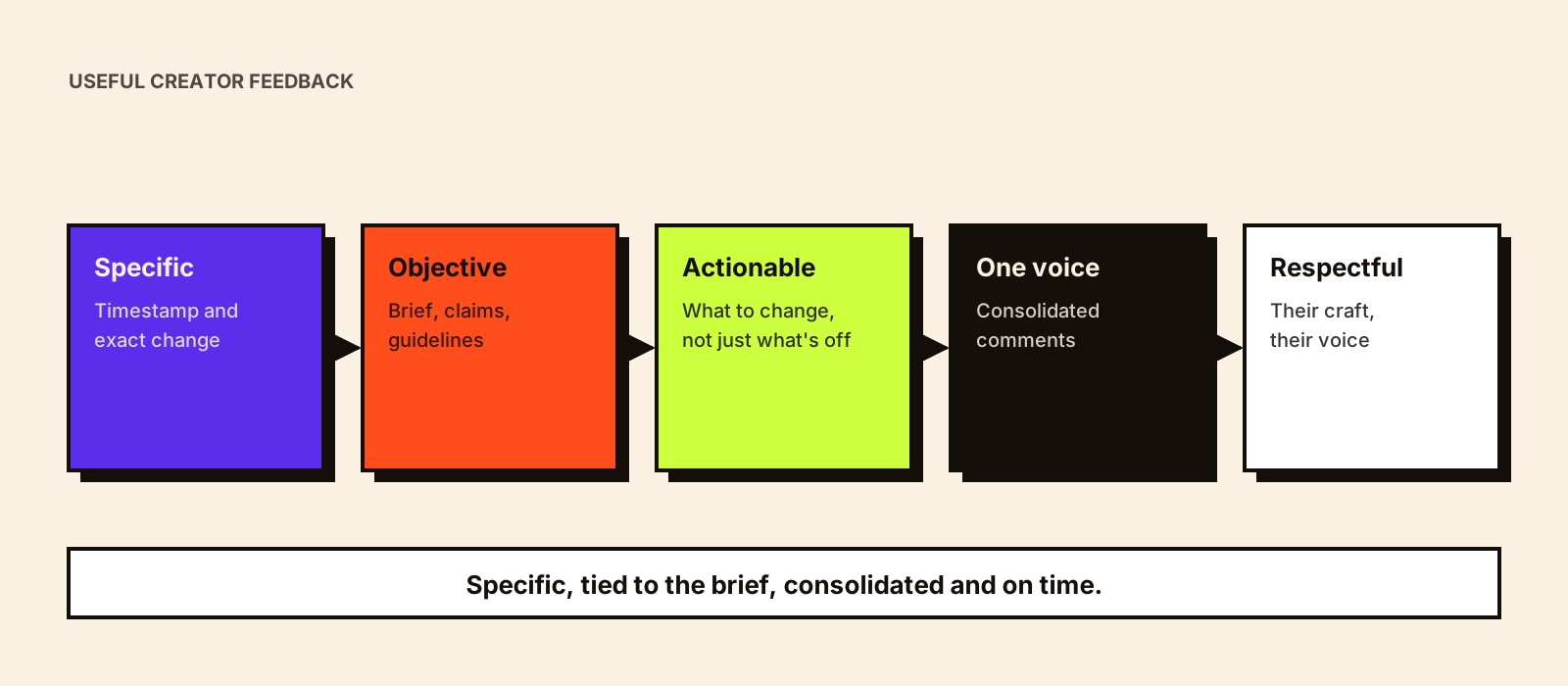
Give influencer feedback that is specific (point to the exact moment or line), objective (tied to the brief, claims or brand guidelines rather than personal taste), actionable (say what to change, not just what's wrong), brand-relevant (only what affects the campaign's goals or compliance) and respectful of the creator's style. Consolidate all reviewers' comments into one set, prioritise must-fix items, stay within agreed revision rounds and reply within the promised window.
Bad feedback vs useful feedback
| Bad | Useful |
|---|---|
| 'Make this better.' | 'The product appears at 0:24; could it come in by 0:08 so viewers see it before they scroll?' |
| 'It feels off-brand.' | 'Our brief avoids comparing with other brands; please remove the comparison at 0:31.' |
| 'Can you make it more premium?' | 'Could you film the product on a plain surface rather than the cluttered counter for the close-up at 0:15?' |
| 'The claim isn't right.' | 'Please change "cures acne" to the approved wording "helps reduce breakouts".' |
| 'Add more energy.' | Usually: no comment. Pacing and tone are the creator's craft unless they conflict with the brief. |
What to comment on, and what to leave alone
| Comment on | Leave to the creator |
|---|---|
| Factual accuracy and approved claims | Their voice, humour and tone |
| Disclosure label and placement | Editing style and pacing |
| Mandatory points from the brief | Music choice (within licensing rules) |
| Product shown correctly and safely | Concept, unless it conflicts with the brief |
| Links, codes and CTA | How they talk to their audience |
| Anything that breaches brand safety or guidelines | Personal taste preferences of the reviewer |
If you find yourself wanting to change everything, the problem is usually the creator choice or the brief, not the draft. Influencer campaign brief explains how to give direction without scripting.
One voice, not five
- Name one reviewer who collects comments from brand, product, legal and others.
- Resolve internal disagreements before feedback goes to the creator.
- Label each comment: must change (compliance, accuracy, brief) or suggestion (optional).
- Send one consolidated message, not a thread of separate opinions.
Revision rounds and timing
- Agree the number of revision rounds before production; two is common for paid work.
- Define a revision: changes to what was agreed, not a new concept or added requirements.
- Reply within the agreed window (for example two working days). Late feedback compresses the creator's schedule.
- If you need more than the agreed rounds because the brief changed, acknowledge it and discuss compensation or time.
A feedback template
Hi [name], thanks for the draft. It's [one specific, genuine positive].

MUST CHANGE (brief / compliance):
1. [Timestamp] [What to change] [Why: brief point / approved claim / disclosure]
2. [ ]

SUGGESTIONS (your call):
• [Timestamp] [Idea]

Everything else looks great. Could you share the revised version by [date]? This is revision round [1] of [2].
Start with something genuine and specific. Creators put real effort into drafts, and acknowledging what works makes the necessary changes easier to hear.
Feedback in regulated categories
In health, wellness, finance, food and children's products, compliance feedback isn't optional. Give exact approved wording rather than general instructions, explain why a claim must change, and route drafts through legal or medical review within the agreed window. Influencer marketing compliance covers what reviewers should check.
After approval
Confirm approval clearly in writing, with the approved version identified, so there's no doubt about what goes live. After the campaign, share results and ask the creator what you could improve. Creator feedback loop covers how their input can improve your next campaign.
Hypothetical example: rewriting feedback
'Looks good but can you make it pop more? Also the product isn't really the hero. And maybe a different background? Our team feels the vibe is off.'
Thanks, the opening hook is great. Two changes needed:
1. 0:22: please change 'gives instant results' to the approved wording 'visible results in two weeks' (claims guidance in the brief).
2. 0:30–0:35: could the product label be visible in the close-up? It's currently turned away.
Suggestion (your call): a quick before/after at the end might work well.
This is round 1 of 2; revised version by Thursday would be perfect.
The 'after' version is specific, tied to the brief, separates must-change from suggestions and respects the creator's choices. It's also faster for the creator to act on.
Feedback for regional-language content
- Have someone who understands the language review the draft, not just the visuals.
- Give claims corrections as exact approved wording in that language.
- Avoid literal translation feedback that makes speech sound unnatural.
- Trust local idiom and humour unless it conflicts with the brief or brand safety.
Common mistakes
- Vague, taste-based comments.
- Several reviewers sending conflicting feedback.
- Adding new requirements during review.
- Slow feedback followed by urgent deadlines.
- Rewriting the creator's script line by line.
Feedback works best inside a defined process: influencer content approval sets out the full review workflow, and influencer revision policy covers how many rounds to agree and what counts as a revision.
Conclusion
Useful influencer feedback is specific, tied to the brief and compliance, actionable and respectful of the creator's craft. Consolidate it, separate must-fix from suggestions, keep to agreed rounds and reply on time. It makes drafts better faster, and it's one of the clearest signals to creators that you're a brand worth working with again.