Creator Content Approval Process: A Step-by-Step Workflow for Brands
How brands collect, review and approve creator content without slowing campaigns: the submission setup, a review sequence, who approves what, turnaround times, parallel vs sequential reviews, approval records and a workflow you can copy.
Approval is where creator campaigns most often lose time. Drafts arrive by WhatsApp, email and Google Drive. Three people comment at different times. Legal sees the draft on the day it was meant to go live. The creator, who delivered on schedule, waits a week and then gets feedback that contradicts the brief. None of this improves the content; it just delays it.
Quick answer
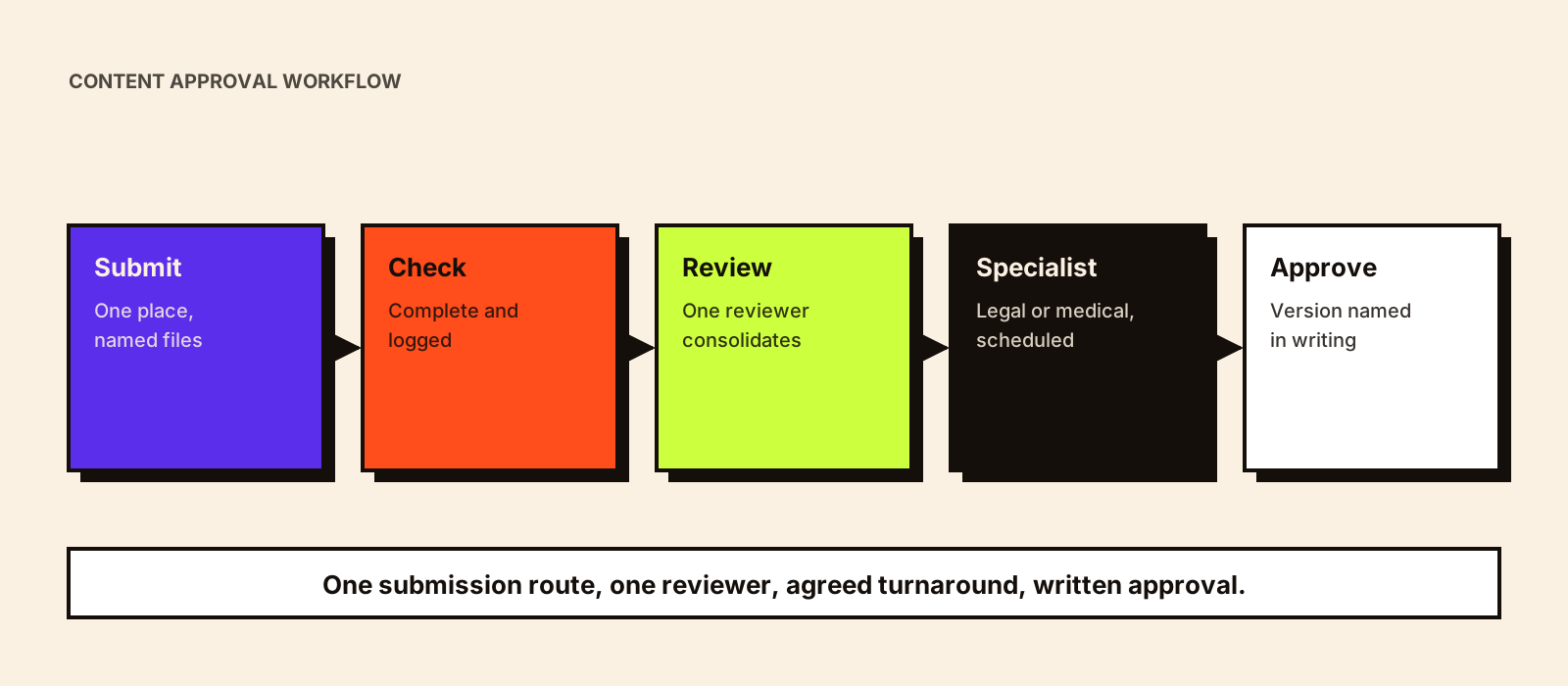
A good creator content approval process has five parts: one submission route with clear file and naming rules; a quick completeness check when drafts arrive; a single named reviewer who consolidates comments from everyone else within an agreed time; specialist review (legal, medical, compliance) only where the content needs it, scheduled in advance; and a written final approval naming the exact version that can go live. Agree the number of revision rounds and turnaround times before production, and track every draft's status so nothing waits unnoticed.
The approval workflow
| Step | What happens | Owner | Typical time limit |
|---|---|---|---|
| 1. Submit | Creator uploads draft to the agreed place, named consistently, with caption and links | Creator | By the draft date |
| 2. Log and check | Draft logged; quick check that it's complete (right format, length, caption, disclosure placeholder) | Campaign manager | Same or next working day |
| 3. Review | Brief, claims, product, brand safety and disclosure reviewed; comments consolidated | Named reviewer | Within agreed window (e.g. 2 working days) |
| 4. Specialist review | Legal, medical or compliance check if the category needs it | Specialist | Scheduled in advance |
| 5. Feedback | One consolidated message: must-change vs suggestions; round number | Reviewer | Same day as review ends |
| 6. Revise | Creator revises within agreed time | Creator | Agreed (e.g. 2–3 days) |
| 7. Approve | Written approval naming the version; go-live details confirmed | Reviewer | On final review |
| 8. Go-live check | Live post checked against the approved version and disclosure rules | Campaign manager | Within a day of posting |
Step 1: Set up content submission properly
Most approval delays start with messy submissions. Before production, tell creators exactly how to submit:
WHERE: [shared folder link / portal / reply to brief email]: one place only
WHAT: final-quality draft (video file, not a screen recording), caption text, links/codes, tags, music used
FORMAT: [vertical 9:16, max length], subtitles if planned
NAMING: [brand]_[creatorhandle]_[deliverable]_v1
WHEN: by [date and time]
NOTE: if you'll be late, tell [name] as early as possible
- Ask for files, not links to posts made private; screen recordings lose quality and hide issues.
- Ask for the caption with the video; disclosure, links and tags live there.
- Keep raw footage requests separate and agreed in advance; they're often a paid extra.
- Avoid WhatsApp for submissions where possible; compression and scattered threads make review harder.
Step 2: Decide who approves what
| Content element | Reviewer |
|---|---|
| Brief adherence, mandatory points, CTA | Campaign owner |
| Product shown correctly | Campaign owner (product team if technical) |
| Claims (health, finance, food, children) | Legal or medical reviewer |
| Disclosure | Campaign owner, against ASCI rules |
| Brand safety | Campaign owner; escalate if unsure |
| Creative style, tone, editing | Creator (not reviewed unless it conflicts with the brief) |
One person collects all comments and sends them to the creator. If the brand team disagrees internally, it resolves that before the creator hears anything. Influencer marketing governance covers wider approval rules inside the brand.
Step 3: Review in a consistent order
1. Completeness: right deliverable, format, length, caption included?
2. Compliance: disclosure present and placed correctly; claims match approved wording
3. Brief: key message and mandatory points covered; nothing prohibited
4. Product: shown correctly, safely, label visible if needed
5. Links and CTA: correct link, code, tag, handle
6. Brand safety: nothing in frame, audio or caption that creates risk
7. Only then: optional suggestions
Reviewing compliance and the brief first means must-fix issues are never lost under creative suggestions. Influencer content quality check has the full checklist; influencer feedback covers how to write the comments.
Step 4: Parallel or sequential review?
| Approach | How | Use when |
|---|---|---|
| Sequential | Campaign owner → legal → brand head | Regulated categories; high-risk claims |
| Parallel | All reviewers get the draft at once; reviewer consolidates by a deadline | Most campaigns; faster |
| Pre-approved concept | Creator shares a short outline before filming; only compliance checked on the final | Complex products; tight timelines; first collaborations |
| Delegated approval | Campaign owner approves alone within defined limits | Repeat creators; low-risk content; always-on programmes |
Step 5: Record approvals properly
- Approve in writing (email or the tracker), not by a thumbs-up emoji in a chat.
- Name the exact version approved (file name or version number).
- Record the approver and date.
- Keep the approved file with the campaign documents.
- After posting, compare the live post with the approved version and screenshot it.
Influencer campaign documentation covers where approval records belong.
How to make approvals faster
- Freeze the brief before production. Most slow approvals are really brief changes.
- Agree turnaround times and book reviewers' time in advance, especially legal.
- Use a concept stage for complex or regulated content.
- Limit reviewers; more people means more opinions, not more quality.
- Track drafts by status, so waiting items are visible.
- Delegate approval for repeat creators and low-risk content.
Influencer campaign delays covers diagnosing where approvals get stuck.
Hypothetical example
Hypothetical: a supplements brand's drafts used to go to the brand manager, then the product team, then legal, one after another, taking up to ten days. It switches to a short concept stage before filming (legal checks claims in the outline), parallel review of final drafts with a two-day deadline and a single reviewer who consolidates comments. Final approvals now usually take two or three days, and creators rarely need a second revision because claims were settled before filming.
Common mistakes
- Several submission channels for the same campaign.
- Reviewers commenting directly to creators, separately.
- Legal brought in at the last minute.
- Approvals given verbally or by emoji.
- No check of the live post against the approved version.
- New requirements introduced during review.
Conclusion
A fast, reliable approval process is mostly decided before drafts arrive: one submission route, a named reviewer, a fixed review order, specialist reviews scheduled in advance, agreed rounds and written approvals. Then track every draft so nothing waits unseen. For rules on how many changes creators should be asked to make, see influencer revision policy.