Influencer Campaign Delays: Common Causes and How Brands Can Prevent Them
Why creator campaigns run late (brand-side, creator-side and external causes), how to diagnose workflow bottlenecks with stage timings, a prevention plan, buffers that work and what to do when a go-live date is at risk.
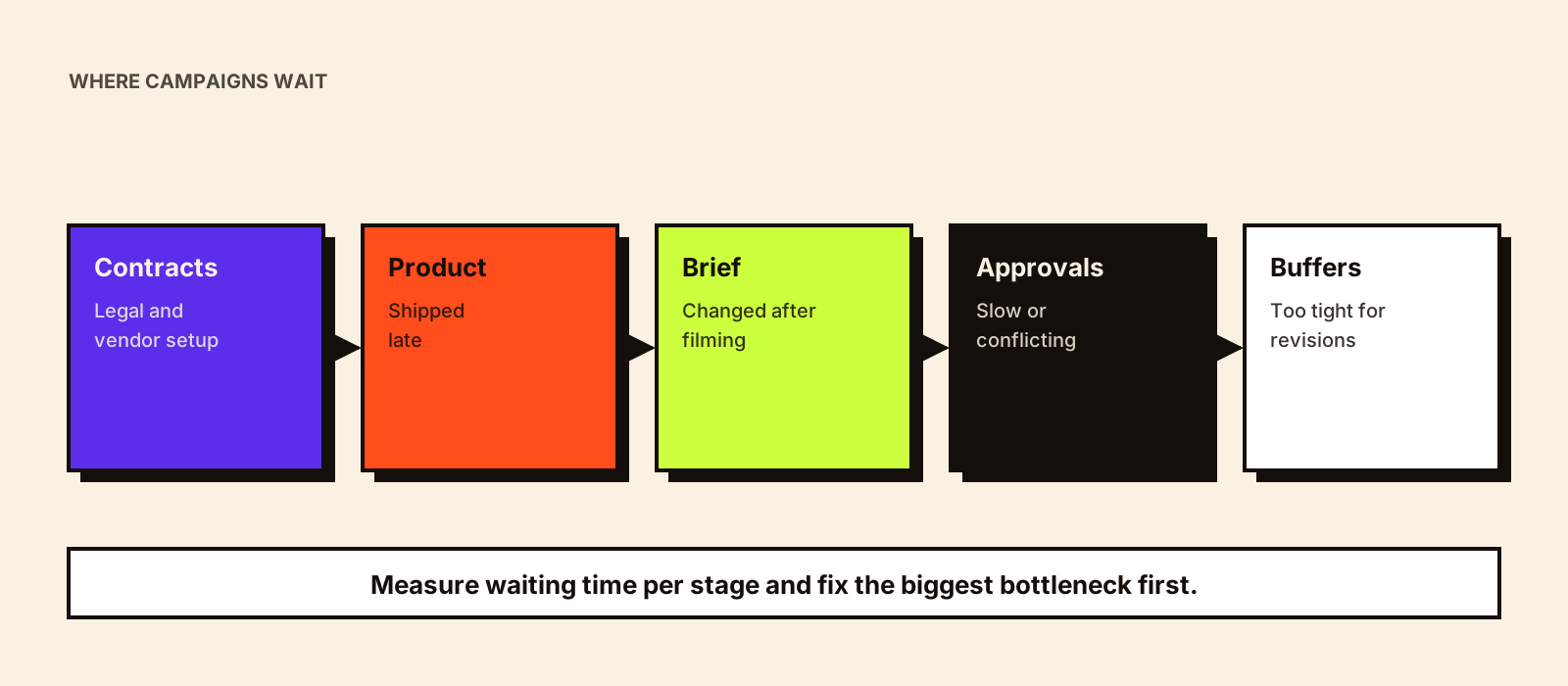
When a creator campaign runs late, the first instinct is to blame creators. In practice, many delays start on the brand side: a contract stuck with legal, product shipped late, a brief that changed after filming, feedback that took a week. Creators do miss deadlines too, but a campaign that is late every time usually has a process problem, not a creator problem.
Quick answer
Influencer campaign delays usually come from slow contracts and vendor setup, late product dispatch, briefs that change after production starts, slow or fragmented approvals, unclear deadlines, and occasionally creator availability or production problems. Prevent them by fixing the brand-side causes first: freeze briefs, start contracts and shipping early, agree feedback times, track every creator's stage and build realistic buffers. To find your own bottlenecks, measure how long each stage actually takes and where items wait.
Common causes
| Cause | Who | Prevention |
|---|---|---|
| Shortlist approval slow | Brand | One decision-maker; ranked list with reserves |
| Contract or legal review slow | Brand | Standard template; legal review only for non-standard terms |
| Vendor setup started late | Brand | Start at agreement |
| Product shipped late | Brand | Dispatch before brief; allow time to use the product |
| Brief changed after filming | Brand | Freeze the brief before production |
| Slow or conflicting feedback | Brand | One reviewer; agreed turnaround |
| Legal review at the last minute | Brand | Schedule specialist review in advance; concept stage |
| Unclear deadlines | Both | All dates in one written recap |
| Creator overbooked | Creator | Confirm availability; avoid peak periods; build buffer |
| Production problems (location, weather, illness) | Creator | Buffer; early warning; flexible go-live window |
| Platform or account issues | External | Backup plan; flexible window |
Finding your bottlenecks
A bottleneck is the stage where work waits longest. To find it, record the date each creator enters and leaves each stage for a couple of campaigns, then compare:
For each creator, record dates for:
Shortlist approved → outreach sent → terms agreed → contract signed → product delivered → brief sent → draft submitted → feedback sent → final approved → live → invoice received → paid

Then calculate, per stage:
• Median days
• Longest cases and why
• Days spent WAITING (on brand, on creator, on third party)

The stage with the most waiting time is your bottleneck. Fix that first.
Teams are often surprised: the longest wait is frequently 'draft submitted → feedback sent' or 'terms agreed → contract signed', both on the brand side. Influencer campaign tracker shows how to capture these dates as part of normal tracking.
Typical bottlenecks and fixes
| Bottleneck | Symptom | Fix |
|---|---|---|
| Approvals | Drafts wait days with no feedback | One reviewer; parallel review; agreed turnaround; delegated approval for low risk |
| Legal | Every draft waits for legal at the end | Concept stage; pre-approved claims library; scheduled review slots |
| Contracting | Agreed creators wait for paperwork | Standard template; e-signature; clear variable terms |
| Logistics | Creators can't start without product | Ship earlier; confirm addresses at onboarding |
| Brief changes | Reshoots and extra rounds | Freeze the brief; scope change process |
| Single owner | Everything waits when one person is away | Backup owner; shared tracker |
Influencer content approval covers faster approval workflows in detail.
Build buffers that work
- Set draft deadlines several days before go-live, enough for at least one revision round.
- Use a go-live window (for example three days) rather than one fixed day, unless the date matters, like a launch embargo.
- Keep one or two reserve creators for campaigns with fixed dates.
- Avoid booking creators for peak festival weeks without confirming their capacity.
- Plan backwards from the go-live date; influencer marketing campaign timeline shows how.
Timelines and backward planning are covered in influencer marketing campaign timeline.
When a go-live date is at risk
- Find out early: track drafts due within the next three days, not only overdue ones.
- Ask the creator what's happening before restating the contract.
- Decide what's flexible: date, format, or creator.
- If the date is fixed, consider a reserve creator or a simpler deliverable.
- Escalate internally if a brand-side step is the cause.
- Record the cause, so the process can be fixed.
Influencer campaign escalation covers when and how to escalate issues.
Delays in Indian campaigns
- Festival seasons compress creator calendars and courier networks at the same time; plan earlier.
- Delivery to tier 2 and tier 3 towns can take longer; ship first to those creators.
- Monsoon can affect outdoor shoots and deliveries in some regions.
- Marketplace sale dates are set by the marketplaces and may be announced at short notice; keep flexible windows.
A pre-launch delay-risk check
□ All agreements signed? (if not: who's blocking, by when)
□ Vendor setup and POs done for every creator?
□ All products delivered, or delivering at least several days before filming?
□ Brief frozen and approved by everyone who needs to approve it?
□ Legal or specialist reviewers booked for the review window?
□ Draft deadlines leave room for at least one revision round?
□ Reserve creators identified for fixed-date deliverables?
□ Tracker flags set for due-soon and overdue items?
□ Any creators with festival, travel or exam-season conflicts?
Each 'no' is a likely delay. Fixing them two weeks out is far cheaper than discovering them on go-live day. Influencer campaign coordination covers running this across many creators.
Common mistakes
- Assuming delays are the creator's fault without checking stage timings.
- Draft deadlines too close to go-live to allow revisions.
- No reserve creators for fixed-date launches.
- Fixing symptoms (chasing harder) instead of the bottleneck.
Conclusion
Most influencer campaign delays are predictable and many are brand-side. Measure where work waits, fix the biggest bottleneck first, build realistic buffers, track upcoming deadlines and act early when a date is at risk. Campaigns get faster when the process improves, not when creators are chased harder.