What Should an Influencer Campaign Project Plan Include?
The twelve sections of an influencer campaign project plan: scope, deliverables, milestones, dependencies, roles (RACI), budget and payments, approvals, risks, communication, change control, measurement and close-out, with a template and examples.
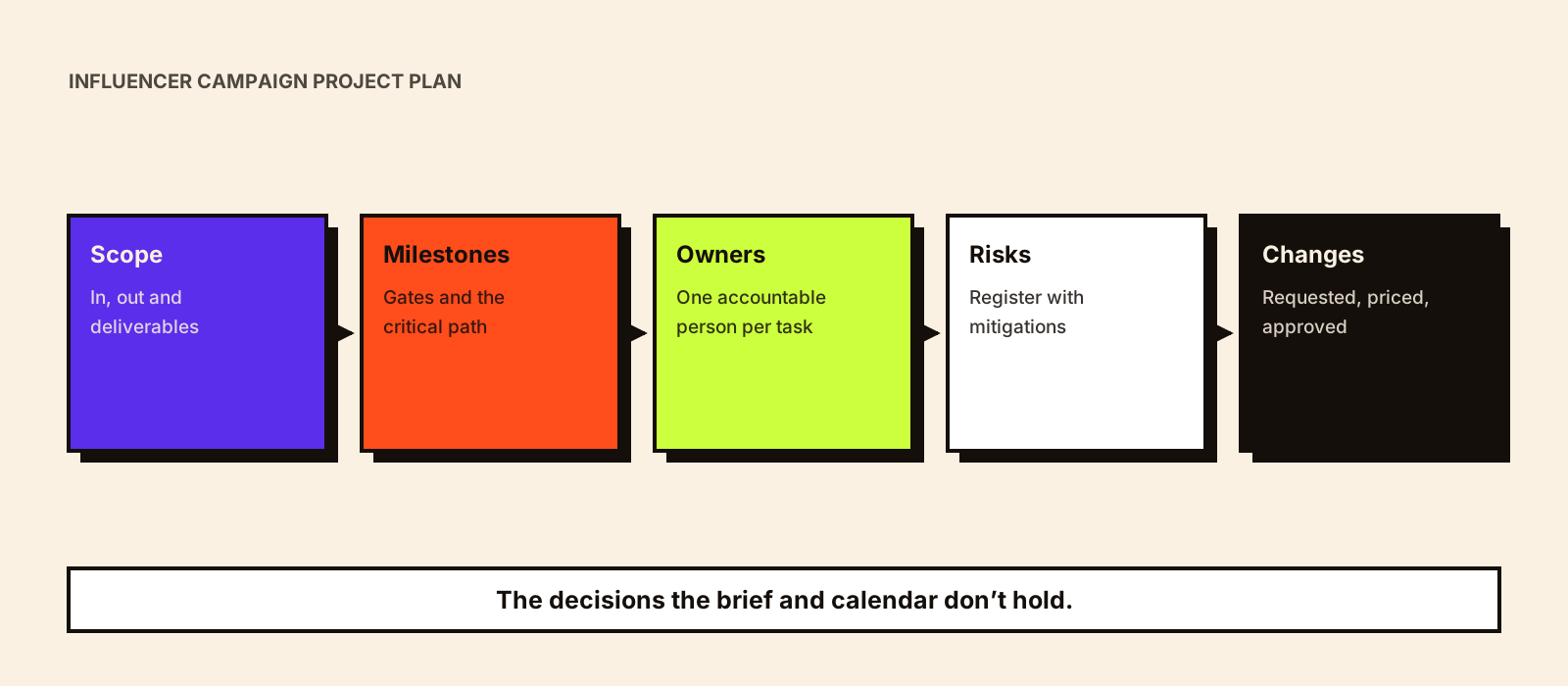
A brief tells creators what to make. A calendar says when. A tracker shows where each creator is. None of them says who decides, what happens if the product is late, how a scope change gets approved, or what 'done' means. That's the job of the project plan: the one document the brand, the agency and everyone approving content work from.
Quick answer
An influencer campaign project plan should include twelve things: scope and objective (including what's out of scope), a deliverables register, milestones and stage gates, dependencies and the critical path, roles and responsibilities (RACI), budget and payment schedule, the approval workflow and turnaround times, a risk register, a communication and escalation plan, change control, the measurement and reporting plan, and close-out tasks. For a small campaign it can be one page; for a launch with many creators and markets, a few pages and a linked tracker.
Project plan vs brief vs calendar vs tracker
| Document | Answers | Audience | Guide |
|---|---|---|---|
| Project plan | Scope, owners, decisions, risks, changes | Brand team and agency | This guide |
| Campaign brief | What creators should make and say | Creators | Influencer campaign brief |
| Calendar | When each step happens | Everyone | Influencer campaign calendar |
| Tracker | Where each creator is right now | Campaign team | Influencer campaign status tracking |
| Checklist | Whether anything has been forgotten | Campaign team | Influencer campaign checklist |
Those guides are: influencer campaign brief, influencer campaign calendar, influencer campaign status tracking and the influencer campaign checklist.
The twelve sections
1. Scope and objective
The objective and primary KPI, markets, platforms, number of creators, and a short out-of-scope list (for example: paid media buying, product photography, extra markets). Most disputes later are about scope that was never written down.
2. Deliverables register
Every deliverable the campaign must produce, from both sides: creator posts by platform and format, usage rights, reports, the content library, and the brand's own deliverables (product, claims list, approvals).
3. Milestones and stage gates
The few checkpoints where the campaign shouldn't move forward until something is true: shortlist approved, contracts signed, product delivered, drafts approved, go-live complete, report delivered. Each gate has a date and an owner.
4. Dependencies and the critical path
What must finish before something else can start. In creator campaigns the critical path usually runs through product delivery (no product, no filming), claims approval (no approved claims, no drafts) and brand review time. If any of these slips, the go-live date slips, so the plan should show them clearly and name who watches them.
5. Roles and responsibilities (RACI)
| Task | Responsible | Accountable | Consulted | Informed |
|---|---|---|---|---|
| Objective and budget | Marketing manager | Head of marketing | Finance | Agency |
| Creator shortlist | Agency or campaign manager | Marketing manager | Brand team | Finance |
| Contracts and rights | Agency or campaign manager | Marketing manager | Legal | Finance |
| Approved claims | Product or regulatory lead | Head of marketing | Legal | Agency |
| Draft approval | Marketing manager | Marketing manager | Legal for claims | Agency |
| Creator payments | Finance | Marketing manager | Agency | Creators |
| Report and post-mortem | Agency or campaign manager | Marketing manager | Brand team | Leadership |
An illustrative split; adjust it to your team. The rule that matters: one accountable person per task.
6. Budget and payment schedule
Each cost line (creator fees, agency fee, rights, product and shipping, production, amplification, contingency) with who approves spending and when creators and the agency are paid. Late creator payments damage the brand's reputation with creators, so payment dates belong in the plan, not just in finance's system.
7. Approval workflow and turnaround times
Who reviews what, in what order, and how fast: concept approval, draft review, legal review for claims, final approval. Include the number of revision rounds. The workflow itself is set out in creator content approval process.
8. Risk register
| Risk (examples) | Likelihood and impact | Mitigation | Owner |
|---|---|---|---|
| Product arrives late | Medium; delays every draft | Ship early; confirm delivery; hold reserve stock | Operations |
| Creator drops out | Medium; gap in the schedule | Approved reserve list; replacement terms in contracts | Campaign manager |
| Claims not approved in time | Medium; drafts stall | Approved-claims list before briefing | Product lead |
| Disclosure missing on a live post | Low to medium; compliance exposure | Go-live checks within hours; fix template | Campaign manager |
| Negative comments or backlash | Low; reputational | Comment monitoring; response plan; escalation path | Social lead |
| Stock-out after a strong post | Low to medium; lost sales | Stock plan for the campaign window | Operations |
Illustrative risks; rate your own. Influencer campaign risk management covers the wider risk framework.
9. Communication and escalation plan
Which channel is used for what (email for decisions, a shared tracker for status, a group chat only for urgent issues), the meeting cadence (kickoff, weekly status, launch-week check-ins) and who to escalate to, by severity, when something goes wrong. Influencer campaign escalation covers severity levels.
10. Change control
How a change gets requested, priced, approved and recorded: an extra creator, a new market, a changed launch date, more usage rights. Without it, small changes pile up into a different campaign with the same budget.
11. Measurement and reporting plan
The primary KPI and how it's tracked, links and codes, the measurement window, what creators must send and when, and the report format and date.
12. Close-out
What 'finished' means: all payments made, insights collected, content library and usage register updated, files and contracts filed, post-mortem held and decisions recorded. Influencer campaign documentation and influencer campaign post-mortem cover these.
A project plan template
CAMPAIGN: ____  OWNER (accountable): ____  VERSION / DATE: ____
1 SCOPE: objective ____ primary KPI ____ markets ____ platforms ____ creators ____ OUT OF SCOPE: ____
2 DELIVERABLES: creator deliverables (link to register) / brand deliverables ____
3 MILESTONES: shortlist approved __ / contracts signed __ / product delivered __ / drafts approved __ / go-live __ / report __
4 CRITICAL PATH: ____ watched by ____
5 RACI: (table)
6 BUDGET: creators __ agency __ rights __ product __ production __ amplification __ contingency __ | payment dates ____
7 APPROVALS: who / order / turnaround / revision rounds
8 RISKS: top five with mitigation and owner
9 COMMUNICATION: channels, meeting cadence, escalation contacts
10 CHANGE CONTROL: how changes are requested, priced and approved
11 MEASUREMENT: tracking, window, insights due, report date
12 CLOSE-OUT: payments, insights, usage register, files, post-mortem date
How detailed should it be?
| Campaign | Plan size |
|---|---|
| A small test with a few creators | One page: scope, milestones, owners, budget, approvals and measurement |
| A multi-creator campaign | A few pages plus a linked tracker and RACI |
| A launch across markets or platforms | The full twelve sections, a risk register reviewed weekly and formal change control |
Hypothetical example
Hypothetical: a D2C food brand plans a 15-creator launch on Instagram and YouTube across three Indian cities. The plan's critical path shows that the nutrition claims must be approved by the regulatory lead before briefs go out, and that product needs ten days in transit to two cities. The risk register flags summer heat for chocolate products, so shipping uses insulated packaging and a two-day delivery window. Change control catches a request to add Hindi-language creators in week three: it's priced, approved as a second wave and given its own dates rather than squeezed into the first.
Common mistakes
- Treating the brief as the project plan.
- No out-of-scope list.
- Several people 'accountable' for the same decision.
- Dependencies not shown, so a late product surprises everyone.
- No change control, so scope grows without budget.
- Close-out skipped, so payments, rights and learnings go missing.
Conclusion
An influencer campaign project plan holds the decisions the other documents don't: scope, owners, dependencies, risks, changes and what 'done' means. Size it to the campaign, review it weekly while the campaign runs, and close it out properly so the next campaign starts from evidence.