Creator Campaign Post-Mortem: How Brands Should Review a Campaign After It Ends
A structured post-campaign review for brands: what to analyse after launch (results, creators, content, process, costs), a blameless post-mortem agenda, a template, turning findings into decisions and what to share with creators.
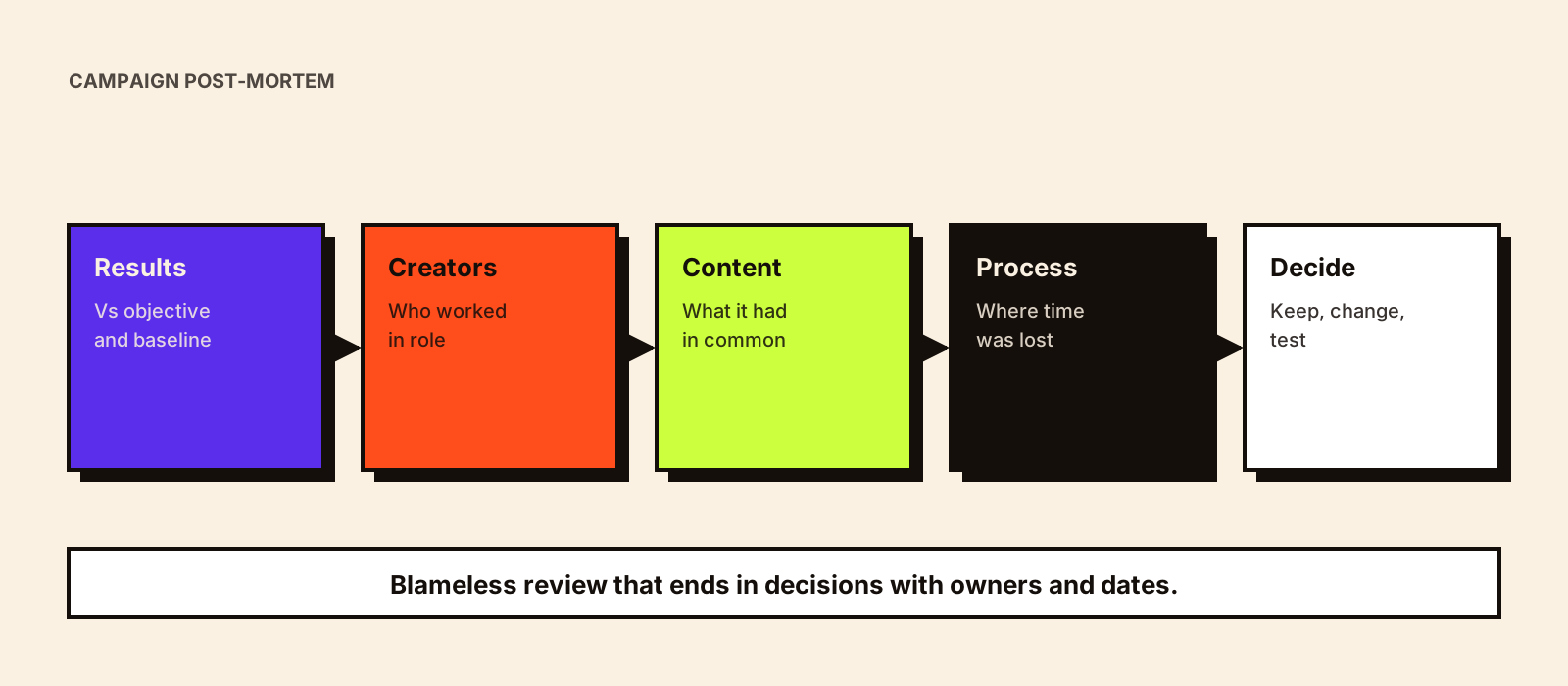
A campaign report says what happened. A post-mortem decides what to do about it. Without one, the same approval delays, briefing gaps and creator mismatches show up campaign after campaign, and the best learnings stay in one person's head.
Quick answer
An influencer campaign post-mortem is a structured review held after the final results are in. It covers results against objectives, creator performance, content performance, process (timeline, approvals, payments, communication), costs and creator feedback, then turns findings into specific decisions: what to keep, change and test next time, and which creators to rebook. Keep it blameless, evidence-based and short, and record the decisions where the next campaign team will find them.
What to analyse after launch
| Area | Questions | Inputs |
|---|---|---|
| Results | Did we hit the primary KPI? Against which baseline? | Report; dashboard |
| Creators | Who performed in their role? Who didn't, and why? | Scorecards; campaign index |
| Content | Which content worked, and what did it have in common? | Content tagging; comment themes |
| Audience | What did people ask, object to, praise? | Comments; sentiment; creator feedback |
| Funnel | Where did people drop off? | Analytics; store data |
| Process | Where did we lose time? What went wrong? | Tracker stage dates; issue log |
| Costs | Cost per result by creator and segment; unplanned costs | Payment tracker |
| Creators' view | What made it easy or hard to work with us? | Creator debrief |
Influencer marketing report covers the results document, influencer data analytics covers the analysis, and creator feedback loop covers the creator debrief.
Keep it blameless
The point is to improve the system, not assign fault. Ask 'what made this happen?' rather than 'who did this?'. A creator missing a deadline because product arrived late is a logistics issue; a reviewer taking a week is a capacity issue. Blame makes people defensive and hides the real causes.
A post-mortem agenda
1. Objective and headline result vs baseline (5 min)
2. What worked: creators, content, process (15 min)
3. What didn't, and the likely cause (15 min)
4. Creator decisions: rebook, new role, not again (10 min)
5. Decisions: keep / change / test next time (10 min)
6. Owners and dates for each decision (5 min)
Post-mortem template
CAMPAIGN: [ ]   DATES: [ ]   OBJECTIVE / PRIMARY KPI: [ ]
RESULT VS BASELINE: [ ] (confidence: high / medium / low)

WHAT WORKED (with evidence)
•

WHAT DIDN'T (with likely cause: creator / content / strategy / distribution / measurement / offer / process)
•

CREATOR DECISIONS
Rebook: [ ]   Different role: [ ]   Not again (reason): [ ]

PROCESS ISSUES (stage, cause, fix)
•

DECISIONS FOR NEXT CAMPAIGN
KEEP:
CHANGE:
TEST:

OWNERS AND DATES
•
Turn findings into decisions
- Every finding should end in keep, change, test or 'no action' with a reason.
- Each decision needs an owner and a date.
- Update the brief template, shortlist criteria and process documents directly.
- Add learnings to a running register so they survive team changes.
- Revisit last campaign's decisions at the start of the next post-mortem: did we act on them?
Influencer data analytics includes a learnings register for this, and influencer campaign optimization covers how changes feed the next cycle.
What to share with creators
- Thanks and specific results you can share for their content.
- What worked especially well in their content.
- Whether you'd like to work together again, if so.
- Any process improvements you're making because of their feedback.
Agencies run similar reviews; creator campaign post-mortem describes the agency-side version, which can feed into yours if an agency ran the campaign.
When to run it
Run the post-mortem soon after the final capture date (for example 30 days after the last post), while details are fresh but results are complete. For long campaigns or always-on programmes, hold a short review after each wave and a fuller one each quarter.
Hypothetical example
Hypothetical: a personal-care brand's festive campaign hits its reach target but misses its order target. The post-mortem finds that creator content performed in line with each creator's usual numbers, but the landing page loaded slowly on mobile and two popular variants went out of stock in the second week. Process review shows legal approval added four days to every draft. Decisions: KEEP the regional creator mix; CHANGE the landing page and stock planning, and add a concept stage so legal reviews claims before filming; TEST a bundle offer against a discount in the next campaign. Owners and dates are assigned, and three creators are rebooked for a series.
Post-mortems with an agency
If an agency ran the campaign, ask it to bring its own review (results by creator, content tagging, process issues) and run the post-mortem together. Make sure decisions and learnings end up in your records, not only the agency's. Influencer campaign handover covers keeping campaign knowledge with the brand.
Common mistakes
- Skipping it because the campaign 'went fine'.
- Holding it before results are complete.
- Blame instead of causes.
- Findings with no owner or date.
- Not checking whether last time's decisions were implemented.
Conclusion
A post-mortem turns a finished campaign into better next ones. Review results, creators, content, audience, funnel, process, costs and creator feedback; keep it blameless; end with keep, change and test decisions with owners; and record them where the next team will look.