Creator Feedback Loop: How Brands Can Improve Campaigns Through Creator Input
How to collect and use creators' insights on audience reaction, formats, product positioning, messaging, production and platform behaviour, when to ask, the questions to use and how to turn answers into better briefs and products.
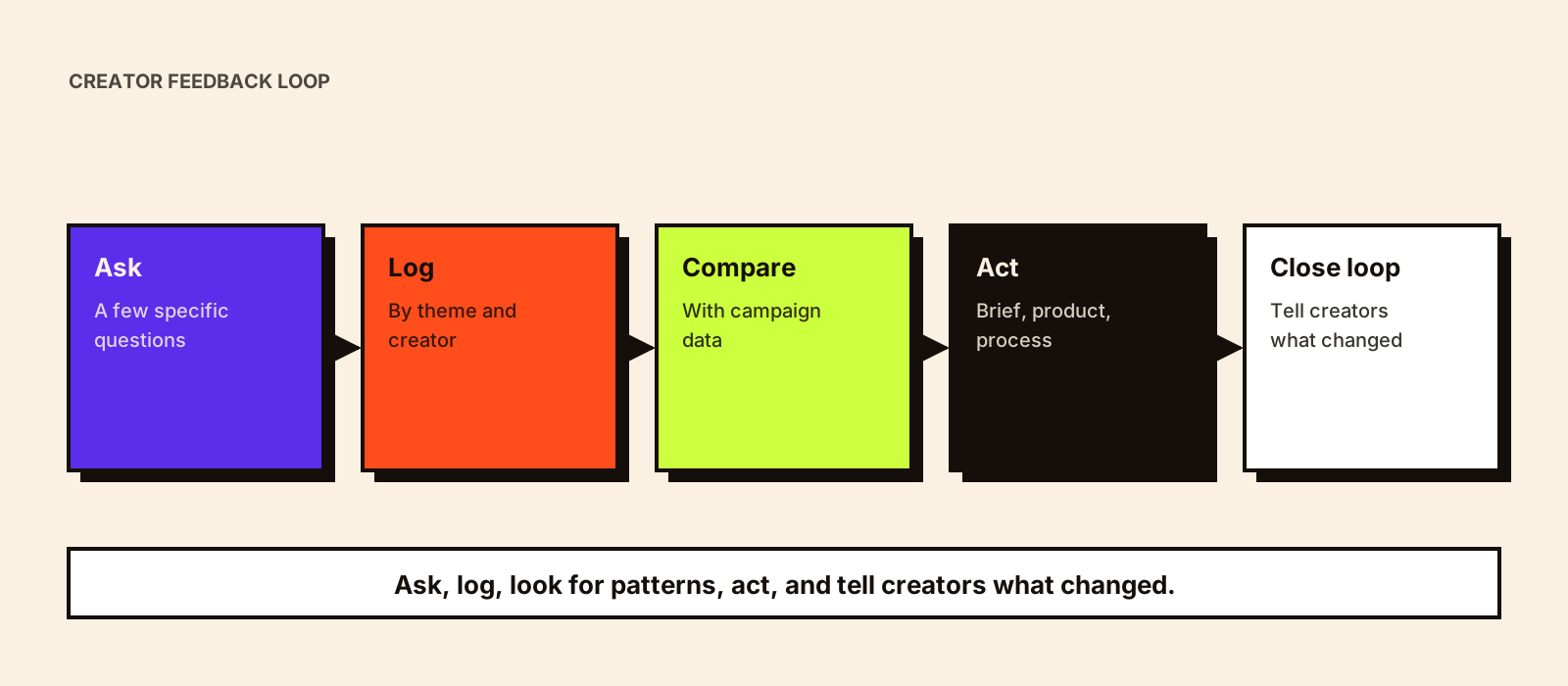
Creators see things brands don't. They read every comment and DM about your product, know which hooks their audience scrolls past, feel which brief points sounded awkward on camera and notice when a product doesn't do what the brief said. Most brands never ask. A feedback loop turns that knowledge into better campaigns, and creators usually appreciate being asked.
Quick answer
A creator feedback loop is a routine for collecting creators' observations after (and sometimes during) a campaign and using them to improve briefs, messaging, formats, products and processes. Ask a few specific questions about audience reactions, questions and objections, what worked in the content, what felt forced, production issues and platform behaviour; record the answers alongside performance data; and show creators what changed as a result.
What creators know that brands don't
| Area | What creators can tell you | How it helps |
|---|---|---|
| Audience reaction | DMs and comments, including ones they deleted or answered privately | Real objections and enthusiasm |
| Audience questions | What people asked about price, use, availability, suitability | FAQ, landing page and brief updates |
| Content format | Which formats and lengths their audience watches | Better deliverables |
| Product positioning | Which benefits resonated; which felt unbelievable | Messaging and claims |
| Campaign messaging | Which mandatory lines sounded scripted | More natural briefs |
| Production | Product timing, packaging, shooting constraints | Smoother logistics |
| Platform behaviour | Changes in reach, features, labels | Planning |
| Process | What made working with you easy or hard | Better creator experience |
When to ask
- At kickoff: 'What would work best for your audience?'
- After posting (first few days): 'What are people asking or saying?'
- After results are in: a short debrief.
- Once or twice a year for repeat creators: a broader conversation about the partnership.
Questions to use
1. What did your audience ask about most?
2. Any objections or doubts that came up repeatedly?
3. Which part of the content got the strongest reaction?
4. Did anything in the brief feel forced or hard to say naturally?
5. Any problems with the product, shipping or timing?
6. What would you do differently next time?
7. Anything we could do to make working with us easier?
Keep it short and optional. A voice note or a quick call often works better than a form, especially for busy or regional creators.
Turning feedback into changes
Date · Creator · Campaign · Feedback (quote or summary) · Theme (audience / product / message / format / process) · Also seen in data? · Action · Owner · Status · Told creator? (yes/no)
- Group feedback by theme across creators; one comment is an anecdote, five is a pattern.
- Compare with performance data: does what creators noticed match what the numbers show?
- Route product and packaging feedback to the product team, messaging feedback to the brand team, process feedback to operations.
- Update the brief template and FAQ before the next campaign.
- Tell creators what changed because of their input.
Influencer data analytics covers combining qualitative insight with campaign data, and influencer sentiment analysis covers analysing audience comments more systematically.
Hypothetical example
Hypothetical: after a food brand's campaign with eight Hindi and Marathi creators, four mention the same DM question: is the product suitable for people fasting during Navratri? The brand's brief never covered it. The product team confirms which variants qualify, the next brief includes it, and the landing page adds a short FAQ. The creators who raised it are told and thanked.
Making creators comfortable giving honest feedback
- Ask after payment is complete, so feedback isn't tied to getting paid.
- Make clear that criticism of the brief or product won't affect future bookings.
- Thank people for critical feedback specifically.
- Act on some of it, visibly.
Feedback from many creators at once
For campaigns with many creators, a short form with three or four questions works better than calls. Group answers by theme, count how many creators raised each point and compare with performance data. Points raised by several creators, or that match a pattern in the numbers, should go to the right team with an owner and a date.
Where creator feedback should go
| Feedback about | Send to | Example action |
|---|---|---|
| Audience questions and objections | Brand and CX teams | Add to FAQ, landing page and next brief |
| Product issues | Product team | Investigate; reply to creator |
| Packaging and shipping | Operations | Change packaging or courier |
| Brief clarity and mandatory points | Campaign team | Update brief template |
| Approval and payment process | Operations and finance | Process fix |
| Platform changes | Strategy | Adjust formats and planning |
Creator experience covers how process feedback can improve the whole creator journey, and repeat influencer collaborations covers using debriefs to plan the next collaboration.
A joint brand–creator debrief
For key creators, a short two-way debrief works better than a form. Both sides share what they saw:
1. Brand shares: results for their content, what worked, how it compared with the campaign (5 min)
2. Creator shares: audience reactions, DMs, questions, what felt natural or forced (5 min)
3. Together: what we'd change in the brief, product, timing or process (5 min)
4. Next: whether and how to work together again (5 min)
AFTER: brand sends a short written summary and any agreed next steps
- Hold it after payment is complete, so feedback isn't tied to getting paid.
- Share real results, including what didn't work, honestly and kindly.
- Listen more than you talk; the creator's view is the point.
- End with a clear next step, even if it's 'not this quarter'.
Influencer campaign post-mortem covers how creator debriefs feed the brand's internal review.
Common mistakes
- Never asking.
- Asking but not recording or acting.
- Long surveys creators won't fill in.
- Treating creator feedback as complaints rather than insight.
- Not telling creators what changed.
Conclusion
Creators are close to your audience in a way your brand isn't. Ask them a few specific questions at the right moments, log what they say, look for patterns, act on them and tell them what changed. It improves briefs and products, and it's one of the simplest ways to make creators feel like partners. For the other direction, giving creators feedback on drafts, see influencer feedback.