Influencer Sentiment Analysis: How Brands Can Understand Audience Reactions to Creators
What sentiment analysis can tell brands about creators and sponsored content, what to measure (creator, sponsored-post, brand and aspect sentiment), manual vs automated methods, the real limitations and a workflow you can run.
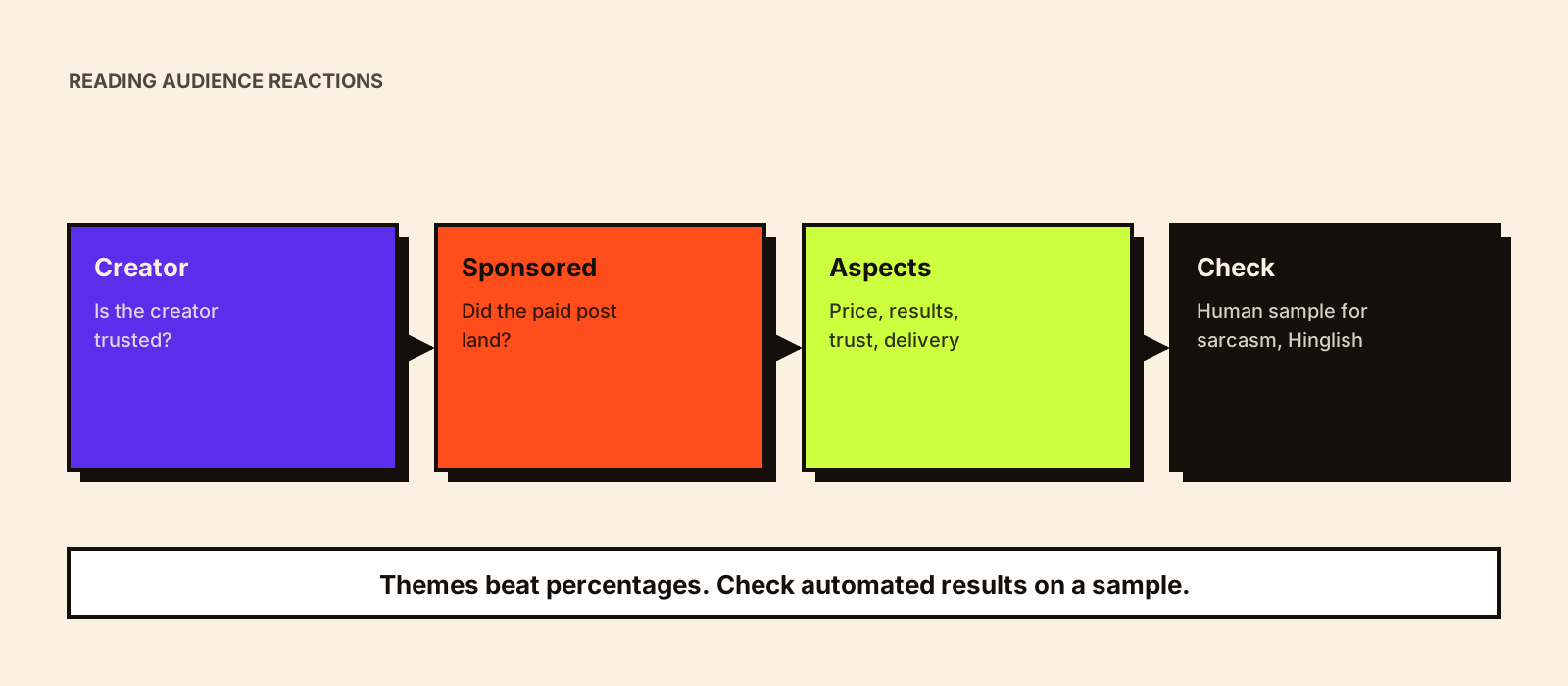
A campaign report says '82% positive sentiment'. That number usually means an automated tool classified most comments as positive, including emoji-only praise, sarcastic jokes it missed and comments about the creator's haircut rather than your product. Sentiment analysis can tell brands a lot about how audiences react to creators and sponsored content. A single percentage rarely does.
Quick answer
Influencer sentiment analysis classifies how audiences feel in comments and conversations about a creator, a sponsored post or a brand. It's most useful when it goes beyond positive/negative to themes: what people praise, question or object to (price, results, trust, delivery). Use automated tools to sort large volumes and manual coding to check accuracy, especially for sarcasm, emojis and code-mixed Hinglish or regional-language comments, which automated models often misread. Compare sentiment on sponsored posts with the creator's organic posts and track it before, during and after campaigns.
What to measure
| Type | Question | Use |
|---|---|---|
| Creator sentiment | How does the audience feel about this creator generally? | Vetting: is the creator trusted, or is there backlash? |
| Sponsored-post sentiment | How did the audience react to the paid post? | Did the integration land or feel forced? |
| Sponsored vs organic gap | Is the audience more negative or indifferent on paid posts? | Ad fatigue; credibility with sponsorships |
| Brand sentiment | What do people say about our brand in creator content and comments? | Campaign impact; issues to address |
| Aspect sentiment | What specifically do they like or dislike (price, results, taste, packaging)? | Brief changes, product feedback, FAQs |
Aspect sentiment is the most actionable. '30% of comments question the price' is a decision; '65% positive' isn't.
Manual, automated or hybrid?
| Method | Strengths | Weaknesses | Use when |
|---|---|---|---|
| Manual coding | Understands sarcasm, context, mixed languages | Slow; reviewer bias; small samples | Vetting a few creators; small campaigns; calibrating tools |
| Automated classification | Fast; handles large volumes; consistent | Misreads sarcasm, emojis, code-mixed text, domain terms | Large campaigns; ongoing monitoring |
| AI-assisted themes | Groups comments into topics and summarises | Can over-generalise; needs checking | Finding questions and objections across creators |
| Hybrid | Automated sort, human sample check | Needs a defined process | Most brand campaigns |
The limitations, plainly
- Sarcasm and irony: 'Wow, another sponsored post, so genuine' reads as positive to many models.
- Code-mixed language: Hinglish, Tanglish and other mixes written in Roman script are hard for models trained mostly on English. Research on Hindi-English text consistently identifies inconsistent transliteration and limited training data as problems.
- Emojis: 😂 can mean delight or mockery; 🔥 can be praise or a joke.
- Domain meaning: 'This serum is killing it' is positive; 'this is killing my skin' is not.
- Target confusion: a positive comment about the creator's outfit isn't positive sentiment about your product.
- Sample bias: comments come from the most vocal viewers, not all viewers.
- Deleted and hidden comments: creators and brands may filter comments, skewing what's left.
None of this makes sentiment analysis useless. It means no automated sentiment score should be reported without a human-checked sample and a note on method.
A workflow you can run
1. DEFINE: What you need to know (creator trust? product objections? brand perception?) and the aspects to track (price, results, taste, delivery, trust).
2. BASELINE: Before the campaign, sample comments on each creator's recent organic posts.
3. COLLECT: Comments on sponsored posts at 7 days (and brand mentions in the period).
4. CLASSIFY: Automated or AI-assisted sort into sentiment and aspects.
5. CHECK: Manually code a random sample (e.g. 50 per creator). Record where the tool disagreed.
6. COMPARE: Sponsored vs organic; creator vs creator; before vs after.
7. ACT: Questions → FAQ and brief updates. Objections → product or messaging review. Backlash → escalate.
Reading sentiment for creator decisions
- A creator whose audience reacts negatively to most sponsored posts may have a credibility problem with ads, even if organic sentiment is warm.
- Mixed sentiment with lots of questions often signals genuine consideration, which is good for sales objectives.
- Negative sentiment about the product, not the creator, is product or messaging feedback; don't blame the creator.
- Sudden negative shifts around a creator (controversy) are a brand-safety issue; see influencer brand safety.
Brand safety responses are covered in influencer brand safety, and the engagement side of comments in influencer engagement quality.
Reporting sentiment honestly
- Show themes with example comments, not just percentages.
- State the method and sample size.
- Report the human-check agreement rate if you used automation.
- Separate sentiment about the creator, the content and the product.
- Compare with a baseline rather than presenting an absolute number.
Aspect lists by category
| Category | Aspects worth tracking |
|---|---|
| Skincare and personal care | Results, skin type suitability, texture, fragrance, price, side effects, authenticity of claims |
| Packaged food | Taste, health, price, pack size, availability, comparison with homemade |
| Fintech | Trust, safety, fees, ease of use, support, comparison with banks |
| Consumer electronics | Performance, battery, build, price, after-sales service |
| Fashion | Fit, fabric, price, sizing, delivery, returns |
Keep the list short (five to eight aspects) and fixed across campaigns so results can be compared.
How big a sample?
For manual checks, coding 50 comments per creator usually shows the main themes; more is better for large campaigns or when aspects are close. For automated classification, still hand-check a random sample and record how often you agreed with the tool. If agreement is low on regional or code-mixed comments, report those creators' sentiment from manual coding only.
Regional-language comments
- Code comments by meaning; Romanised Hindi, Tamil or Bengali is common and tools often misread it.
- Have someone who reads the language do the manual sample.
- Watch for local idioms and slang that flip meaning.
- Report regional sentiment separately rather than blending it into a national figure.
Hypothetical example
Hypothetical: a fintech app's campaign shows 'mostly positive' sentiment in an automated report. A manual sample finds many 'positive' comments are jokes about the creator, while the most common product comment is 'is this safe?'. The brand adds a safety explainer to the next brief and a short FAQ on its landing page. Sentiment didn't measure success; it showed what was blocking it. Social listening for creator discovery explains how similar conversations help find creators audiences already trust on topics like safety.
Common mistakes
- Reporting one positive-sentiment percentage as campaign success.
- Trusting automated sentiment on Hinglish or regional comments without checking.
- Mixing creator sentiment with product sentiment.
- No baseline, so normal audience tone looks like a campaign effect.
- Ignoring neutral questions, which are often the most useful comments.
Negative or confused reactions often explain weak results; influencer campaign underperformance covers turning them into a diagnosis.
Conclusion
Sentiment analysis helps brands understand how audiences react to creators and sponsored content, especially when it tracks specific aspects rather than a single score. Combine automated sorting with human checks, compare against baselines, separate creator, content and product reactions, and turn questions and objections into better briefs. For listening beyond your own campaign posts, see social listening for influencer marketing.