Influencer Campaign Underperformance: What Brands Should Do When Results Are Weak
How to diagnose weak influencer campaign results without automatically blaming creators: confirming the problem, locating where the funnel breaks, separating creator, content, strategy, distribution, measurement and offer problems, and what to do about each.
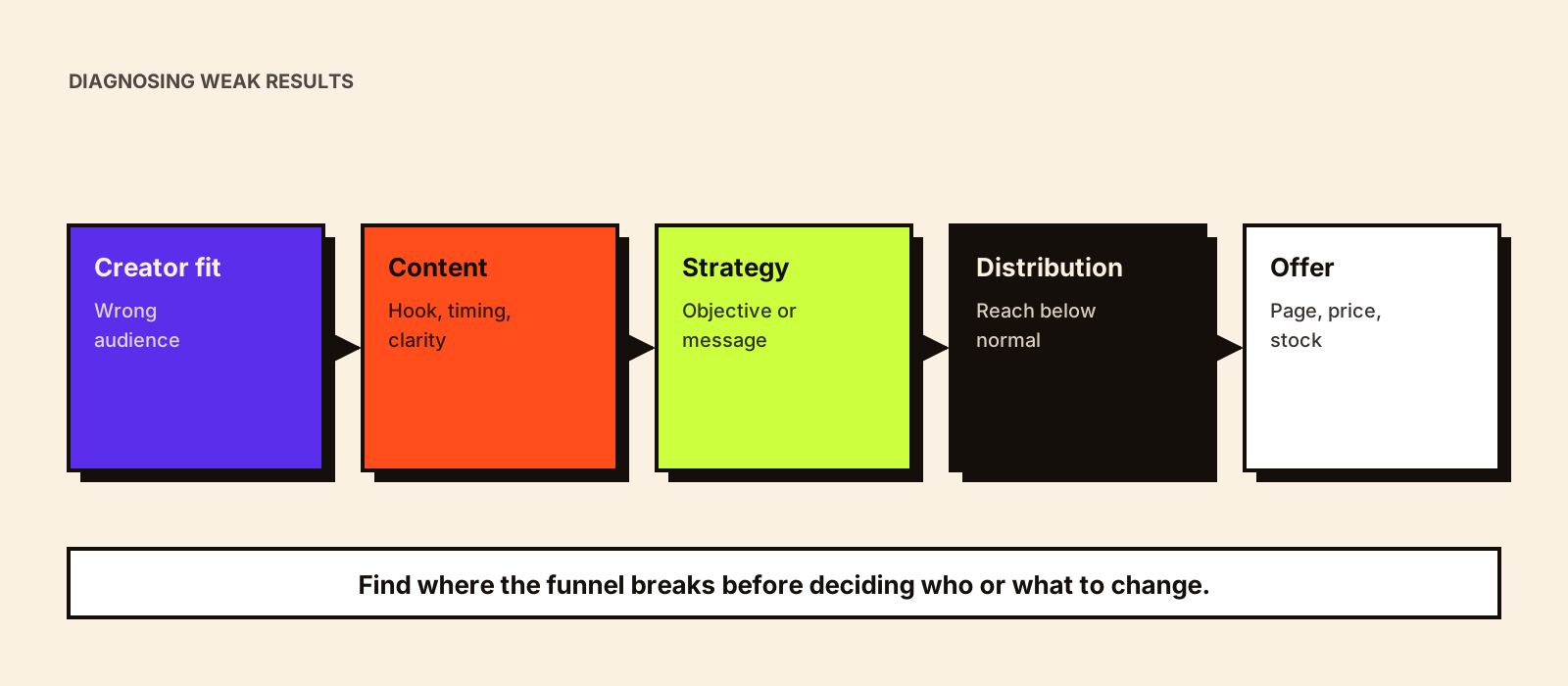
When an influencer campaign underperforms, the usual reaction is to blame the creators and book different ones next time. Sometimes that's right. Often the creators were fine and the problem was the offer, the landing page, the objective, the tracking or the brief. Changing creators without diagnosing the cause tends to repeat the same result with new faces.
Quick answer
To fix an underperforming influencer campaign, first confirm it really underperformed (against a fair baseline, the right objective and the same capture day). Then find where the funnel breaks: reach, attention, engagement, clicks or conversion. The break point usually points to the cause: a creator or audience-fit problem, a content problem, a strategy problem, a distribution problem, a measurement problem or an offer and product problem. Fix the cause that fits the evidence, not the easiest one to change.
Step 1: Is it really underperforming?
- Compared with what? Your own baseline for similar creators, formats and objectives, not a generic benchmark.
- Judged on the right metric? An awareness campaign shouldn't be judged on code sales.
- At the right time? Long-form and searchable content may still be building.
- With complete data? Creator-reported insights, not just public likes.
- Including what tracking misses? Marketplace sales and later purchases may not show in links or codes.
Influencer benchmarking and influencer performance data explain how to set a fair comparison.
Step 2: Find where the funnel breaks
| Break point | Pattern | Most likely causes |
|---|---|---|
| Reach | Views well below the creator's usual | Distribution, timing, format, platform changes, hook |
| Attention | Views OK, low watch time or completion | Hook, pacing, product appears too late |
| Engagement | Watched, but few saves, shares, meaningful comments | Content relevance, audience fit, creator credibility on the topic |
| Clicks | Engaged, but few link clicks | CTA, link placement, offer clarity, audience intent |
| Conversion | Clicks, but few orders or leads | Landing page, price, offer, stock, delivery, trust |
Step 3: Separate the six kinds of problem
| Problem type | Signs | What to check | Fix |
|---|---|---|---|
| Creator / audience fit | Low engagement from the target audience; comments from the wrong region or language | Audience insights; comment language and location | Different creators or segments next time |
| Content | Good reach but weak attention or engagement | Hook, product timing, clarity, authenticity | Better brief; creative freedom; different angle |
| Campaign strategy | Many creators underperform in the same way | Objective, message, creator roles, budget split | Rethink objective, message or mix |
| Distribution | Views well below creators' normal across the board | Posting time, format, platform changes, overlap between creators | Timing, format, amplification |
| Measurement | Results look weak but sales or search moved | Tracking setup, attribution gaps, capture days | Fix tracking; use wider measures |
| Offer / product | Clicks but no conversion; price objections in comments | Landing page, price, stock, delivery, reviews | Fix offer, page or product information |
If most creators underperform in the same way, look at strategy, offer or measurement before blaming creators. If one creator underperforms while others in the same brief do well, look at that creator's fit and content.
When the problem is one creator
- Compare the sponsored post with the creator's own recent posts: was it unusually weak for them?
- Check audience fit: did their audience match the campaign's market and language?
- Check execution: did they follow the brief, post on time, include the link and code?
- Check the content: was the product introduced late, or the message forced?
- Talk to them: creators often know why a post underperformed (timing, platform issues, audience reaction).
- Record it fairly on the scorecard; one weak post isn't a verdict on a creator.
Creator performance scorecard covers evaluating creators across several dimensions, and creator feedback loop covers asking creators what they saw.
What to do now vs next time
| Now (campaign still live) | Next campaign |
|---|---|
| Fix links, codes, landing page, stock | Change creator segments or roles |
| Answer audience objections publicly | Rewrite the brief and angle |
| Amplify the posts that did work (with permission) | Adjust objective and KPIs |
| Share learnings with creators yet to post | Fix tracking and attribution |
| Shift reserve budget | Test one change deliberately |
Mid-campaign optimization covers what's realistic during a live campaign.
Hypothetical example
Hypothetical: a fintech app's campaign with 12 personal-finance creators drives views in line with their usual numbers but very few installs. Comments are full of 'is this safe?' and 'what are the charges?'. The landing page answers neither question. The diagnosis isn't the creators; it's an offer and trust problem at the conversion step. The brand adds a clear fees and safety section, asks creators still to post to address safety in their own words, and plans the next campaign with an education-led brief.
Common mistakes
- Replacing all creators without diagnosing the cause.
- Judging against generic benchmarks instead of your own baseline.
- Ignoring comments, which often explain the problem directly.
- Measuring only link clicks and codes when much of the effect shows up elsewhere.
- Concluding from one campaign what needs two or three to confirm.
Conclusion
Weak results are information. Confirm the problem against a fair baseline, find where the funnel breaks, decide whether it's a creator, content, strategy, distribution, measurement or offer problem, and fix that cause. Change what you can now, plan the bigger fixes for the next campaign and record what you learned in the post-mortem.