Social Listening for Influencer Marketing: How Brands Can Find Creator Opportunities
How to use social listening to find creators who already talk about your category, spot content angles, monitor campaigns and catch brand-safety issues, with a query plan and workflow for Indian brands.
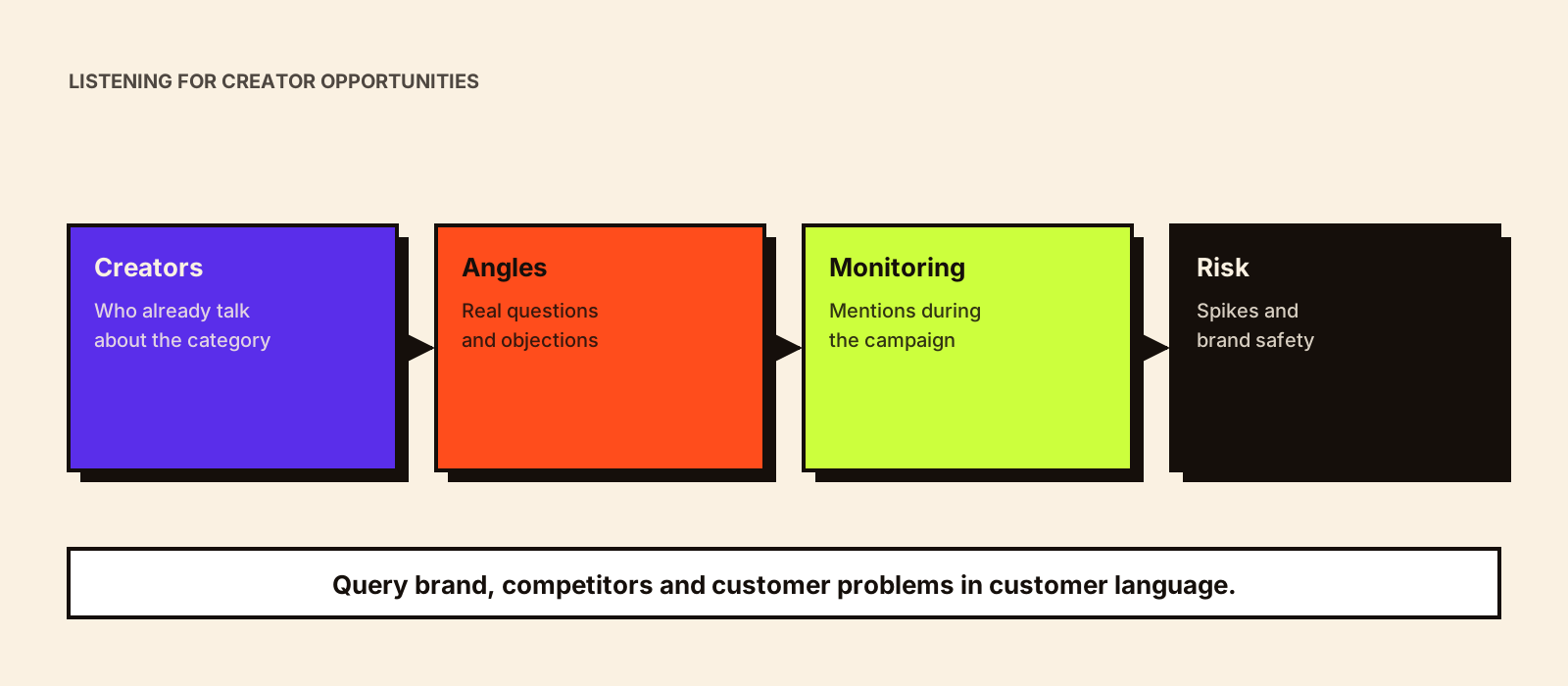
Most creator searches start with 'who's popular in our category?' Social listening starts with a better question: 'who's already talking about the problems we solve, our brand or our competitors, and what are their audiences saying back?' The creators it surfaces often have more credibility with your customers than the obvious names, because they were talking about the topic before anyone paid them to.
Quick answer
Social listening for influencer marketing means tracking public conversations about your brand, competitors and category to find creators who already talk about them, understand which content angles resonate, monitor live campaigns and spot brand-safety risks early. Set up queries for brand and product names (including misspellings and regional-language versions), competitor names, category problems and campaign hashtags, review results weekly and route them to discovery, briefs or risk review. Listening tells you who is talking and what about; it still needs human vetting before any creator is approved.
Four ways listening helps creator marketing
| Use | What you look for | What you do with it |
|---|---|---|
| Creator discovery | Creators who mention your brand, competitors or category problems unprompted | Add to long list; prioritise genuine fans and category experts |
| Content angles | Questions, complaints, comparisons and phrases customers use | Write briefs around real customer language |
| Campaign monitoring | Mentions, sentiment and questions during and after a campaign | Answer questions, adjust messaging, find content to amplify |
| Brand safety and risk | Negative spikes, controversy involving creators you work with, misinformation | Pause, respond or review before it grows |
Listening vs monitoring
Monitoring tracks direct mentions and tags of your brand. Listening looks wider: conversations about your category, your customers' problems and your competitors, even when nobody tags you. For creator marketing, the wider view is more valuable because most of the creators worth finding have never tagged you.
Build a listening query plan
BRAND
• Brand name, product names, common misspellings
• Handle mentions and brand hashtag
• Hindi/regional transliterations if customers use them

COMPETITORS
• 3–5 competitor brand names and handles
• Their campaign hashtags

CATEGORY PROBLEMS (customer language, not product language)
• 'cold coffee at home', 'filter coffee recipe', 'coffee without machine'
• 'best coffee for beginners', 'too bitter coffee'
• Regional: Tamil/Kannada terms for filter coffee

CAMPAIGN
• Campaign hashtag, creator handles + brand name

EXCLUDE
• Unrelated meanings, job posts, spam terms
Write category queries in the words customers use, not in your marketing language. People search and post about 'how to make cold coffee at home', not 'premium instant coffee'.
Finding creators through listening
Sorting category conversations by author surfaces creators who already shape the topic: people who start discussions, answer questions and get tagged when the subject comes up. It's slower than filtering a database and finds creators with genuine topic authority. Social listening for creator discovery sets out the full workflow, from topic queries to scoring conversation influence. Creators who mention your own brand are a separate, warmer group; see brand mention monitoring.
Everyone you find this way still goes through normal vetting. How to vet influencers covers the checks, and influencer search tools covers other ways to build the long list.
Turning listening into better briefs
The most underused output of listening is customer language. Before a campaign, pull the top questions and objections from category conversations and put them in the brief as 'questions your audience is likely to ask'. Creators can then answer real concerns in their own words, which usually works better than reciting product features. For example, if listening shows people asking whether a sunscreen leaves a white cast on darker skin, a creator showing that on camera answers the question that actually blocks purchase.
Listening during and after campaigns
- Track mentions and sentiment around the campaign hashtag, brand name and creator handles.
- Flag product questions in comments so someone can answer them, ideally with the creator.
- Spot organic posts from people who weren't paid, which may be worth reposting with permission or inviting into a future campaign.
- Compare conversation volume and themes before, during and after the campaign as one input into awareness measurement.
- Watch for negative spikes and escalate quickly.
Platform coverage and limits
Listening tools see what platforms make available to them. Coverage is generally broader for public posts on platforms with open data access and narrower for others; Instagram Stories, private accounts, WhatsApp groups and closed communities are largely invisible. Spoken mentions in videos may be missed unless the tool transcribes audio. For India, check how well a tool handles Hindi, regional languages and Hinglish, both in queries and in sentiment. Don't treat listening data as a complete picture of what people are saying.
X is one of the more listenable platforms; X social listening covers it specifically. Brand-safety responses are covered in influencer brand safety.
A weekly listening workflow
1. Review new brand and competitor mentions → flag creators, questions, risks
2. Review top category conversations → note recurring questions and phrases
3. Add promising creators to the database with source = 'listening' and a note
4. Send product questions to the team that answers customers
5. Escalate any risk to the brand-safety owner
6. Monthly: summarise top themes for the next campaign brief
Do you need a listening tool?
Native platform search, saved searches and alerts can cover a small brand's listening needs, especially in a narrow category. Dedicated listening tools become worthwhile when mention volume is high, you need several languages or platforms in one view, or you want history and trend analysis. Some influencer marketing platforms include listening features; check they cover the platforms and languages that matter to you before paying for them.
Example: listening before a regional launch
Illustrative example: a home-appliance brand plans a Tamil Nadu launch of a wet grinder with a new feature. Four weeks of listening on Tamil and English category terms ('idli batter', 'grinder noise', 'mixer vs grinder') turns up three useful things: a set of Chennai and Coimbatore cooking creators who discuss grinder brands in detail, a recurring complaint about noise in small apartments, and comparisons between tabletop and traditional grinders. The brief then leads with noise and apartment use, and the shortlist starts from creators already trusted on the topic.
How to show listening is worth the time
| Output | Evidence of value |
|---|---|
| Creators found through listening | How many were booked, and how they performed against others |
| Brief angles from listening | Performance of content using those angles |
| Questions answered during campaigns | Reduction in repeated questions; comment sentiment |
| Risks caught early | Issues escalated before they spread |
Tag creators sourced through listening in your database so you can compare their results over time.
Common mistakes
- Only monitoring brand mentions and missing category conversations.
- Using product language in queries instead of customer language.
- Treating automated sentiment percentages as precise.
- Collecting insights nobody uses in briefs or creator selection.
- Reaching out to every creator who mentioned the brand without vetting them.
Conclusion
Social listening finds creators who were already talking about your category, gives briefs the words your customers actually use, and keeps watch during campaigns. Set up queries for brand, competitors, category problems and campaigns, review weekly and route findings into discovery, briefs and risk review. To use listening for timing as well as creators, see influencer trend tracking.