How to Use Customer Insights in Influencer Briefs: Reviews, Objections and Segments
How to turn customer reviews, support questions, sales objections and comment threads into better creator briefs: matching creators to customer problems, writing to segments, turning objections into content angles, and the honesty and privacy limits to respect.
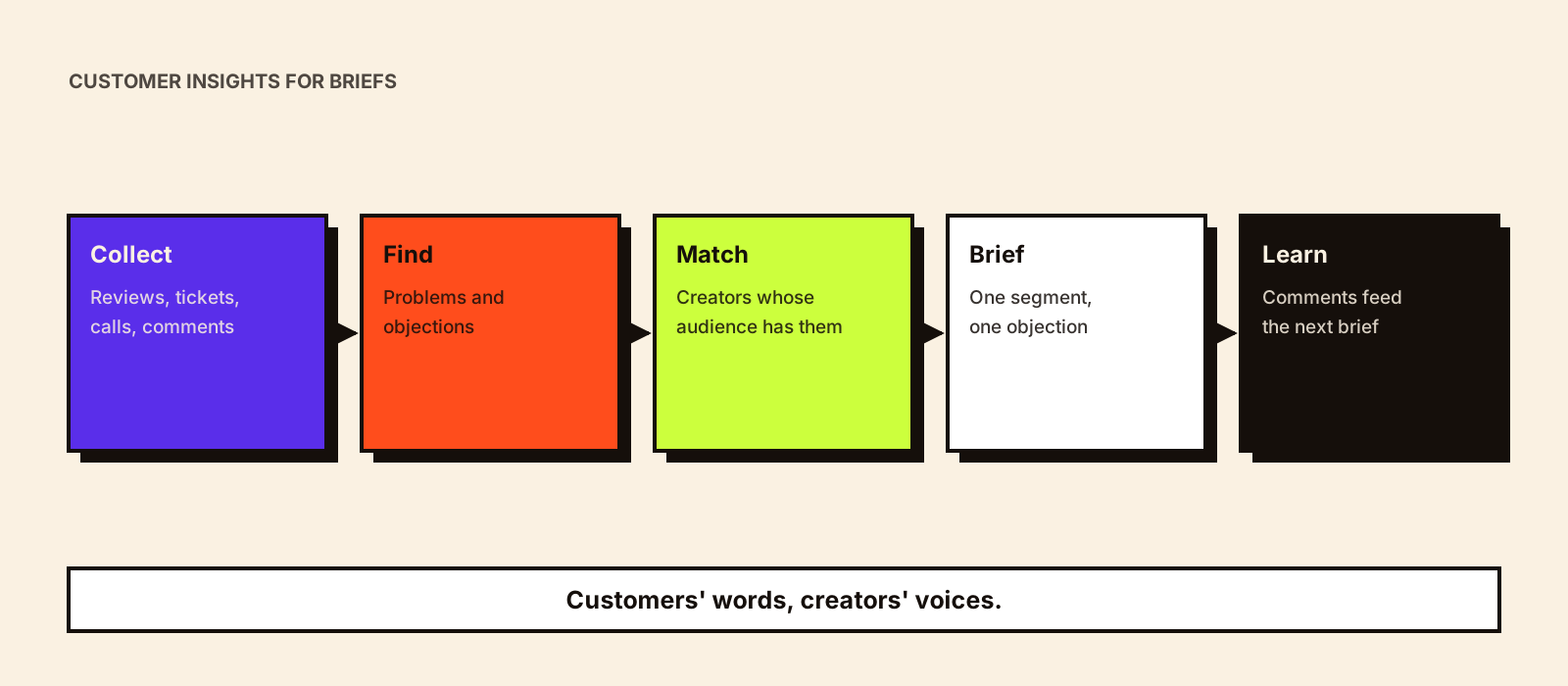
Most influencer briefs describe the product the way the brand sees it. Customers describe it differently: the problem they had, the doubt that nearly stopped them, the moment it worked. Briefs built on those words give creators something real to talk about. This guide covers where to find customer insight and how to turn it into a brief.
Quick answer
Collect what customers already say in reviews, support tickets, sales calls, returns and comments. Pull out the problems they're solving, the objections they raise and the words they use. Choose creators whose audiences have those problems, give each creator one problem and one objection to address, and let them show it in their own way. Never present customer quotes as the creator's experience, and keep personal data out of the brief.
Where customer insight comes from
| Source | What it tells you | Caution |
|---|---|---|
| Reviews (your site, marketplaces) | Outcomes, surprises, customers' own words | Skewed to very happy or unhappy buyers |
| Support tickets and chats | Confusion and setup problems | Shows problems, not reasons to buy |
| Sales call notes | Objections and competing options | Depends on how well notes are kept |
| Return and cancellation reasons | Expectations the product didn't meet | Small numbers can mislead |
| Comments on creator posts | Questions real audiences ask | Read in aggregate; don't collect personal data |
| Site search and FAQ visits | What people look for before buying | Needs analytics set up |
Comments on past creator campaigns are especially useful because they come from the audiences you'll reach again. Influencer social listening covers how to collect them across platforms, and creator feedback loops cover what creators themselves notice in their communities.
Match creators to customer problems
Start from the problem, not the creator category. A sleep supplement might suit a new-parent creator, a shift-work nurse and a frequent traveler, each for a different reason. Look for creators whose audiences already ask about the problem, and check audience location and age against your customers. Choosing the right influencer for your brand covers the rest of the selection checks.
Turn objections into content
| Objection customers raise | Creator content angle |
|---|---|
| "It's too expensive" | Cost per use, or comparison with what they use now |
| "Will it work for me?" | Use by someone like the audience, including limits |
| "It looks complicated" | Setup from unboxing to first use |
| "I've tried things like this before" | What's different, shown, not claimed |
| "Is it safe or legitimate?" | Certifications, policies, returns; checked claims only |
Brief by segment
If customers buy for different reasons, write one short section of the brief per segment instead of one message for everyone. For each segment, note the problem, the main objection, the proof that matters to them and the type of creator who reaches them. Give each creator one segment, so each video stays focused.
Segment: who they are (in customers' words)
Problem: what they're trying to solve
Words customers use: 3–5 phrases from reviews or calls
Main objection: and what genuinely answers it
Proof we can support: approved claims and evidence
What not to say: claims we can't prove, competitor comparisons we haven't checked
Creator freedom: how they show it is up to them
Add this to the rest of the brief; our influencer campaign brief guide covers the other sections.
Honesty and privacy limits
- Customer quotes can inform the brief, but creators speak from their own use
- Don't ask creators to repeat review claims you can't support
- Remove names and contact details from anything shared
- Summarize comments in aggregate rather than storing individual profiles
- Check claims against advertising rules in each market
Our influencer marketing compliance guide covers claims and disclosure by market.
Common mistakes
- Briefs written only in the brand's language
- Asking one video to answer every objection
- Choosing creators by category instead of the problem their audience has
- Turning customer reviews into a creator's script
Conclusion
Customer insight makes creator content more specific: the right problem, the right doubt and the words people actually use. Collect it before the brief, match creators to the problems and let them show the answer honestly. After the campaign, the comments become insight for the next brief.