How Do You Build an Influencer Campaign Calendar?
How to build an influencer campaign calendar: the annual planning calendar and the production calendar, working back from anchor dates, staggering go-lives, market moments in India, the Gulf, the UK, Australia and Singapore, and a template.
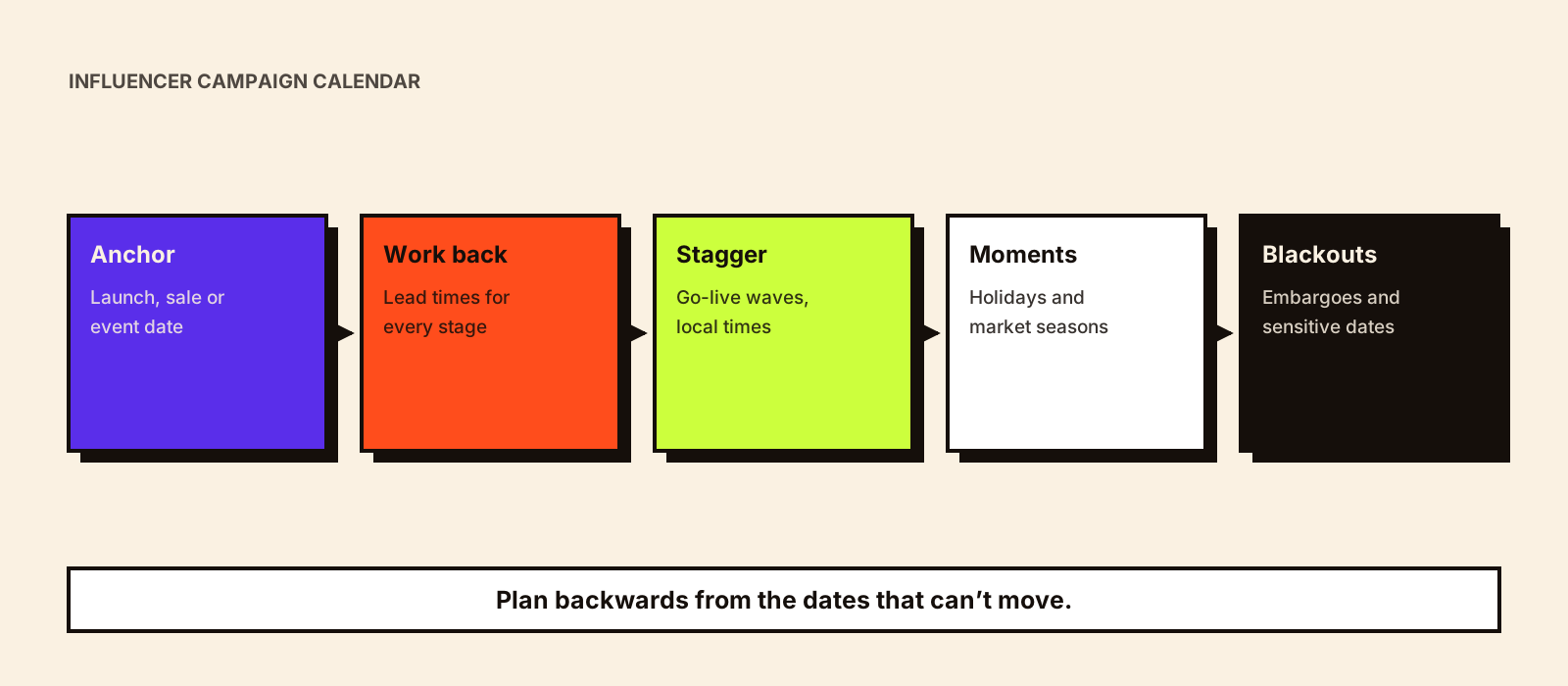
Most influencer campaigns that miss their moment didn't fail on creative. They failed on dates: product reached creators after the launch, drafts landed during a public holiday, or every creator posted on the same afternoon and the campaign disappeared by the weekend. A calendar fixes this by putting every date that matters in one place, worked back from the dates that can't move.
Quick answer
Build an influencer campaign calendar in six steps: fix the anchor dates that can't move (launch, sale, event), add the market moments and holidays that affect your audiences and creators, work backwards from each anchor using realistic lead times for sourcing, contracts, shipping, drafts and approvals, stagger creator go-lives rather than posting all at once, mark blackout dates (embargoes, exclusivity periods, sensitive dates), and give each date an owner. Keep two views: an annual calendar for planning campaigns across the year, and a production calendar with every creator's dates for each campaign.
Two calendars, two jobs
| Annual planning calendar | Campaign production calendar | |
|---|---|---|
| Answers | Which campaigns run when, and how they fit the business calendar | What each creator must do, by when |
| Main dates | Launches, sales, seasons, market holidays, budget periods | Brief sent, product delivered, draft due, feedback due, go-live, insights due |
| Owner | Marketing lead | Campaign manager |
| Reviewed | Quarterly | Daily or weekly during a campaign |
| Detail | Weeks and months | Days, and in launch week, hours |
Planning a full year of creator activity is covered in the influencer marketing annual plan. This guide focuses on building the calendar itself.
Step 1: Fix the anchor dates
Anchor dates are the ones the campaign serves: a product launch, a marketplace sale, a store opening, an event, a festival. Write them down first and agree with stakeholders that they're fixed. If an anchor date might move, note the latest date it can move to, because everything else depends on it.
Step 2: Add market moments and holidays
| Market | Moments that commonly shape creator calendars | Planning note |
|---|---|---|
| India | Diwali and the wider festive season, regional festivals (Durga Puja, Onam, Pongal and others), wedding season, marketplace sale events | Popular creators book up early; regional festivals fall on different dates by state |
| UAE and Saudi Arabia | Ramadan, Eid al-Fitr, Eid al-Adha, national days, shopping festivals, summer travel | Islamic holidays follow the lunar calendar and move about 11 days earlier each year; final dates depend on moon sighting |
| United Kingdom | Black Friday, Christmas, January sales, back to school | Retail peaks concentrate demand for creators in Q4 |
| Australia | End of financial year sales (June), Christmas in summer, Black Friday | Seasons are reversed from the northern hemisphere, which changes product and content timing |
| Singapore | Lunar New Year, mid-year and year-end sales, 11.11 and 12.12 online sales | Multilingual audiences may need separate creators or versions |
Check holiday dates each year from official sources such as the UAE government's public holidays page, and confirm working weeks in each market. Seasonal planning in detail is covered in seasonal influencer marketing in India, UK seasonal influencer campaigns and influencer campaign timelines in Australia.
Step 3: Work backwards from each anchor
For each anchor, count back through the stages that must happen first. The lead times below are planning assumptions for a campaign starting from scratch; use your own history once you have it.
| Milestone | Counts back from | What usually decides the gap |
|---|---|---|
| Results and report | Last go-live | Your measurement window: a week for reach, several weeks for sales |
| Last go-live | Anchor date | Whether content should lead into the moment or follow it |
| Final approval | Each go-live | At least a couple of working days so creators aren't rushed |
| Drafts due | Final approval | Your review time plus one revision round |
| Product delivered | Drafts due | Time for creators to use the product honestly before filming |
| Brief and kickoff | Product delivered | Shipping time, especially to smaller cities or across borders |
| Contracts signed | Brief | Negotiation, usage rights and legal review |
| Shortlist approved | Contracts | Outreach and response time |
Typical stage lengths, and what slows them down, are in influencer marketing campaign timeline.
Step 4: Stagger go-lives
Unless the objective is a single moment of maximum visibility, spread creator posts across days or weeks. Staggering keeps the brand visible for longer, lets you learn from the first posts and adjust later briefs, spreads your team's checking and comment-moderation load, and gives people several chances to see the product from different creators. For launches, a common shape is a small group of creators before launch (under embargo, posting on launch day), a larger wave in launch week, and follow-up content afterwards.
Schedule posts in the audience's local time, not head office time, and use each creator's own audience insights to choose the hour rather than generic 'best time to post' advice. Instagram's professional insights, for example, show creators how their audience engages over time.
Step 5: Mark blackout dates
- Embargoes: nothing goes live before the launch announcement.
- Exclusivity periods: dates when a creator can't post for a competitor, or when your brand shouldn't sit next to a competitor's campaign on the same account.
- Sensitive dates: religious observances, days of national significance, and periods when light-hearted promotion would be inappropriate.
- Your team's own blackouts: office closures and holidays when nobody can approve content.
- Stock and fulfilment limits: dates when you couldn't ship orders the campaign creates.
Step 6: Give every date an owner
A date without an owner is a hope. Each milestone needs one named person on your side (or the agency's) who confirms it happened, plus a backup. Share the calendar in a format everyone can see, and agree that only the owner moves a date, with a note of why.
A production calendar template
Creator | Platform and deliverable | Market and time zone | Brief sent | Product shipped | Product delivered (confirmed) | Concept due | Draft due | Feedback due | Final due | Go-live date and local time | Minimum live until | Insights due | Owner | Status | Notes
The calendar shows when things should happen; the tracker shows whether they did. Keep them linked rather than separate: influencer campaign status tracking covers the tracker, and what an influencer campaign project plan should include covers the document that holds scope, owners and risks alongside the dates.
Hypothetical example
Hypothetical: a skincare brand launches a serum on a fixed Monday in India and the UAE. Working back, it plans results two weeks after the last post, three go-live waves (four creators on launch day under embargo, eight in launch week, six in the fortnight after), final approvals two working days before each wave, drafts five working days before that, product delivered at least ten days before drafts so creators can try the serum properly, and contracts signed a week before shipping. The UAE creators' permit numbers are checked before contracts, and drafts in Arabic are reviewed by a native speaker. The calendar marks Eid dates as tentative until confirmed, and no approvals are expected on the team's office holiday.
Common mistakes
- Planning forward from today instead of backwards from the anchor date.
- Forgetting shipping time, especially to smaller cities or across borders.
- Setting draft deadlines without the reviewer's availability.
- Every creator posting on the same day by default.
- Holiday dates copied from last year without checking.
- A calendar nobody owns, updated only when something has already slipped.
Conclusion
A good influencer campaign calendar starts from the dates that can't move, works backwards through realistic lead times, staggers go-lives, respects each market's moments and blackouts, and gives every date an owner. Keep an annual view for planning and a production view for each campaign, and link both to the tracker that shows what actually happened.