Influencer Marketing Campaign Timeline: From Brief to Final Report
How long an influencer marketing campaign takes in India, stage by stage from brief to final report: planning, creator sourcing and vetting, negotiation and contracts, briefing, production and approvals, go-live and reporting, with example timelines for a small test, a product launch and a festive campaign, and what slows campaigns down.
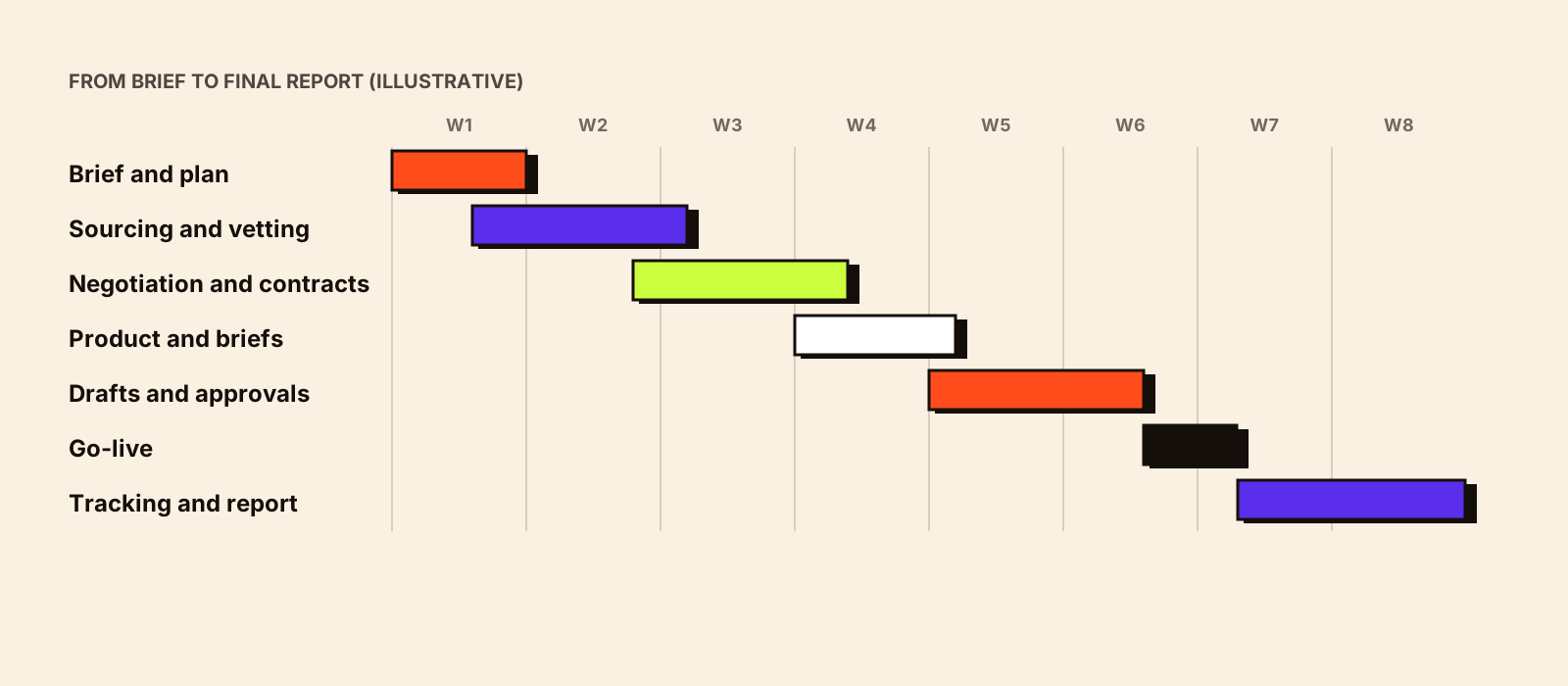
The most common planning mistake in influencer marketing is starting three weeks before a launch date that can't move. Creators need time to find a slot, make content and get it approved; your legal team needs time to read claims; parcels take time to reach Guwahati and Coimbatore. A realistic timeline is the difference between a campaign and a scramble.
Quick answer
A typical influencer campaign takes several weeks from brief to go-live, plus a live window and a few weeks for results and reporting. As a planning rule of thumb (illustrative, not a standard), a small test with a handful of micro-creators can go live in about three to five weeks from brief; a multi-creator product launch usually needs six to ten weeks; campaigns tied to festive seasons or large regional rollouts should start planning two to three months ahead. The biggest variables are creator availability, product shipping, approval speed, usage-rights negotiation and category compliance.
The stages and what drives their length
| Stage | What happens | What makes it longer |
|---|---|---|
| 1. Brief and planning | Objective, KPI, audience, budget, platforms agreed | Unclear objective; many stakeholders |
| 2. Creator sourcing and vetting | Longlist, audience checks, shortlist, client approval | Niche or regional creators; slow shortlist approval |
| 3. Outreach and negotiation | Availability, fees, usage, exclusivity | Usage rights for ads; exclusivity; many creators |
| 4. Contracts | Terms confirmed in writing | Legal review; vendor onboarding and POs |
| 5. Product and briefing | Product shipped, creator brief sent | Shipping to many cities; product not ready |
| 6. Production | Creators make content | Complex formats, shoots, travel |
| 7. Review and approvals | Drafts checked, revised, approved | Several approvers; regulated claims |
| 8. Go-live | Staggered or synchronized publishing | Launch-date dependencies |
| 9. Live window and tracking | Monitoring, amplification | Longer windows for sales or leads |
| 10. Reporting and review | Data collection, report, post-mortem | Waiting for sales data or platform insights |
Example timelines
Illustrative examples, not benchmarks. Your timeline depends on creator availability, approvals and logistics.
Small test: 6 micro-creators, one platform
| Week | Work |
|---|---|
| 1 | Brief, audience definition, sourcing longlist |
| 2 | Vetting, shortlist approval, outreach |
| 3 | Confirmations, product shipped, creator briefs |
| 4 | Drafts, one round of feedback, approvals |
| 5 | Go-live across a few days |
| 6–8 | Tracking window, then report and review |
Product launch: 20+ creators, launch date fixed
| Weeks before launch | Work |
|---|---|
| 10–8 | Strategy, creator mix, budget split, shortlist approval |
| 8–6 | Negotiation, usage rights, contracts, vendor onboarding |
| 6–4 | Product seeding, briefs, pre-launch teaser planning |
| 4–2 | Drafts, review, legal check of claims, approvals |
| 2–0 | Teasers, embargoed content scheduled, launch-day plan confirmed |
| Launch +0–4 | Launch-day posts, follow-up waves, paid amplification |
| Launch +4–8 | Results, report, post-mortem |
Launch planning in detail: how to find the right influencers for a product launch.
Festive campaign across regions
Popular creators in India book up ahead of Diwali, Durga Puja, Onam, Pongal and wedding season, and regional festivals fall on different dates. Start sourcing two to three months before the first festival you're targeting, lock creators early, and plan language-specific briefs and approvals per region. Seasonal planning is covered in seasonal influencer marketing in India.
What slows campaigns down, and fixes
| Delay | Fix |
|---|---|
| Slow shortlist approval | One decision-maker; approve on criteria agreed in the brief |
| Usage-rights negotiation late in the process | Decide ad usage before outreach |
| Vendor onboarding and purchase orders | Start finance paperwork in week one |
| Product not ready or stuck in transit | Ship early; track every parcel; plan a buffer |
| Many approvers, unlimited rounds | Named approvers, set turnaround, fixed revision rounds |
| Claims needing legal review | Share approved claims list with creators in the brief |
| Creator misses a date | Buffer days; backup creators from the shortlist |
How long should a campaign stay live?
It depends on the objective. Awareness campaigns often run as a concentrated burst so reach overlaps; sales and lead campaigns need a longer window, because creator content keeps working after posting and buying decisions take time. Considered purchases (cars, property, education, B2B software) need measurement windows of weeks or months. Metrics by objective are covered in influencer marketing KPIs.
Build the plan backwards
- Start from the fixed date (launch, sale, event) and work back.
- Add buffers at approvals and shipping, where delays cluster.
- Book creators before you finalize every detail of the brief when dates are tight.
- Put approval deadlines in writing for your own team, not just the agency.
- Keep a master tracker; see how influencer campaign management works.
Execution workflow: how influencer campaign management works. The planning steps themselves: how to create a successful influencer marketing campaign.
Conclusion
Influencer campaigns take longer than most first plans assume, because creator availability, shipping, approvals and rights negotiation all take time. Plan backwards from the fixed date, add buffers where delays cluster, make approval turnaround a commitment, and allow a measurement window that fits the purchase. A campaign planned this way goes live calmly.