Influencer Campaign Coordination: How Brands Can Manage Multiple Creators Efficiently
How to coordinate many creators in one campaign: batching work into waves, group vs individual communication, staggered go-lives, managing regional and language groups, shared FAQs, logistics at scale and the team you need.
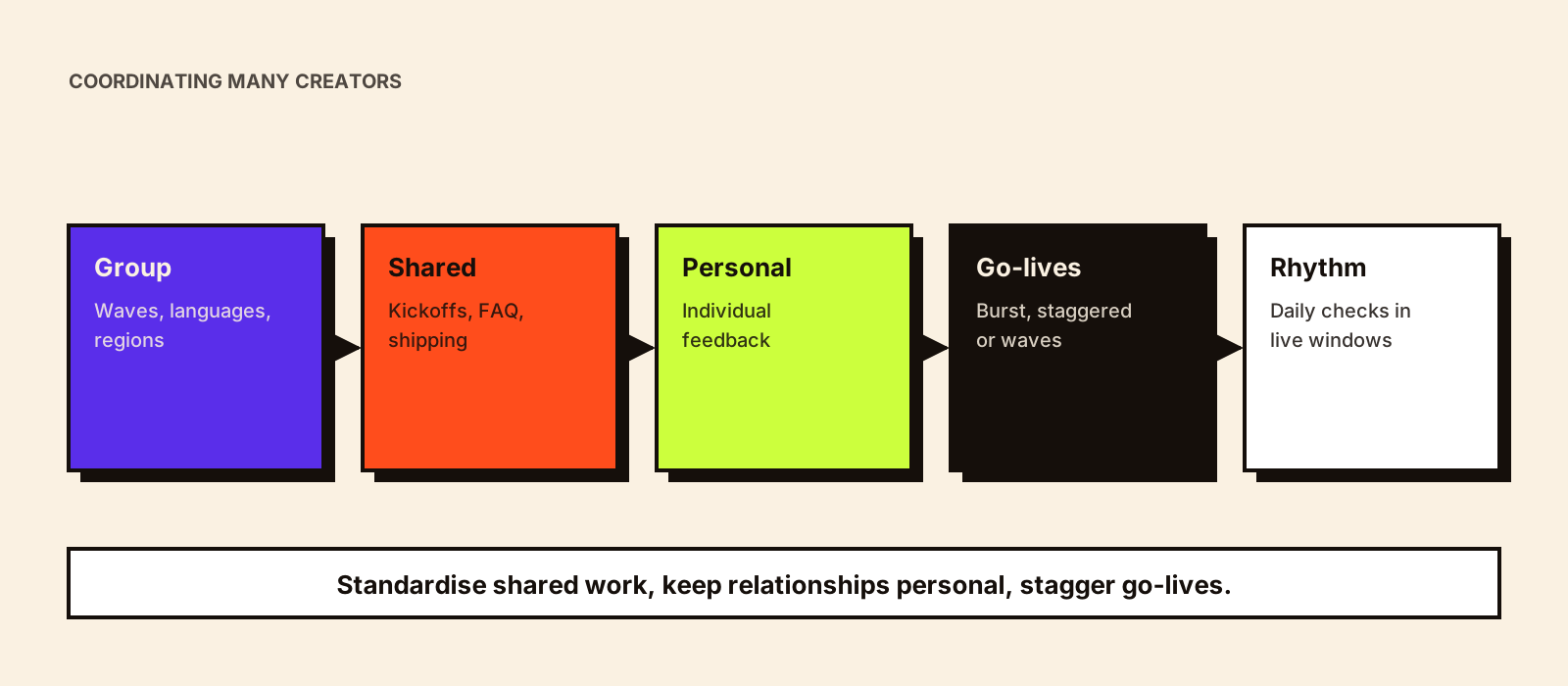
Managing three creators is a series of conversations. Managing forty is a logistics operation: forty addresses, forty agreements, drafts arriving on different days, questions that ten creators ask in slightly different words, and a go-live calendar that needs to make sense to the audience as well as the team. Coordination is what makes scale manageable without turning creators into a queue.
Quick answer
Coordinate multiple creators by grouping them (by wave, language, region or deliverable type), running shared activities once (group briefings, a common FAQ, batch shipping) while keeping individual relationships personal, staggering go-lives deliberately, tracking everyone in one tracker with fixed statuses, and sizing the team to the number of creators. Standardise everything that can be standardised so time is left for the creators who need attention.
Group creators sensibly
| Grouping | Why | Example |
|---|---|---|
| Waves | Spread workload and go-lives | Wave 1 launch week, wave 2 two weeks later |
| Language | Briefings, reviews and FAQs in the same language | Hindi, Tamil, Bengali groups |
| Region | Logistics and local timing | South India shipped first |
| Deliverable type | Different specs and reviews | Reels creators vs YouTube integrations vs UGC |
| Relationship | Different level of guidance | Repeat partners vs first-time creators |
Do shared work once
- Group kickoff per wave or language, with a recording or written recap.
- One FAQ document, updated as questions arrive and shared with everyone.
- Batch shipping with tracking shared in one message.
- Standard submission instructions and naming.
- Batch reviews at set times each day, so feedback is consistent.
Keep the relationship individual: personal confirmation messages, individual feedback, one-to-one calls for creators new to brand work. Influencer communication covers channels and ownership, and influencer campaign kickoff covers group sessions.
Plan go-lives deliberately
| Pattern | How | Use for |
|---|---|---|
| Synchronised burst | Many creators post within a short window | Launches, sale days, embargoed announcements |
| Staggered | Posts spread over days or weeks | Sustained presence; avoiding audience fatigue |
| Waves | Groups post in planned phases | Testing then scaling; regional rollouts |
| Always-on | Regular posts by a stable group | Ambassador programmes |
Synchronised bursts need the most coordination: drafts approved several days early, embargo instructions in writing, and a go-live checklist ready for the day. Influencers for product launch covers launch coordination.
Coordinating across languages and regions
- One core brief, localised per language and checked by native speakers.
- Reviewers who understand each language for claims and disclosure.
- Ship to farther regions first.
- Plan around regional festivals and local events.
- Report by region as well as overall.
How to run a pan-India influencer marketing campaign covers multi-market planning in depth.
Team size and roles
| Role | Typical responsibility |
|---|---|
| Campaign lead | Plan, decisions, escalations, stakeholder updates |
| Creator coordinators | A defined group of creators each: communication, tracker updates |
| Reviewer(s) | Consolidated feedback within agreed times |
| Logistics | Shipping, tracking, replacements |
| Analyst | Insights collection and reporting |
There's no fixed ratio of coordinators to creators; it depends on deliverable complexity, how many creators are new to brand work and how compressed the timeline is. A useful test: if a coordinator can't reply to every creator within the agreed response time during peak days, the team is too small. Influencer marketing team structure covers ownership models.
Daily coordination rhythm during live campaigns
MORNING: tracker flags: drafts due, feedback overdue, posts due today, products in transit
MIDDAY: batch review of submitted drafts; consolidated feedback sent
AFTERNOON: go-live checks on today's posts; FAQ updated; issues escalated
END OF DAY: tracker updated; tomorrow's go-lives confirmed with creators
Hypothetical example
Hypothetical: a D2C home brand runs 45 nano and micro creators across five languages for Diwali. It splits them into three waves and five language groups, runs one group kickoff per language, keeps a single FAQ, ships to the farthest regions first and assigns each of three coordinators about 15 creators. Wave 1 posts in the first festive week; insights from wave 1 refine the brief for waves 2 and 3. The team handles 45 creators without anyone feeling like a ticket number.
Coordination checklist
□ Creators grouped by wave, language and region
□ One owner per creator; coordinators' groups assigned
□ Group kickoffs scheduled; written recaps ready
□ Shared FAQ created and linked in every brief
□ Shipping plan: farthest regions first; tracking shared
□ Submission instructions and naming standard sent
□ Reviewers for each language confirmed; batch review times set
□ Go-live pattern decided (burst, staggered, waves) and calendar shared
□ Tracker set up with flags for due-soon and overdue items
□ Escalation contacts shared; reserve creators identified
□ Go-live checklist ready for each posting day
Influencer content quality check provides the go-live checklist, and influencer campaign escalation covers what to do when something goes wrong mid-campaign.
Common mistakes
- Treating every creator identically, including repeat partners and first-timers.
- Answering the same question 20 times instead of updating a shared FAQ.
- All go-lives on one day without a reason.
- No regional or language reviewers.
- One coordinator for too many creators at peak times.
Conclusion
Coordinating many creators is about grouping, standardising shared work, planning go-lives deliberately and keeping relationships personal. Use one tracker, a shared FAQ, batch reviews and a daily rhythm in live windows, and size the team so every creator still gets timely replies. For the tracker itself, see influencer campaign tracker.