Influencer Communication Strategy: How Brands Should Manage Creator Communication
How brands should manage creator communication through a campaign (channels, ownership, response times, update rhythm, escalation and documentation) and the seven misunderstandings that cause most creator campaign problems, with fixes.
Ask creators what makes a brand difficult to work with and communication comes up quickly: three people asking for different changes, replies that take a week, deadlines mentioned once in a voice note, requirements that change after filming. Most of these aren't bad intentions; they're the absence of a plan.
Quick answer
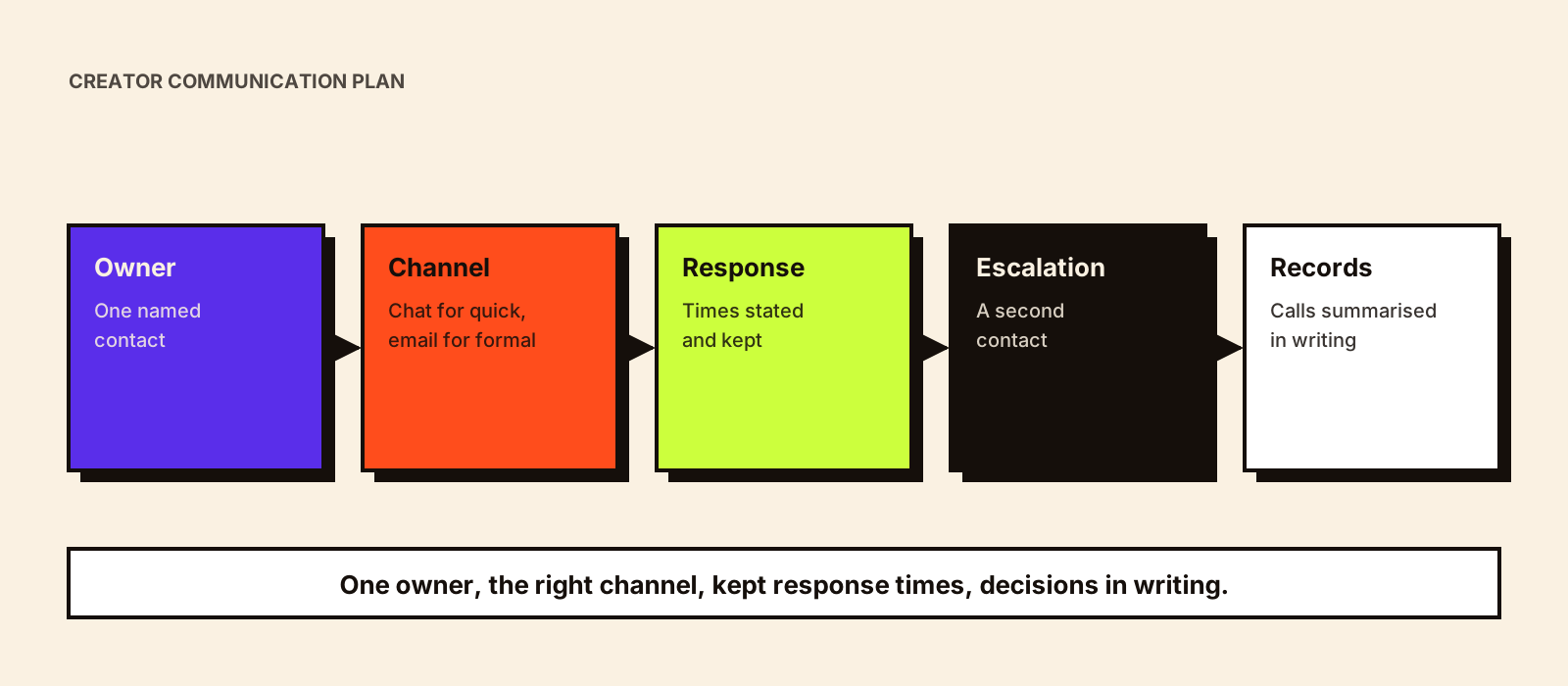
Brands should manage creator communication with one named owner per creator, an agreed channel for day-to-day messages and email for anything formal, clear response-time expectations on both sides, a predictable update rhythm, an escalation contact, and written records of every decision. Most misunderstandings come from unclear deliverables, deadlines, revisions, usage rights, payment terms or changing requirements, and each can be prevented by confirming it in writing before production.
The communication plan
| Element | Good practice |
|---|---|
| Ownership | One named brand contact per creator, plus a backup |
| Channel | Agree one channel for quick coordination; use email for agreements, briefs and changes to terms |
| Response times | Brand commits to replying within a set time (for example one working day); creators tell you their usual availability |
| Update rhythm | Updates at milestones (product shipped, draft received, feedback sent, approved, live, paid), not constant check-ins |
| Escalation | A second contact for urgent issues: delays, product problems, comment backlash |
| Documentation | Decisions confirmed in writing in one place; voice notes and calls summarised |
| Language | The creator's preferred language where possible, especially for regional creators |
Choosing channels
| Channel | Use for | Avoid for |
|---|---|---|
| Agreements, briefs, changes to terms, invoices, formal decisions | Quick back-and-forth on a draft | |
| WhatsApp (if the creator prefers) | Quick coordination, delivery updates, reminders | Contract terms, payment details, anything you'll need on record |
| Instagram DM | First contact with smaller creators; light coordination | Formal terms |
| Project tool or creator portal | Draft submission, feedback, approvals at scale | Creators who can't or won't use it (have a fallback) |
| Calls | Kickoff, complex feedback, resolving problems | Decisions that aren't then written down |
Seven misunderstandings, and how to prevent them
| Misunderstanding | What happens | Prevention |
|---|---|---|
| Unclear deliverables | 'One Reel' turns out to mean different lengths, formats or extras | Specify format, length, platform, number, captions, links in writing |
| Unclear deadlines | Go-live known, draft date not; feedback window unknown | Share every date in one list: product, draft, feedback, revisions, live |
| Changing requirements | New mandatory points added after filming | Freeze the brief before production; treat changes as a scope change |
| Unclear revisions | Endless rounds; taste-based feedback | Agree number of rounds and what counts as a revision |
| Unclear usage rights | Brand runs content as ads the creator priced as organic | State usage platforms and duration before agreeing fee |
| Unclear payment terms | Creator expected payment on posting; finance pays 60 days after invoice | Agree timing, invoice process and vendor setup upfront |
| Poor communication | Slow replies, several brand voices, decisions lost in chats | One owner, response times, written recaps |
Most of these are settled during negotiation and onboarding; the communication plan makes sure they stay settled. How to negotiate with influencers and influencer onboarding cover the earlier steps.
Handling creator questions
- Encourage questions at kickoff; many creators hesitate to ask later.
- Answer quickly, even if the answer is 'checking with the team, back by tomorrow'.
- Share answers to common questions with all creators in a campaign, not just the one who asked.
- If a question reveals a gap in the brief, update the brief and tell everyone.
Communicating changes and problems
Plans change: launches move, stock runs short, claims get revised. Tell creators as early as possible, explain what changes for them, and be fair about the impact. If a change adds work or delays their schedule, discuss compensation or flexibility rather than assuming they'll absorb it. If something goes wrong after posting, such as negative comments or a product issue, the escalation contact should reach the creator quickly with clear guidance.
Communication checklist
□ Named brand owner and backup shared with creator
□ Channel agreed for coordination; email for formal matters
□ Brand response time stated and kept
□ All key dates shared in one message
□ Brief frozen before production
□ Revision rounds agreed
□ Usage and payment terms confirmed in writing
□ Calls and voice notes summarised in writing
□ Escalation contact shared
□ Milestone updates sent (shipped, received, approved, live, paid)
Communication with managers and agencies
When a creator is managed, agree who handles what: usually commercial and scheduling with the manager, creative detail with the creator. Copy the manager on anything that affects terms, dates or payment. If you work through an agency, make sure creators know who to contact and that the agency passes on brand decisions without delay.
Communication for multi-creator and regional campaigns
- Send the same core updates to every creator at once (dates, brief clarifications, FAQs) so nobody is working from older information.
- Group creators by language for briefings and updates where possible.
- For WhatsApp groups, agree that decisions are confirmed by email; groups move fast and messages get buried.
- Respect creators' time zones and working hours, including those outside India.
- Plan for slower responses around major festivals, when creators are busiest.
Hypothetical example
Hypothetical: a fashion brand runs a 15-creator festive campaign. Midway, the launch date moves by four days. The campaign manager emails all creators the same afternoon with the new date, what it means for their draft and go-live dates, and confirmation that fees and terms are unchanged; she follows up individually with the three creators whose travel plans clash. Nobody hears about the change from another creator, and nobody has to chase for details.
Influencer feedback covers how to communicate changes to drafts, and creator experience covers how communication shapes the overall creator journey.
Common mistakes
- Several brand team members messaging the same creator.
- Decisions made on calls and never written down.
- Contract terms negotiated over WhatsApp.
- Going silent while waiting for internal approvals.
- Treating creator questions as a nuisance.
When an issue needs more than a quick message, influencer campaign escalation sets out severity levels, owners and response times.
Conclusion
Good creator communication is planned: one owner, the right channel for each kind of message, response times you keep, milestone updates, an escalation route and written records. Settle the common sources of misunderstanding before production and communicate changes early and fairly. For giving feedback on drafts specifically, see influencer feedback.