Influencer Onboarding: How Brands Should Set Up Creators Before a Campaign
How brands onboard creators between 'yes' and the brief: the step-by-step process from selection to first draft, what to confirm and collect, a full onboarding checklist, onboarding for regional and first-time creators, and common mistakes.
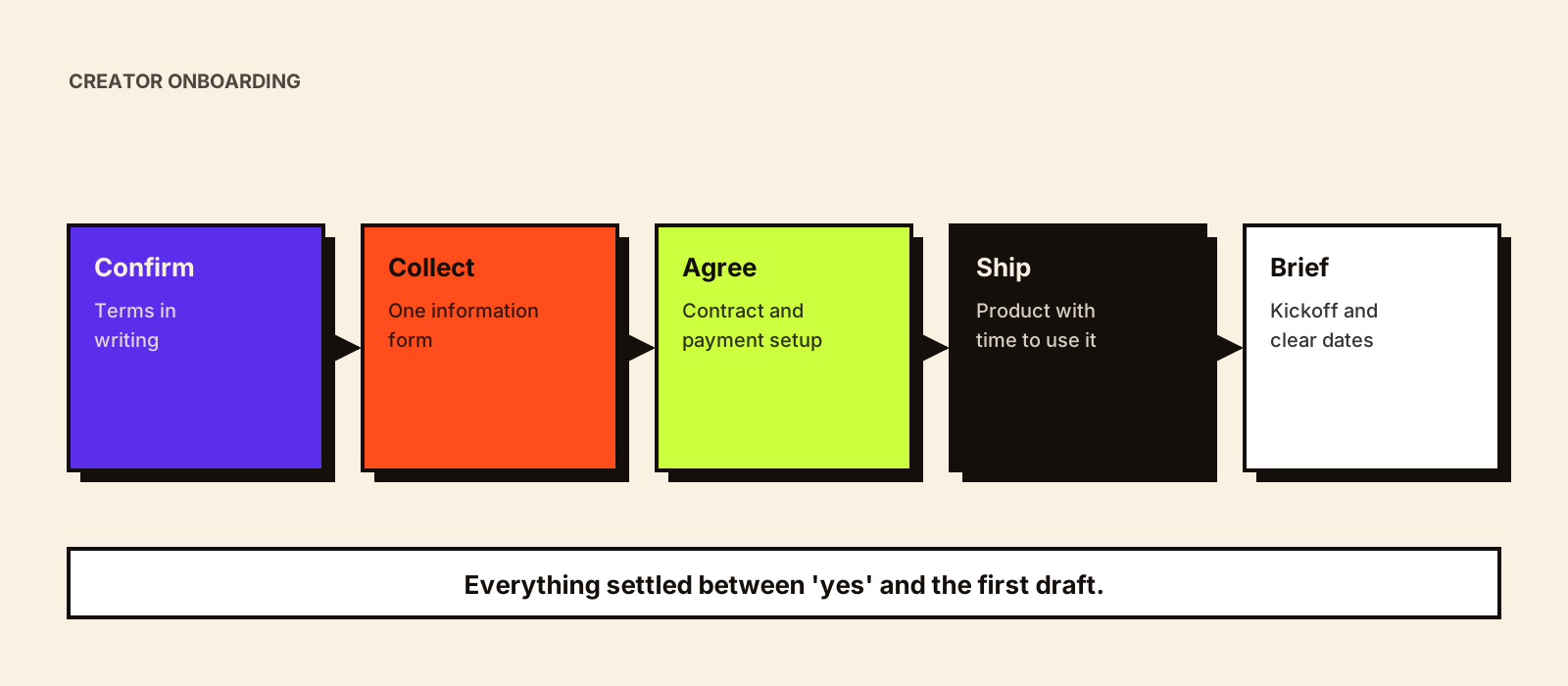
The gap between a creator saying yes and the creator starting work is where many campaigns quietly go wrong. Product ships to an old address. The finance team discovers it can't pay someone who isn't set up as a vendor. The creator assumed organic-only usage; the brand planned ads. Nobody told them who approves drafts. None of this is dramatic, but each one costs days, and together they shape how the creator feels about working with you.
Quick answer
Influencer onboarding is everything a brand does between a creator agreeing to work together and the creator starting production: confirming the collaboration, collecting the details you need (contacts, handles, shipping, billing), signing the agreement, setting up payment, sharing the brief, agreeing the communication channel and approval process, and confirming compliance requirements such as disclosure. Done well, it takes a few days, prevents most mid-campaign problems and gives creators a clear, professional start.
Where onboarding sits in a creator partnership
Creator selected → creator confirms → details collected → agreement signed → payment set up → brief and kickoff → content production → review and approval → publishing → payment → results shared → next collaboration
Onboarding covers the steps from confirmation to kickoff. Before it come discovery, outreach and negotiation; after it, production, approval, payment and the relationship. Influencer marketing operations shows how all the stages fit together.
The onboarding process, step by step
Step 1: Confirm the collaboration in writing
As soon as a creator agrees, send a short written confirmation of what was agreed: deliverables, platform, dates, fee, usage rights, exclusivity and who their contact is. This catches misunderstandings before anyone has invested time. Influencer follow-up includes a summary template.
Step 2: Collect the details you need
Use one short form or sheet rather than a string of messages: legal name or business name for the agreement, preferred contact channel, handles, shipping address for product campaigns, manager details if any, and billing information for finance. Collect only what you need. Influencer campaign information sheet lists the fields and what to avoid asking for.
Step 3: Sign the agreement
Send the agreement promptly, reflecting exactly what was confirmed. Keep it readable; creators new to brand work may not have seen a contract before. Influencer marketing contract covers what it should include.
Step 4: Set up payment early
If your finance team needs vendor registration, start it now, not when the invoice arrives. Tell the creator what documents finance needs, when payment will be made and how invoices should be addressed. Influencer payment terms covers what to agree.
Step 5: Ship product, if relevant
Dispatch in time for the creator to use the product properly before filming, not the day before the draft is due. Confirm the delivery address and share tracking. For skincare, food or anything that needs time to show results, build that time into the schedule.
Step 6: Brief and kick off
Share the brief, then hold a short kickoff call or message thread to walk through it, agree communication and approval steps and answer questions. Influencer campaign kickoff covers what to cover; influencer campaign brief covers the brief itself.
Step 7: Confirm compliance requirements
Make disclosure expectations explicit: the platform's paid-partnership label and a clear label in the content itself, as ASCI's influencer guidelines require. Share any claims the creator must or must not make, especially for health, finance, food or children's products.
Step 8: Confirm next steps and dates
End onboarding with a single message listing dates (product arrival, draft due, feedback window, go-live), who to contact and what happens next. Creators shouldn't have to search through a thread to find a deadline.
The creator onboarding checklist
CONFIRMATION
□ Written confirmation of deliverables, platform, dates, fee, usage, exclusivity
□ Named brand contact (and backup)
□ Creator's preferred channel for day-to-day messages

DETAILS
□ Legal/business name for the agreement
□ Handles and profile links
□ Manager or agency details (if any)
□ Shipping address and delivery notes (product campaigns)
□ Billing details routed to finance, not stored in campaign chats

AGREEMENT AND PAYMENT
□ Agreement sent and signed
□ Vendor setup started (if your finance team requires it)
□ Invoice addressing and payment timing explained

PRODUCT
□ Product dispatched with enough time to use it
□ Tracking shared; delivery confirmed

BRIEF AND KICKOFF
□ Brief shared; kickoff done
□ Approval process and feedback windows explained
□ Escalation contact shared

COMPLIANCE
□ Disclosure requirements explained
□ Approved and prohibited claims shared
□ Usage rights and duration confirmed

DATES
□ Product arrival · draft due · feedback window · go-live · insights due · payment date
Keep the checklist as a column set in your campaign tracker so every creator's onboarding status is visible at a glance. Influencer campaign automation shows how to trigger reminders from it.
How long should onboarding take?
For a single creator, onboarding can be done within a few working days if the agreement template, information form and finance process are ready. The slowest steps are usually internal: legal review of non-standard terms, vendor registration and product dispatch. Start those first. Influencer marketing campaign timeline shows how onboarding fits into the overall schedule.
Onboarding regional and first-time creators
- Explain terms in plain language, and in the creator's language where possible.
- Walk through the agreement on a call rather than just sending a document.
- Explain disclosure simply: what label, where, and why.
- Make invoicing easy: tell them exactly what finance needs, and give an example.
- Check delivery coverage for their pin code before promising dates.
- Expect more questions, and answer them patiently; it's the start of a relationship.
Onboarding at scale
For campaigns with dozens of creators, standardise: one information form, one agreement template with a short list of variable terms, one onboarding email sequence and one tracker with status columns. A creator onboarded in a seeding programme of 50 should get the same clarity as a hero creator, even if the process is lighter.
Hypothetical example
Hypothetical: a D2C haircare brand books 12 creators for a launch. On day one after confirmations, each receives a summary email and an information form. Agreements go out on day two; finance starts vendor setup the same day. Products ship on day three with tracking. On day six, a 20-minute group kickoff covers the brief, approval process and disclosure, followed by short one-to-one calls for the two creators new to brand work. Drafts arrive on schedule because nobody is waiting on missing information.
Common mistakes
- Sending the brief before terms are confirmed in writing.
- Starting vendor setup only when the invoice arrives.
- Shipping products too late to use properly.
- Collecting details through scattered DMs and chat messages.
- Asking for more personal information than needed.
- No named contact, so creators don't know who to ask.
Add each creator to the campaign tracker as soon as they confirm; influencer campaign tracker covers statuses and columns.
Conclusion
Good onboarding is quiet: the creator knows what's agreed, who to talk to, when things are due, how they'll be paid and what the rules are, before they start creating. Confirm in writing, collect only what you need, start payment setup early, ship in time, brief properly and close with clear dates. It's the first experience a creator has of working with you, and it sets the tone for everything after; creator experience covers why that matters.