Influencer Campaign Information Sheet: What Brands Should Collect From Creators
The information brands should collect from creators before a campaign (contacts, handles, audience data, deliverables, availability, shipping, billing and preferences), what not to ask for, how to store it and a ready-to-use information sheet.
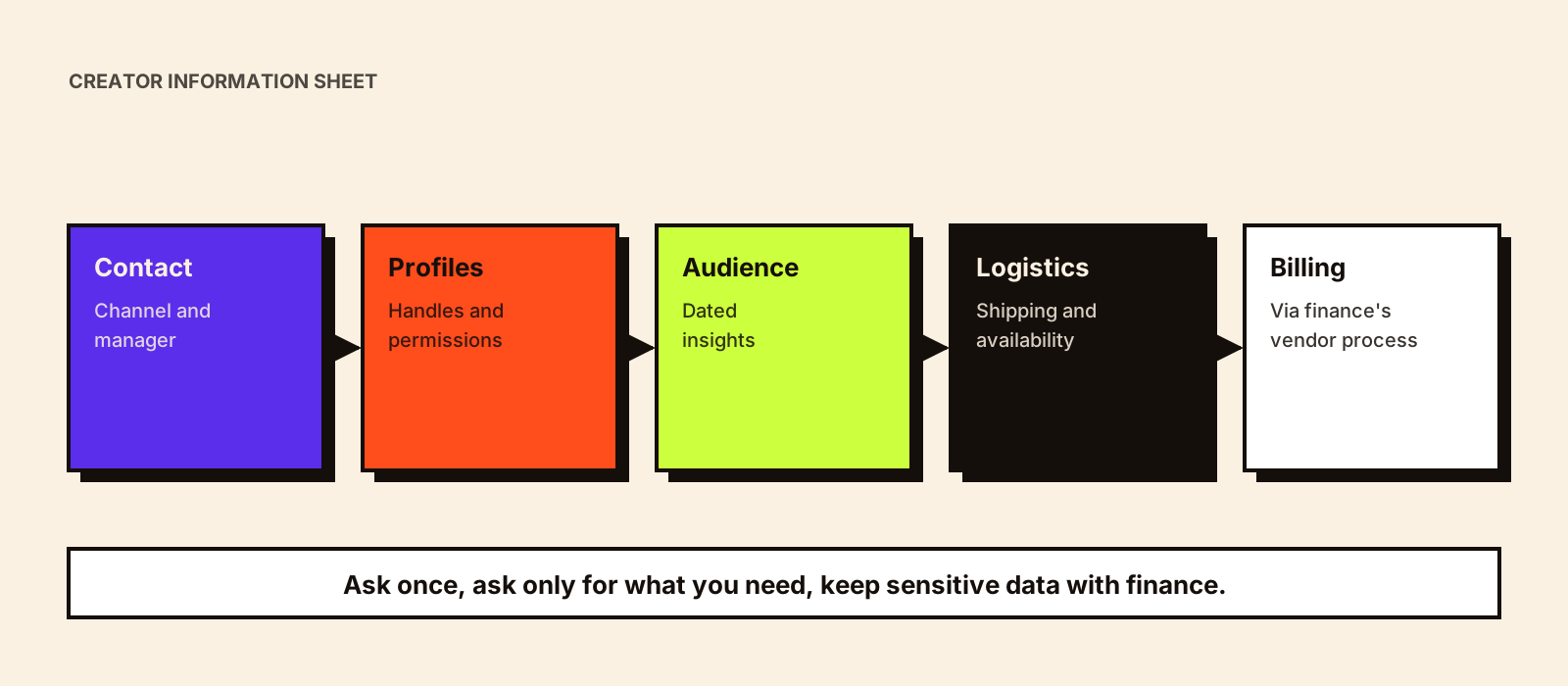
Most brands collect creator information piece by piece: an address in a DM, an audience screenshot by email, bank details on WhatsApp, a manager's number in someone's phone. Then someone leaves, or the campaign grows, and nobody can find anything. A single information sheet sent once at onboarding fixes most of this, as long as it asks only for what's needed.
Quick answer
Before a campaign, brands should collect: the creator's name or business name for the agreement, preferred contact channel and manager details, social handles and profile links, recent audience insights (with date), confirmation of deliverables and availability, shipping details for product campaigns, content preferences and anything they won't do, and billing information routed to finance. Don't ask for information you don't need, keep sensitive financial and identity details with finance rather than in campaign trackers, and tell creators how their data will be used.
What to collect, and why
| Section | Fields | Why you need it |
|---|---|---|
| Identity | Name; business or legal name if invoicing as a business | Agreement and invoicing |
| Contact | Work email, preferred channel, best times, manager or agency contact | Day-to-day communication; who to send terms to |
| Profiles | Handles and links for each platform in the campaign | Tracking, tagging, partnership permissions |
| Audience | Recent insights: top cities/states, age, gender (screenshot date) | Confirming fit; reporting baseline |
| Deliverables | Confirmation of what's agreed; any format constraints | Avoiding misunderstandings |
| Availability | Shooting dates, travel, blackout dates | Realistic timeline |
| Shipping | Delivery name, address, phone for courier, pin code, delivery notes | Product campaigns |
| Preferences | Topics or claims they won't make; product preferences (shade, size, diet) | Respecting boundaries; right product |
| Partnership tools | Whether they can enable paid-partnership label and partnership ad permissions | Disclosure and paid amplification |
| Billing (to finance) | Details finance requires to process payment | Paying correctly and on time |
What not to ask for
- Passwords or login access to accounts, ever. Use the platform's official partnership and permission tools.
- Identity documents beyond what finance genuinely requires, and never via campaign chats.
- Personal information unrelated to the campaign: family details, home address when no product is shipped, date of birth.
- Bank details in the general campaign sheet. Route them to finance through its normal vendor process.
- Audience data you won't use.
Creator data is personal data. India's DPDP Rules, notified in November 2025, phase in most business obligations by May 2027; collecting only what you need and restricting who can see sensitive details is good practice now. Influencer marketing data covers the wider data picture.
A ready-to-use information sheet
CAMPAIGN: [name]   CREATOR: [name]   DATE: [ ]

1. CONTACT
Name / business name (for agreement):
Work email:            Preferred channel: email / DM / WhatsApp
Best times to reach you:
Manager or agency (name, email):

2. PROFILES
Instagram:    YouTube:    Other:
Can you enable the paid-partnership label and approve partnership ad requests? yes / no / not sure

3. AUDIENCE (please attach screenshots from the last 30 days)
Top cities/states · age · gender · screenshot date

4. DELIVERABLES AND AVAILABILITY
Confirm deliverables as agreed: yes / questions:
Shooting availability:          Dates you're unavailable:

5. SHIPPING (product campaigns only)
Name for delivery · address · pin code · phone for courier · delivery notes

6. PREFERENCES
Product preferences (size, shade, flavour, etc.):
Anything you won't say or show:

7. BILLING
Finance will contact you separately for payment setup. Please tell us whether you'll invoice as an individual or a business.

We'll use these details only for this collaboration and keep them with the campaign team and finance.
Where to store it
- Campaign details (contacts, handles, deliverables, dates, preferences) in your campaign tracker or CRM.
- Audience screenshots in the campaign folder, with dates.
- Shipping details with whoever dispatches, removed or archived after delivery.
- Billing and tax details only in finance's vendor system.
- Access limited to people who need it.
Influencer marketing CRM covers how to keep creator details and history together, and influencer campaign documentation covers what to keep after the campaign.
Collecting information from regional and smaller creators
- Offer the sheet in the creator's language, or fill it together on a short call.
- Explain why you need each item; it builds trust.
- Use a simple form that works on a phone.
- For smaller towns, ask for delivery landmarks and an alternate phone for the courier.
Hypothetical example
Hypothetical: a snack brand seeding 40 creators across Gujarat and Maharashtra sends one short mobile form instead of messaging each creator for details. The form asks for delivery address with landmark, an alternate phone for the courier, flavour preferences and whether the creator can enable the paid-partnership label. Billing is handled separately, only for the 10 creators booked for paid posts. The team gets everything within a few days, and no bank details sit in the shared campaign sheet.
Information to refresh for repeat creators
- Audience insights: request fresh, dated screenshots for each new campaign.
- Shipping address: confirm it hasn't changed before dispatch.
- Manager or agency: representation changes more often than brands expect.
- Preferences and boundaries: ask again; creators' positions evolve.
Influencer marketing CRM covers keeping these details current across campaigns.
Common mistakes
- Asking for the same information several times across a campaign.
- Collecting bank or ID details in chat threads or shared spreadsheets.
- Undated audience screenshots.
- Not asking about content boundaries, then briefing something the creator won't do.
- Keeping shipping addresses long after delivery with no reason.
Conclusion
One clear information sheet, sent once at onboarding, gives you everything you need to run the campaign without repeated requests. Ask only for what you'll use, keep sensitive details with finance, date audience data and store everything where the team can find it. It's a small step in influencer onboarding that prevents a lot of friction later.