Influencer Invoicing: What Brands Should Know Before Paying Creators
Influencer invoicing from the brand side: why brands need invoices, what an invoice generally contains, GST tax invoice basics, matching invoices to agreements, an approval workflow, common errors and record keeping, with official sources for tax points.
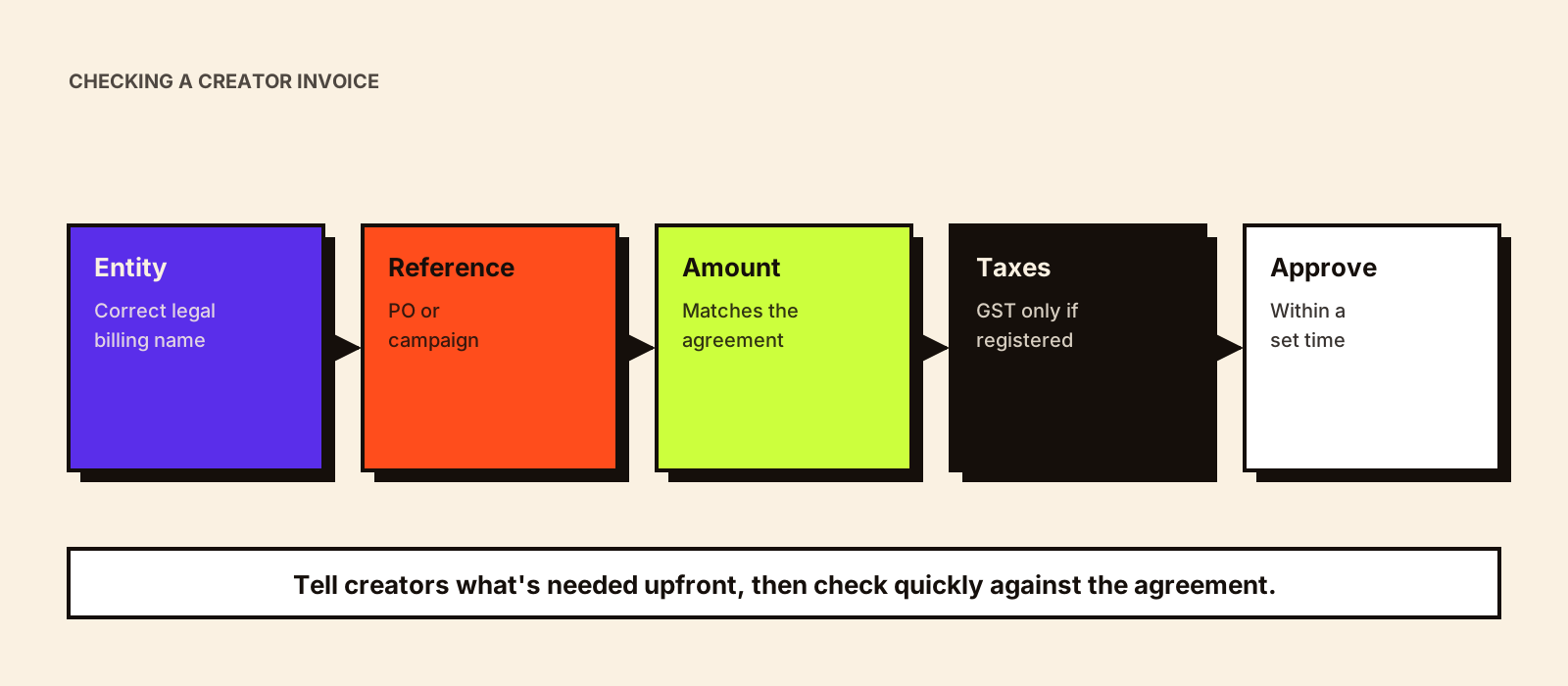
Many late creator payments come down to the invoice: billed to the brand's trade name instead of its legal entity, missing a reference, GST charged by someone who isn't registered, a different amount from the agreement. The creator thinks they've done everything; finance can't process it. Brands can prevent most of this by telling creators exactly what's needed and checking invoices quickly.
Quick answer
Brands need invoices to process and record creator payments correctly. An influencer invoice generally includes a unique invoice number and date, the creator's name or business details and PAN, your legal billing entity and address, a reference (PO or campaign), the deliverables covered, the amount, GST details only if the creator is GST-registered, the total and payment details. Check each invoice against the agreement (entity, deliverables, amount, taxes), approve it within a set time and keep it with the agreement and payment record.
Why brands need invoices
- Finance can't process most vendor payments without one.
- It records what was paid for, matching the agreement.
- It supports the brand's own tax and accounting records.
- It gives creators a clear record of what they've been paid for.
What an influencer invoice generally contains
| Item | What to look for |
|---|---|
| Invoice number and date | Unique number; date after or on completion as agreed |
| Creator details | Name or business name, address, contact, PAN |
| GSTIN | Only if the creator is GST-registered |
| Bill-to | Your exact legal entity name and address, and your GSTIN if applicable |
| Reference | PO number, campaign name or agreement date |
| Description | Deliverables covered by this invoice |
| Amount | Matches the agreed fee for this payment |
| Taxes | GST lines only if registered; no GST if not |
| Total and payment terms | Total and due date matching the agreement |
| Payment details | Provided through finance's vendor process |
For GST-registered creators, the invoice should be a GST tax invoice with the particulars set out in Rule 46 of the CGST Rules, such as GSTIN, invoice number, the recipient's details, description, taxable value, tax rate and amount, and place of supply. Creators who aren't registered should not charge GST.
This is general operational information, not tax or legal advice. Requirements depend on the creator's status (individual or business, GST-registered or not), the nature of the payment and current rules, which change. Confirm specifics with your finance team or a chartered accountant.
Tell creators what you need before they invoice
Please address your invoice to:
[Legal entity name]
[Registered address]
[GSTIN, if applicable]

Include:
• Reference: [PO number / campaign name]
• Deliverables: [as agreed]
• Amount: ₹[ ] (add GST only if you're GST-registered)
• Your PAN
Send to: [finance / campaign email]
We'll confirm receipt within [x] working days and pay within [x] days of approval.
[If applicable: we'll deduct TDS as required and share the certificate.]
Matching invoices to agreements
□ Billed to the correct legal entity and address
□ Reference (PO / campaign) present
□ Deliverables match what was agreed and delivered
□ Amount matches the agreement for this payment
□ GST shown only if the creator is registered; GSTIN present if so
□ Invoice number unique (not a duplicate of an earlier invoice)
□ Deliverables approved and live (if that's the trigger)
□ Vendor setup complete
An approval workflow
1. Invoice received → logged in payment tracker (same day)
2. Campaign owner checks against agreement and deliverables (within 2 working days)
3. Issues → creator contacted with specific correction
4. Approved → sent to finance with agreement and approval record
5. Finance processes → payment scheduled → creator informed of date
6. Paid → confirmation to creator; files stored
Creator payment tracking covers the tracker that supports this workflow.
Common invoice errors, and how to prevent them
| Error | Prevention |
|---|---|
| Wrong billing entity (trade name, agency, wrong group company) | Send exact bill-to details with the agreement |
| Missing PO or reference | Raise the PO early and share it |
| GST charged by an unregistered creator, or missing GSTIN | Ask about GST status during onboarding |
| Amount differs from agreement | Confirm the amount per payment in writing |
| Invoice before trigger is met | Explain when to invoice |
| Duplicate invoice numbers | Check against previous invoices from the same creator |
When you find an error, tell the creator quickly and specifically. Many creators are new to invoicing; a clear correction request is more helpful than a rejection. Creators can follow how to invoice brands as a creator in India.
Gifted products and barter
Gifted products and barter arrangements can have tax implications for both brand and creator, and the treatment depends on the arrangement and current rules. Don't assume 'no payment, no paperwork'. Ask your finance team how such arrangements should be recorded, and be transparent with creators about it.
Record keeping
- Keep each invoice with its agreement, approval record and payment confirmation.
- Record any TDS deducted and certificates issued.
- Store in one place finance and the campaign team can both reference.
- Follow your finance team's retention policy.
Influencer campaign documentation covers how invoices fit into the wider campaign record.
Common mistakes
- Not telling creators what an acceptable invoice needs.
- Letting invoices sit unchecked for weeks.
- Rejecting invoices without saying what's wrong.
- Starting vendor setup only after the invoice arrives.
- Treating tax questions as the creator's problem alone.
Conclusion
Smooth influencer invoicing starts before the invoice: tell creators exactly what's needed, start vendor setup early, check invoices against the agreement promptly, correct errors helpfully and keep good records. Confirm tax specifics with your finance team using current official guidance. For the payment terms that sit behind each invoice, see influencer payment terms.