Creator Payment Tracking: How Brands Can Manage Influencer Payments at Scale
How to track payments to many creators across campaigns: the fields to record, payment statuses, the link between approvals and invoices, a weekly payment review, what to keep out of the tracker and how to share status with creators.
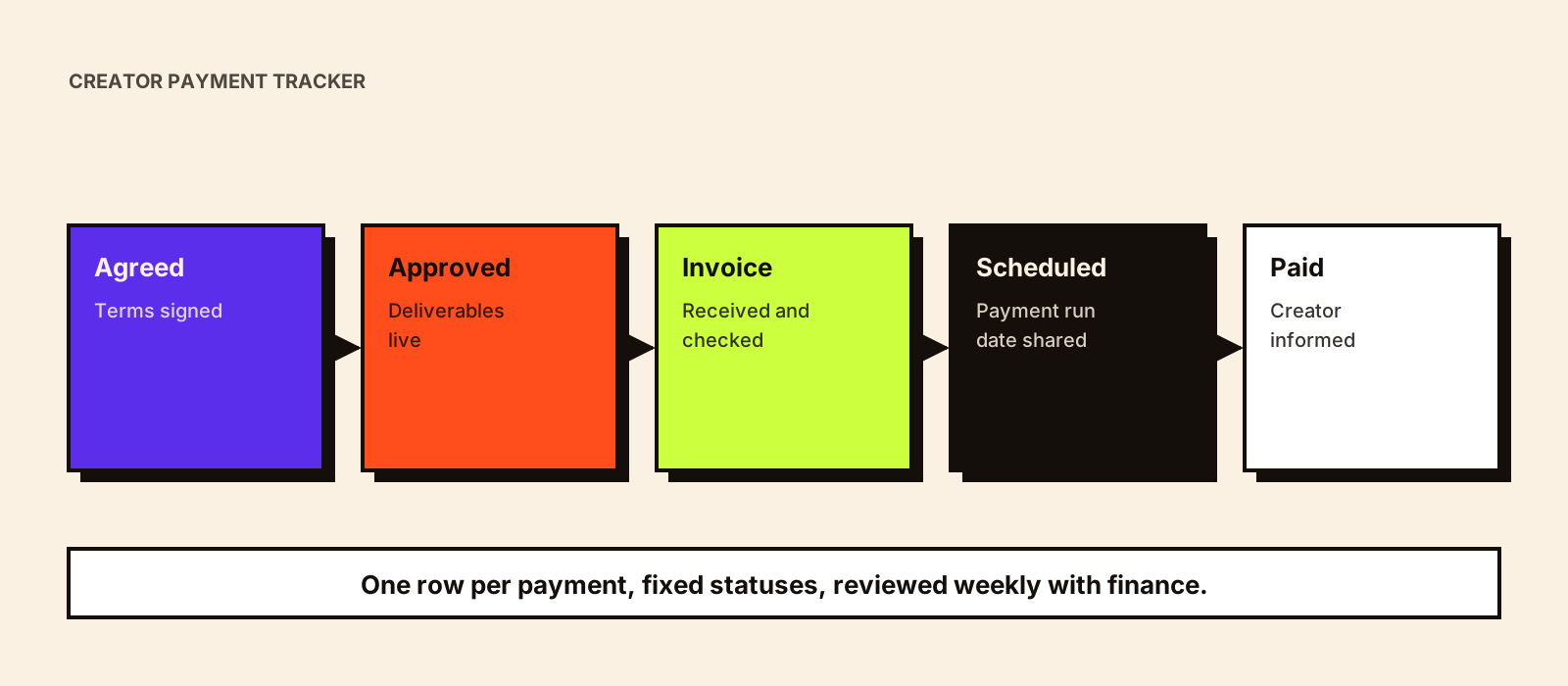
Paying three creators is easy. Paying sixty across four campaigns, with different fees, schedules, invoice formats and approval chains, is where payments slip. Creators chase, the campaign team chases finance, finance asks for documents nobody has, and the brand's reputation among creators and managers takes the hit. A simple tracker that links each payment to its approval and invoice prevents most of it.
Quick answer
Track creator payments with one row per payment (not per creator), recording creator, campaign, agreed fee, deliverables covered, approval status, invoice received and checked, payment due date, status and date paid. Use a fixed set of statuses, link each row to the agreement and invoice, review it weekly with finance, and keep bank and identity details out of the tracker. Share status proactively with creators so they never have to chase.
The fields to track
| Field | Example | Note |
|---|---|---|
| Payment ID | DIW26-014-1 | Unique per payment (a creator may have several) |
| Creator | [creator name / handle] | Link to creator record |
| Campaign | Diwali 2026 | |
| Deliverables covered | 1 Reel + 3 Stories | What this payment is for |
| Agreed amount | ₹[ ] + GST (if applicable) | From the agreement |
| Payment type | Advance / milestone / balance / retainer / commission | |
| Deliverables approved | Date / pending | Trigger check |
| Invoice received | Date / missing | Link to file |
| Invoice checked | Matches agreement? yes / issue | |
| Due date | Date | From agreed terms |
| Status | See statuses below | |
| Date paid | Date | From finance |
| Notes | e.g. 'vendor setup pending' |
Leave bank account numbers, PAN images and other sensitive details out of the campaign tracker. They belong in finance's vendor system with restricted access.
Payment statuses
1. Agreed: terms signed; payment not yet due
2. Awaiting deliverables: trigger not met
3. Awaiting invoice: deliverables approved; invoice requested
4. Invoice issue: invoice doesn't match terms; creator contacted
5. Approved for payment: invoice checked and approved internally
6. Scheduled: in finance's payment run, with date
7. Paid: payment confirmed; creator informed
Side status: On hold (with reason and owner)
Link approvals to payments
The most common internal delay is a gap between 'content approved' and 'invoice approved'. Make the link explicit: when content is approved and live, the tracker moves the payment to 'awaiting invoice' and requests the invoice; when the invoice arrives, someone checks it against the agreement within a set time; approved invoices go to finance with everything they need. Influencer campaign automation shows how to trigger these steps automatically.
A weekly payment review
□ Payments due in the next 14 days: everything ready?
□ Overdue payments: reason, owner, new date
□ Invoices with issues: who's resolving, by when
□ Vendor setups pending
□ Creators to update proactively
□ Anything on hold longer than a week
Tell creators before they ask
- Confirm when the invoice is received and approved.
- Share the scheduled payment date.
- Confirm when it's paid.
- If there's a delay, explain why and give a new date before the original date passes.
- Tell creators if TDS has been deducted and when they'll get the certificate.
Proactive updates cost a minute and save hours of chasing. They're also one of the things creators remember most about a brand. Creator payment delays covers what to do when something goes wrong.
Tools
A shared spreadsheet or database works for most brands if statuses are fixed and someone owns it. Larger programmes may use influencer campaign management software with payment tracking, or connect the campaign tracker to finance's system. What matters is that each payment links to its agreement, approval and invoice, and that statuses are updated weekly. Influencer campaign management software covers options.
Metrics worth watching
- Average days from approval to payment.
- Share of payments made by the due date.
- Invoices returned for errors (and the most common error).
- Number of payment queries from creators.
Hypothetical example
Hypothetical: a D2C brand pays 45 creators across three campaigns each month. Before a tracker, creators chased payments by DM and the campaign team had to search emails to answer. After moving to one row per payment with fixed statuses, a link to each agreement and invoice, and a Tuesday review with finance, the team can answer any payment question in seconds and sends creators their payment dates proactively. The same people handle more creators with fewer messages.
Handling TDS and certificates in the tracker
If TDS is deducted, record the amount deducted and the net amount paid against each payment, and track when the TDS certificate is issued to the creator. From 1 April 2026 the certificate for non-salary TDS is Form No. 131 under the Income-tax Act, 2025. Finance owns the details; the tracker simply makes sure creators aren't left wondering why they received less than the invoice. This is general information, not tax advice.
Influencer invoicing covers checking invoices, and influencer payment terms covers what should be agreed before any payment is due.
Common mistakes
- One row per creator, so multiple payments get confused.
- No link between content approval and invoice approval.
- Sensitive financial data in shared campaign sheets.
- No weekly review, so overdue payments surface only when creators complain.
- Not telling creators about TDS deductions.
Conclusion
Payment tracking at scale needs one row per payment, fixed statuses, links to agreements, approvals and invoices, a weekly review with finance and proactive updates to creators. It's simple to set up and it protects the relationships everything else depends on. For what to check on each invoice, see influencer invoicing.