Influencer Payment Terms: What Brands and Creators Should Agree on Before a Campaign
The payment terms brands and creators should agree before any work starts: total compensation, schedule, what triggers payment, revisions, usage and exclusivity fees, cancellation, expenses, product value, invoicing, taxes and late payment.
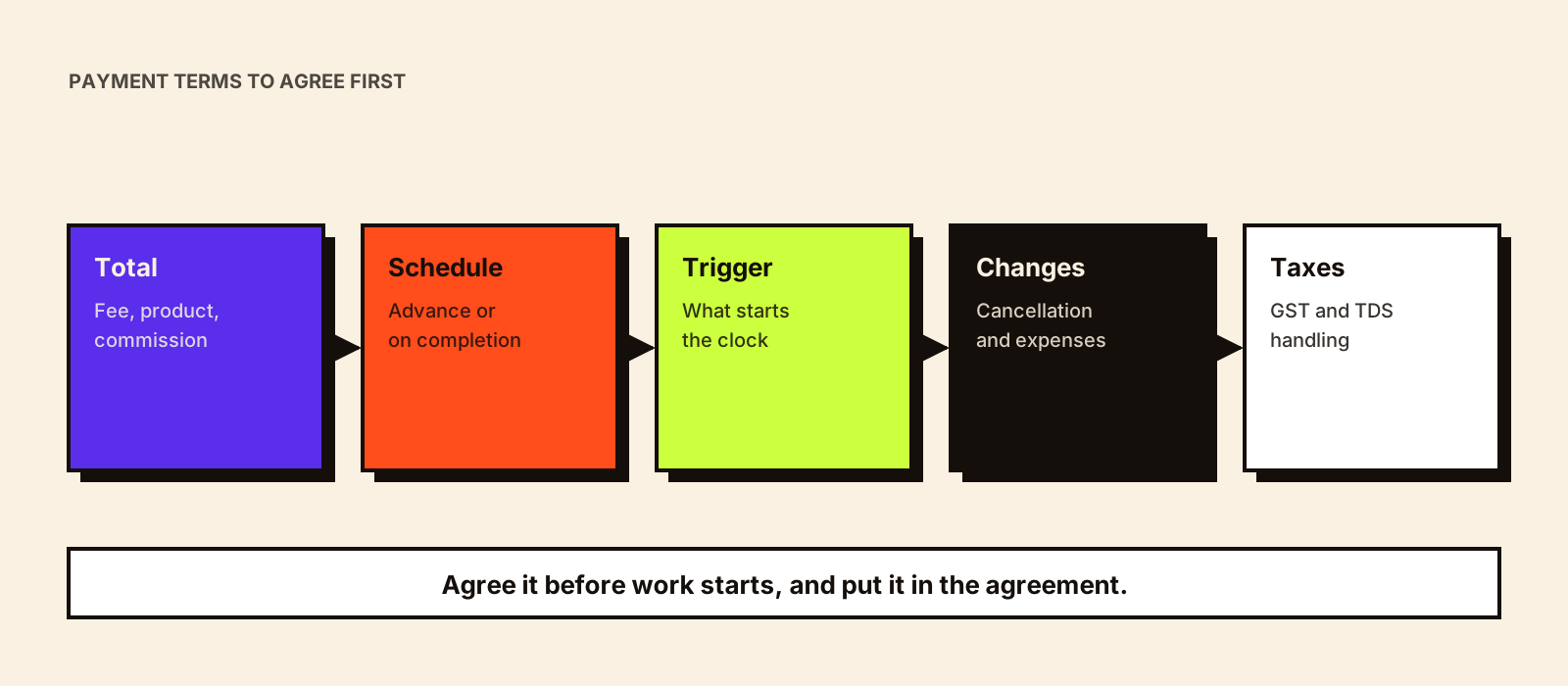
Payment disputes between brands and creators rarely start with someone refusing to pay. They start with two different assumptions: the creator expected payment when the post went live; finance pays 45 days after receiving an invoice that matches a purchase order nobody raised. Agreeing payment terms upfront removes the assumptions.
Quick answer
Before a campaign, brands and creators should agree the total compensation (fee, product, commission), what it covers (deliverables, revisions, usage rights, exclusivity), the payment schedule (advance, milestones or on completion), what triggers each payment and how many days after, invoice and vendor requirements, how taxes are handled, what happens if the campaign is cancelled or changed, who covers expenses, and what happens if payment is late. Put it in the agreement, not just in messages.
The terms to agree
| Term | What to agree | Why it matters |
|---|---|---|
| Total compensation | Fee in ₹, whether GST is extra, product value, any commission or bonus | No surprises on the total |
| What the fee covers | Deliverables, revision rounds, usage rights (platforms, duration), exclusivity | Prevents 'that wasn't included' |
| Payment schedule | Advance, milestones or on completion; percentages | Cash-flow expectations on both sides |
| Payment trigger | Signature, approval, go-live, insights shared or invoice receipt | Removes ambiguity about when the clock starts |
| Payment period | Number of days after the trigger | A date the creator can plan around |
| Invoicing | Who to invoice (legal entity), reference numbers, where to send | Avoids rejected invoices |
| Vendor setup | Documents finance needs and when | Avoids first-payment delays |
| Taxes | Whether GST applies to the invoice and whether TDS will be deducted | Creator knows what they'll receive |
| Revisions beyond scope | Whether extra rounds or reshoots are charged | Fairness when the brand changes plans |
| Cancellation and changes | Fees if the brand cancels or postpones after work starts | Protects creator time |
| Expenses | Travel, props, locations, studio: included or reimbursed | Avoids disputes over costs |
| Late payment | What happens if payment is late; who to contact | Clear escalation path |
Common payment schedules
| Schedule | How it works | Suits |
|---|---|---|
| On completion | Full payment after deliverables are live and approved | Small, single-deliverable collaborations |
| Advance plus balance | Part on signing, rest on completion | Larger deals; creators with production costs |
| Milestones | Payments tied to stages (e.g. per video in a series) | Multi-deliverable or multi-month work |
| Monthly retainer | Fixed monthly amount for ongoing work | Ambassadors and always-on creators |
| Fixed plus performance | Fee plus commission or bonus on tracked results | Sales-focused campaigns with fair, transparent tracking |
Payment models and timing are covered in more detail in influencer marketing payments.
Choosing the payment trigger
The trigger is the event that starts the payment clock. Choose one both sides can verify: 'within 15 days of the post going live and the invoice being received' is clear; 'after the campaign ends' isn't. Avoid tying payment to results the creator doesn't control unless it's a separate, agreed performance element on top of a fair fee.
Cancellation and changes
- If the brand cancels before any work: usually no fee, but agree a notice period.
- If the brand cancels after production starts: agree a cancellation fee that reflects work done.
- If the brand postpones: agree how long the creator holds the slot and whether rescheduling has a cost.
- If the brand changes the brief after filming: treat substantial changes as additional work.
- If the creator can't deliver: agree what happens to any advance.
Taxes: agree how they'll be handled
Discuss tax treatment before agreeing the fee, not when the invoice arrives. Creators registered for GST will typically add GST to their invoice; those who aren't registered shouldn't. Indian businesses paying creators may need to deduct tax at source (TDS); from 1 April 2026 the non-salary TDS provisions sit in section 393 of the Income-tax Act, 2025, and deductors issue Form No. 131 as the TDS certificate. Tell creators upfront whether you'll deduct TDS so they know what they'll actually receive.
This is general operational information, not tax or legal advice. Requirements depend on the creator's status (individual or business, GST-registered or not), the nature of the payment and current rules, which change. Confirm specifics with your finance team or a chartered accountant.
The creator-side view is covered in GST for influencers in India and TDS for influencers in India.
Paying small creators and MSME suppliers
Creators who run registered businesses may be micro or small enterprises under the MSMED Act. Where they are, buyers are expected to pay within the agreed credit period, which the Act caps at 45 days from acceptance of the services, and delayed payments can attract interest. Ask creators whether they're Udyam-registered during vendor setup, and set payment periods comfortably within the limit. Disputes can be raised through the government's MSME Samadhaan portal.
Payment terms checklist
□ Total fee in ₹; GST treatment stated
□ Product, commission or bonus stated separately
□ Deliverables, revisions, usage and exclusivity covered by the fee
□ Schedule: advance / milestones / completion (percentages)
□ Trigger for each payment and number of days
□ Invoice: billing entity, references, where to send
□ Vendor setup documents and timeline
□ TDS: whether it will be deducted
□ Cancellation, postponement and change terms
□ Expenses: included or reimbursed
□ Late-payment contact and process
□ All of the above in the signed agreement
Common mistakes
- Agreeing the fee in chat and the terms never.
- 'Payment after campaign' with no date.
- Not mentioning TDS until the creator notices a smaller payment.
- Long payment periods used as an unspoken discount.
- No cancellation terms, so creators bear the cost of brand changes.
Conclusion
Clear payment terms protect both sides: the total, what it covers, when and how payment happens, how taxes are handled, what happens if plans change and what to do if payment is late. Agree them before work starts and put them in the agreement. For processing payments once the work is done, see influencer marketing payments and influencer invoicing.