Influencer Marketing Operations: How Brands Can Build a Reliable Creator Partnership Process
The operating system behind creator partnerships: the eleven-stage process from discovery to relationship management, roles and ownership, service levels, the core documents and tools, a weekly rhythm, operations metrics and a maturity path.
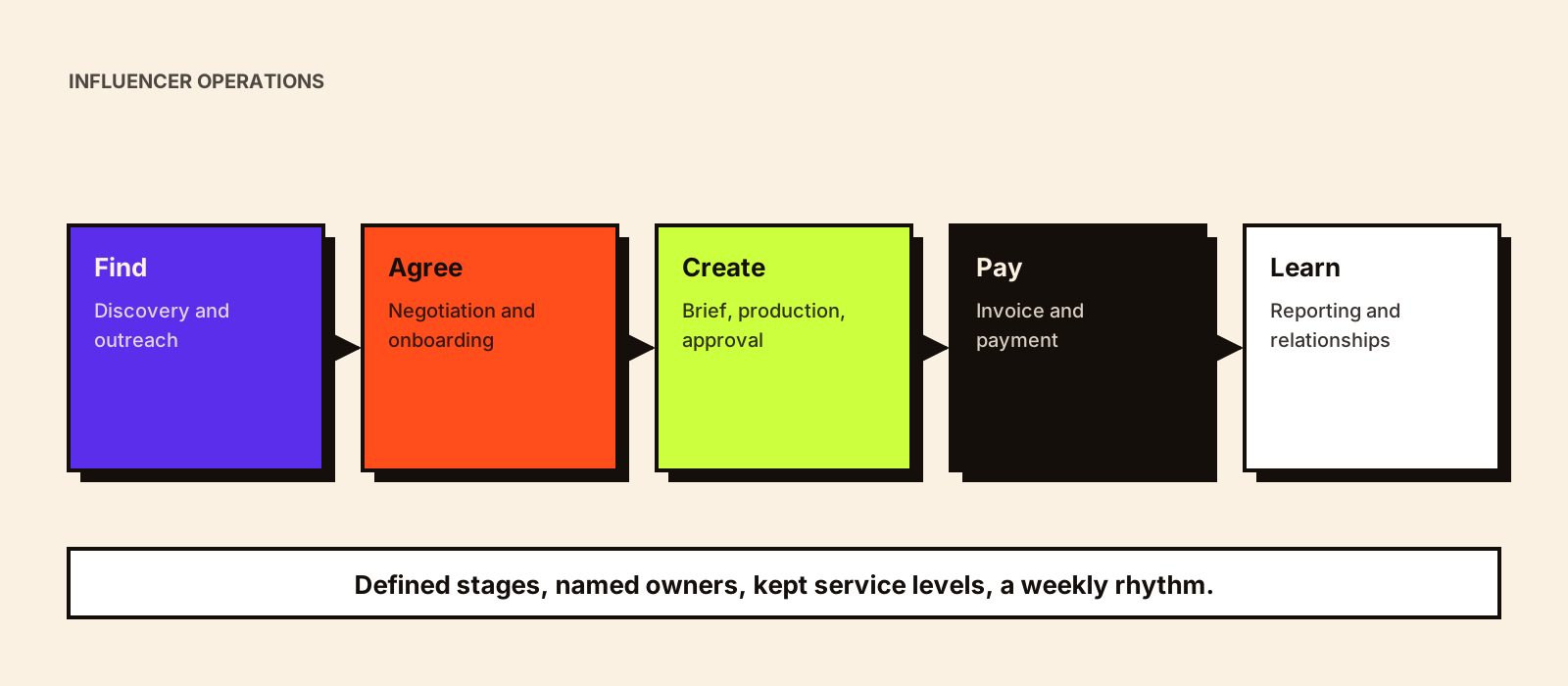
Running one creator campaign well depends on a capable person. Running creator partnerships well month after month depends on a system: a defined process, clear owners, standard documents, service levels both sides can rely on and a rhythm for reviewing what's happening. That system is influencer marketing operations, and it's what lets a brand scale creator work without everything depending on whoever happens to be managing it.
Quick answer
Influencer marketing operations is the repeatable system a brand uses to run creator partnerships: a defined process from discovery through outreach, negotiation, onboarding, briefing, production, approval, publishing, payment, reporting and relationship management; named owners for each stage; standard templates and records; service levels for responses, feedback and payment; a shared tracker; and a regular review rhythm. It sits between strategy (what you're trying to achieve) and campaign management (running a specific campaign).
Operations vs strategy vs campaign management vs governance
| Question | Example | |
|---|---|---|
| Strategy | What are we trying to achieve with creators, and how? | Objectives, audiences, creator mix, budget |
| Operations | How do we run creator work reliably, every time? | Process, owners, templates, SLAs, tools, rhythm |
| Campaign management | How do we run this campaign? | Steps, dates and creators for one campaign |
| Governance | What rules and approvals apply? | Policies, approval matrix, compliance |
Influencer marketing strategy, how influencer campaign management works and influencer marketing governance cover the other three.
The creator operations process
| Stage | Output | Guide |
|---|---|---|
| 1. Discovery | Vetted, ranked shortlist | Influencer shortlisting |
| 2. Outreach | Interested creators | Influencer outreach strategy |
| 3. Negotiation | Agreed terms | How to negotiate with influencers |
| 4. Onboarding | Signed agreement, details, payment setup | Influencer onboarding |
| 5. Briefing and kickoff | Shared understanding | Influencer campaign kickoff |
| 6. Production | Drafts | Influencer communication |
| 7. Approval | Approved content | Influencer feedback |
| 8. Publishing | Live, disclosed content | Influencer marketing compliance |
| 9. Payment | Creators paid on time | Influencer marketing payments |
| 10. Reporting | Results and insights | Influencer marketing report |
| 11. Relationship management | Rebook decisions, repeat partnerships | Influencer relationship management |
Detailed guides for each stage: influencer shortlisting, influencer outreach strategy, how to negotiate with influencers, influencer onboarding, influencer campaign kickoff, influencer communication, influencer feedback, influencer marketing compliance, influencer marketing payments, influencer marketing report and influencer relationship management.
Roles and ownership
| Role | Owns |
|---|---|
| Influencer lead | Process, standards, creator roster, relationships, rate review |
| Campaign manager | Day-to-day campaign execution, creator communication, tracker |
| Reviewer / approver | Consolidated feedback and approvals within service levels |
| Legal / compliance | Agreement templates, claims review, disclosure standards |
| Finance | Vendor setup, invoice processing, payments, tax handling |
| Analyst | Data definitions, capture, reporting, benchmarks |
| Agency (if used) | Agreed stages, with data shared back to the brand |
In small teams one person holds several roles. What matters is that every stage has a named owner. Influencer marketing team structure covers ownership models.
Service levels creators can rely on
| Commitment | Example service level |
|---|---|
| Reply to creator messages | Within one working day |
| Send agreement after terms confirmed | Within two working days |
| Feedback on drafts | Within two working days, consolidated |
| Invoice check after receipt | Within two working days |
| Payment after trigger | As agreed, typically a set number of days |
| Results shared after campaign | Within a few weeks of the final capture date |
These are examples; set levels you can actually keep and tell creators what they are. Keeping them consistently is a large part of creator experience.
Core documents and records
- Templates: outreach messages, proposal, agreement, information sheet, brief, feedback, handover pack.
- Records: campaign tracker, creator CRM, usage register, payment tracker, campaign folders.
- Definitions: a data dictionary so metrics mean the same thing every time.
Influencer campaign documentation and creator payment tracking cover two of the most important records.
Tools
Operations don't require expensive software. A shared tracker, a CRM or database, consistent folders and an automation layer for reminders cover most brands. Dedicated influencer software helps as volume grows. The influencer marketing technology stack covers the options; the process should come first and the tools second.
A weekly operating rhythm
□ Campaign status: creators by stage; anything overdue
□ Approvals waiting: who, since when
□ Payments: due this fortnight, overdue, invoice issues
□ Creator issues raised this week
□ Rights expiring in the next 30 days
□ Upcoming campaigns: onboarding and product dispatch on track?
MONTHLY: SLA performance, creator feedback themes, process fixes
QUARTERLY: roster review, rate review, tool and template review
Operations metrics
| Metric | What it tells you |
|---|---|
| Time from shortlist approval to signed agreements | Outreach and onboarding speed |
| Share of drafts delivered on time | Brief and onboarding quality |
| Average feedback turnaround | Internal approval health |
| Average revision rounds | Brief clarity and reviewer discipline |
| Share of payments on time | Finance process health |
| Repeat acceptance by top creators | Creator experience and relationship health |
A maturity path
| Level | Looks like | Next step |
|---|---|---|
| Ad hoc | Each campaign run differently; knowledge in people's heads | Standard templates and one tracker |
| Defined | Standard process and templates; owners named | Service levels and weekly review |
| Managed | SLAs measured; payments tracked; documentation consistent | Automation; creator feedback loop |
| Optimised | Metrics drive process changes; strong repeat partnerships | Regular review; scale carefully |
Operations across Indian markets
- Build language support into templates and briefing for regional creators.
- Plan product logistics for tier 2 and tier 3 delivery times.
- Schedule around regional festivals, not only national ones.
- Make finance processes (vendor setup, GST and TDS handling) clear and quick for individual creators.
Execution playbooks
A repeatable system needs written playbooks for the stages where campaigns most often go wrong. These are the ones worth standardising first:
| Playbook | What it standardises | Guide |
|---|---|---|
| Timeline and deadlines | Stage durations, buffers, reminders | Influencer marketing campaign timeline |
| Content approval | Submission, review order, approvers, turnaround | Influencer content approval |
| Revision policy | Rounds, definitions, scope changes | Influencer revision policy |
| Quality control | Pre-approval and go-live checklists | Influencer content quality check |
| Status tracking | Statuses, columns, flags, views | Influencer campaign tracker |
| Delays and bottlenecks | Stage timing analysis and fixes | Influencer campaign delays |
| Escalation | Severity levels, owners, response times | Influencer campaign escalation |
| Non-compliance | Proportionate responses to missed requirements | Creator non-compliance |
| Multi-creator coordination | Waves, groups, shared FAQ, daily rhythm | Influencer campaign coordination |
Guides for each: influencer marketing campaign timeline, influencer content approval, influencer revision policy, influencer content quality check, influencer campaign tracker, influencer campaign delays, influencer campaign escalation, creator non-compliance and influencer campaign coordination.
Common mistakes
- Buying software before defining the process.
- No owner for some stages (often payments and post-campaign).
- Service levels promised to creators but not measured.
- Agency processes that leave the brand without its own records.
- Treating operations as admin rather than as what makes creator partnerships work.
Operations keeps campaigns running; influencer campaign optimization covers improving their results each cycle.
Conclusion
Influencer marketing operations turns creator partnerships from a series of individual efforts into a reliable process: defined stages, named owners, standard templates and records, service levels, a weekly rhythm and a few metrics. It makes campaigns smoother for your team and more respectful of creators' time, and it's what allows a creator programme to grow without losing quality.