Creator-Led Campaigns: How Brands Can Build Campaigns Around Creator Storytelling
What changes when creators shape the idea rather than deliver a brand script: how creator-led campaigns differ from traditional influencer campaigns, when each fits, how to brief for ideas, the story formats that work, guardrails, measurement and the commercial terms involved.
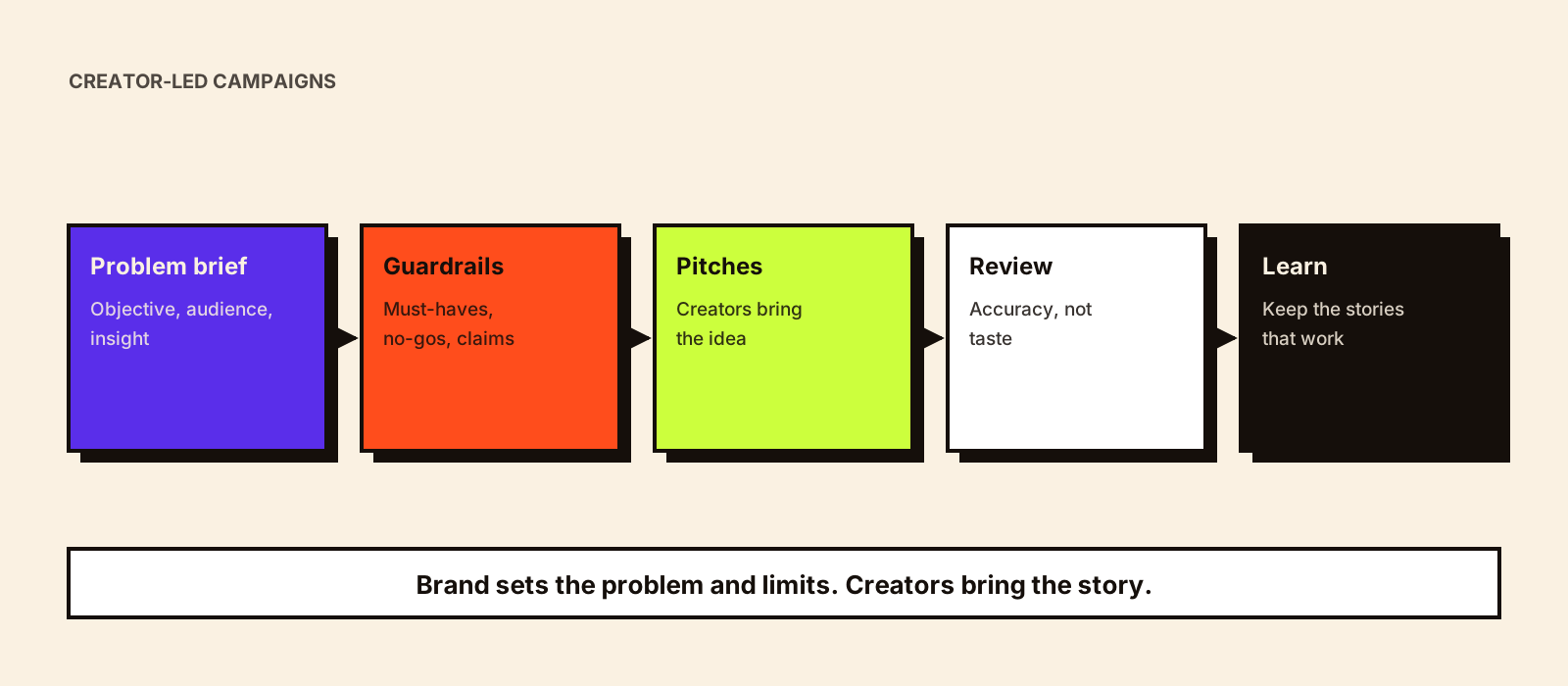
In a traditional influencer campaign, the brand writes the idea and creators deliver it in their own voice. In a creator-led campaign, the brand defines the problem and the guardrails, and creators bring the idea. The second can produce content that feels native to each creator's audience; it can also produce content nobody approved of in spirit if the brief is vague. The difference is mostly in how you brief and what you review for.
Quick answer
A creator-led campaign gives creators responsibility for the concept, story and execution within clear guardrails: the objective, the audience, a few must-haves, approved claims and things to avoid. It works best when you want content that feels native to each creator's audience, cultural relevance or variety for testing. Brand-led campaigns remain better for precise product messages, regulated claims and tightly coordinated launches. Brief with a problem rather than a script, invite ideas, review for accuracy and fit rather than taste, and agree how ideas, rights and any development work are paid for.
Creator-led vs traditional influencer campaigns
| Traditional (brand-led) | Creator-led | |
|---|---|---|
| Idea comes from | Brand or agency | Creators, responding to a brief |
| Brief | Concept, key messages, often a script outline | Objective, audience, insight, must-haves, no-gos |
| Output | Consistent across creators | Varied: different stories from each creator |
| Approval focus | Matching the concept | Accuracy, claims, disclosure and brand fit |
| Strength | Message control and consistency | Native feel, audience relevance, more creative range to test |
| Risk | Content that feels like an ad on the creator's feed | Ideas that miss the objective, or drift off-brand |
When to let creators lead
| Creator-led fits | Brand-led fits |
|---|---|
| Brand building and cultural relevance | Precise product information (specs, pricing, offers) |
| Categories where audiences distrust scripted ads | Health, nutrition, finance or other regulated claims |
| Testing many angles for paid creative | Launches with embargoes and a single coordinated message |
| Long-term partners who know your brand | First collaborations with unfamiliar creators |
| Regional and language markets the brand team doesn't know well | Campaigns needing identical assets across markets |
Most programs mix both: a brand-led core message, with creator-led stories around it.
Briefing for ideas, not scripts
- The objective and the one thing the audience should think, feel or do
- Who the audience is, in the creator's terms rather than a persona deck
- An insight or tension worth building a story around
- Must-haves, kept short: product shown in use, disclosure, any mandatory claim or offer
- No-gos: claims you can't support, topics to avoid, competitor mentions
- What freedom the creator has: format, tone, story, language
- How ideas will be chosen and what happens if an idea isn't selected
Asking for a short idea pitch before production saves both sides time. If you ask for detailed concepts from several creators, consider paying for that development work. The full briefing guide is influencer campaign brief.
Story formats that work
- The creator's own problem, and how the product fits into solving it
- Series: several episodes over weeks, such as a 30-day routine or a home project
- Behind the scenes: visiting the factory, farm or kitchen and asking real questions
- Day-in-the-life content where the product appears where it naturally would
- Creator collaborations: two creators with different audiences on one idea
- Local and language stories: a regional recipe, a city's commute, a festival ritual
- Co-created editions or products, for long-term partners
Hypothetical example: a kitchenware brand asks home-cook creators in five states to show one family recipe that's hard to get right, and how the pan changes it. Each video looks different; together they say the same thing about the product in five regional contexts. Regional influencer marketing covers working across languages.
Guardrails and approvals
Creative freedom doesn't remove the brand's responsibility for claims and disclosure. Review creator-led content for accuracy, approved claims, disclosure and brand safety, and resist rewriting it to your taste; heavy edits turn a creator-led idea back into a brand ad. Influencer content approval and influencer marketing compliance cover the review process.
Content guidelines that don't make every post look the same
When several creators work from the same guidelines, posts can start to look identical: same opening, same script, same shot. That defeats the point of working with different creators. Split the guidelines into what is fixed and what is free, and keep the fixed list short.
| Fixed (must be right) | Flexible (creator decides) |
|---|---|
| Product facts and approved claims | The story and the angle |
| Disclosure wording and placement | Hook, opening and pacing |
| Brand name, logo use and pronunciation | Setting, styling and music (within licensing rules) |
| Things to avoid (competitors, sensitive topics) | Format, within the agreed deliverables |
| Links, codes and posting window | Language register and humour |
- Show two or three very different examples of good content, not one template to copy
- Avoid supplying a script unless the claims are regulated; supply facts instead
- Review drafts against the fixed list only; don't edit style
- Check variety across the campaign before approving: if three drafts open the same way, ask one creator to try another angle
Measuring creator-led work
- Content performance against each creator's own baseline, not against other creators
- Saves, shares and comment quality as signs the story landed
- Sentiment and brand mentions in comments
- Which story angles perform, to inform the next brief and paid creative
- For awareness goals, recall and branded search; for sales, the same tracking as any campaign
Influencer content performance explains how to identify which stories worked and why.
Commercial terms
- Who owns the concept and format if you want to reuse it with other creators
- Usage rights for the content, especially if creator-led pieces will become ads
- Payment for idea development or pitches that aren't produced
- Approval rights and revision limits suited to a creator's idea
Ownership and licensing are covered in who owns influencer content and influencer usage rights.
Common mistakes
- Calling it creator-led while sending a script
- A brief so open that ideas miss the objective
- Rewriting creators' ideas at approval
- Using creator-led formats for regulated or technical claims
- Comparing varied creative pieces as if they were the same ad
Conclusion
Creator-led campaigns trade some message control for content audiences actually want to watch. They work when the brand is clear about the objective and the guardrails and genuinely open about everything else. Start with creators who know your brand, brief with a problem, review for accuracy rather than taste, and keep the stories that work.