Creator Non-Compliance: What Brands Should Do When Influencers Miss Campaign Requirements
What brands should do when creators miss requirements (deadlines, disclosure, claims, deliverables, posting rules, exclusivity): separating mistakes from breaches, proportionate responses, what the agreement allows, documentation and preventing repeats.
A creator posts without the agreed disclosure. Another misses the launch date. A third adds a claim that legal never approved, or posts for a competitor during an exclusivity period. Each needs a response, but not the same one. Treating an honest mistake like a breach damages a relationship for no reason; ignoring a real breach leaves the brand exposed.
Quick answer
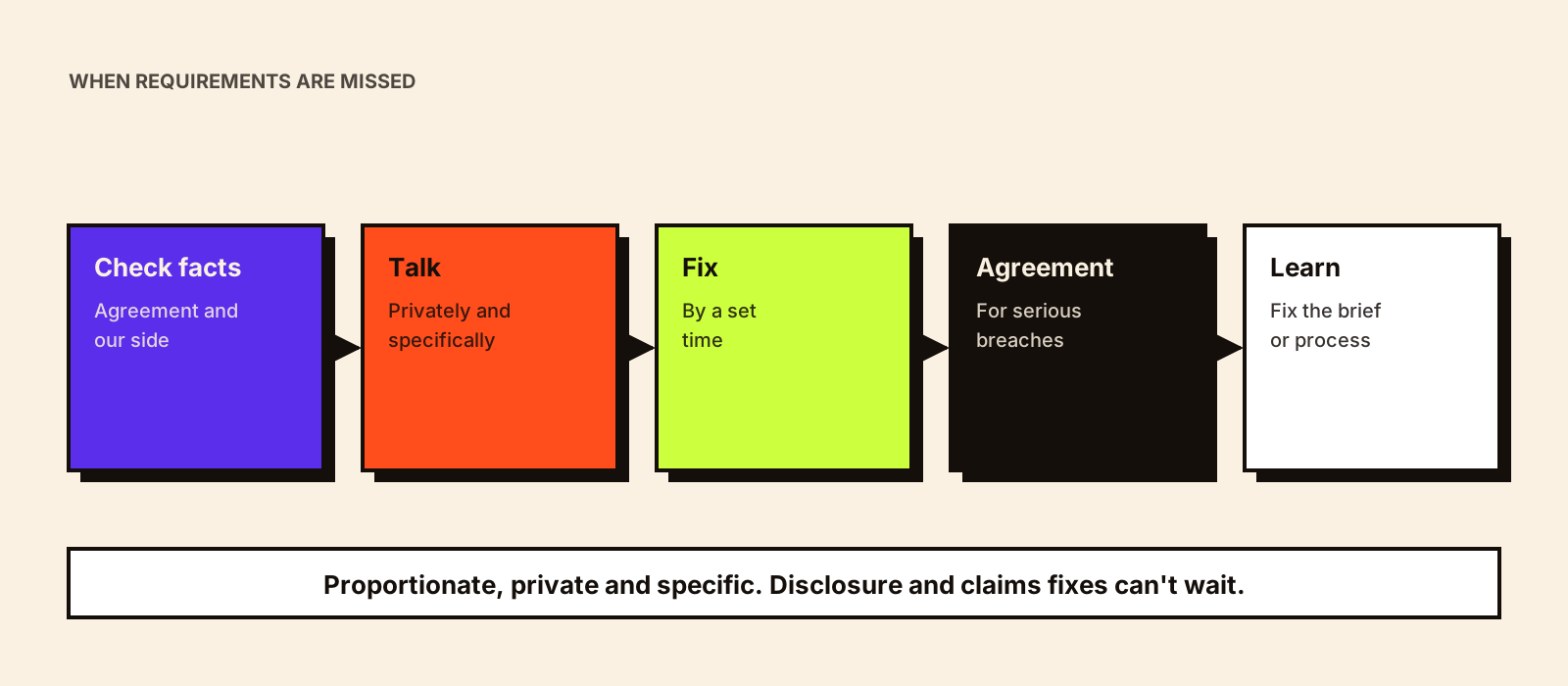
When a creator misses campaign requirements, first confirm the facts against the agreement and approvals, then talk to the creator privately and ask for a specific fix by a specific time. Respond in proportion: most issues are mistakes fixed within hours. For compliance issues such as missing disclosure or unapproved claims, the fix is non-negotiable and fast. For serious or repeated breaches, refer to what the agreement says about corrections, payment and termination, involve legal where needed, and record everything. Then fix the cause, which is often an unclear brief or process.
Types of non-compliance
| Requirement missed | Typical cause | Urgency |
|---|---|---|
| Disclosure missing or hidden | Habit, misunderstanding of placement | High: fix immediately |
| Unapproved or misleading claim | Creator's own words; brief unclear | High: fix or remove immediately |
| Posted unapproved version | Approval misunderstood; last-minute edit | Medium–high |
| Missed deadline or go-live | Overbooking, production issue, brand delay | Depends on date sensitivity |
| Deliverable incomplete (e.g. Stories missing) | Oversight | Medium |
| Wrong link, code or tag | Copy error | Medium: fix quickly |
| Post removed or archived early | Creator unaware of minimum duration | Medium |
| Exclusivity breach | Misunderstood category or dates; deliberate | High |
| Partnership ad permission not granted | Unfamiliar with the tool | Low–medium |
A proportionate response
1. CHECK THE FACTS: What does the agreement and approved brief say? Was the requirement clearly communicated? Did anything on our side contribute?
2. TALK TO THE CREATOR: Privately, specifically, politely. What's needed and by when.
3. FIX: Most issues resolved here.
4. IF NOT FIXED OR SERIOUS: Escalate internally; refer to the agreement (corrections, payment holds, termination, remedies).
5. RECORD: Issue, communications, fix, outcome.
6. LEARN: Brief, onboarding or contract change; note on creator scorecard if a pattern.
Influencer campaign escalation covers who should be involved at each level.
Disclosure and claims: why these are different
Missing disclosure and misleading claims aren't just campaign issues; they're advertising compliance issues for both creator and brand. ASCI's influencer guidelines require clear, upfront disclosure of material connections. Ask for an immediate fix: add the label in the right place, use the platform's paid-partnership tool, or edit out the claim. If the creator can't edit the content, agreeing to take it down and repost may be necessary. Don't let these wait for the next round of feedback.
Influencer marketing compliance covers the rules in more detail. This is general guidance, not legal advice.
Payment and the agreement
- If payment is tied to delivery as agreed, it's reasonable to pay once the requirement is met, and to tell the creator that clearly.
- Don't withhold payment for issues outside the agreement or caused by the brand.
- For partial delivery, agree a fair adjustment rather than withholding everything.
- For serious breaches (deliberate exclusivity violation, refusal to correct a misleading claim), follow the agreement's remedies and involve legal.
- Keep the tone professional; most disputes are resolved by conversation.
Influencer marketing contract covers clauses that make these situations clearer, and influencer payment terms covers payment triggers. If the problems can't be fixed and you're considering ending the partnership, influencer campaign cancellation covers how to do it properly.
Check the brand's side first
Before treating something as creator non-compliance, check whether the requirement was actually clear. Was disclosure placement explained with an example? Was approved claim wording given? Was the deadline in writing? Did product arrive on time? Did feedback come late? A surprising share of 'non-compliance' turns out to be unclear instructions, and the right response is to fix the brief, not blame the creator.
Message templates
Hi [name], quick one on your [post]: [the 'Ad' label isn't in the first lines of the caption / the claim at 0:20 isn't one we're able to make]. Could you [add 'Ad' at the start of the caption and apply the paid-partnership label / edit or remove that section] today? It's required under ASCI guidelines and our agreement. Thanks, and sorry for the hassle.
Hi [name], the [3 Stories] in our agreement for [date] haven't gone up yet. Is everything okay? Could you post them by [date/time], or let me know if something's stopping you and we'll work it out.
Prevent repeats
- Explain disclosure with an example at kickoff, especially for creators new to brand work.
- Give exact approved claim wording.
- Put all dates and minimum post duration in the written recap.
- Run go-live checks so issues are caught within hours.
- Add recurring issues to the brief template.
- Note patterns on creator scorecards; consider different roles for creators who repeatedly miss requirements.
Influencer content quality check covers go-live checks, and creator performance scorecard covers recording reliability.
Common mistakes
- Treating honest mistakes as breaches.
- Letting compliance issues wait.
- Withholding payment for brand-caused problems.
- Public criticism of creators.
- Not checking whether the brief was clear.
Conclusion
Respond to creator non-compliance proportionately: check the facts and your own side, talk privately, ask for specific fixes, act fast on disclosure and claims, use the agreement for serious breaches and record everything. Then improve the brief and process so the same issue doesn't happen again.