Creator Experience: How Brands Can Build Better Influencer Campaign Workflows
What creator experience means, why it affects communication, reliability, content quality and repeat partnerships, a journey map of friction points from outreach to payment, how to measure it and a practical improvement plan.
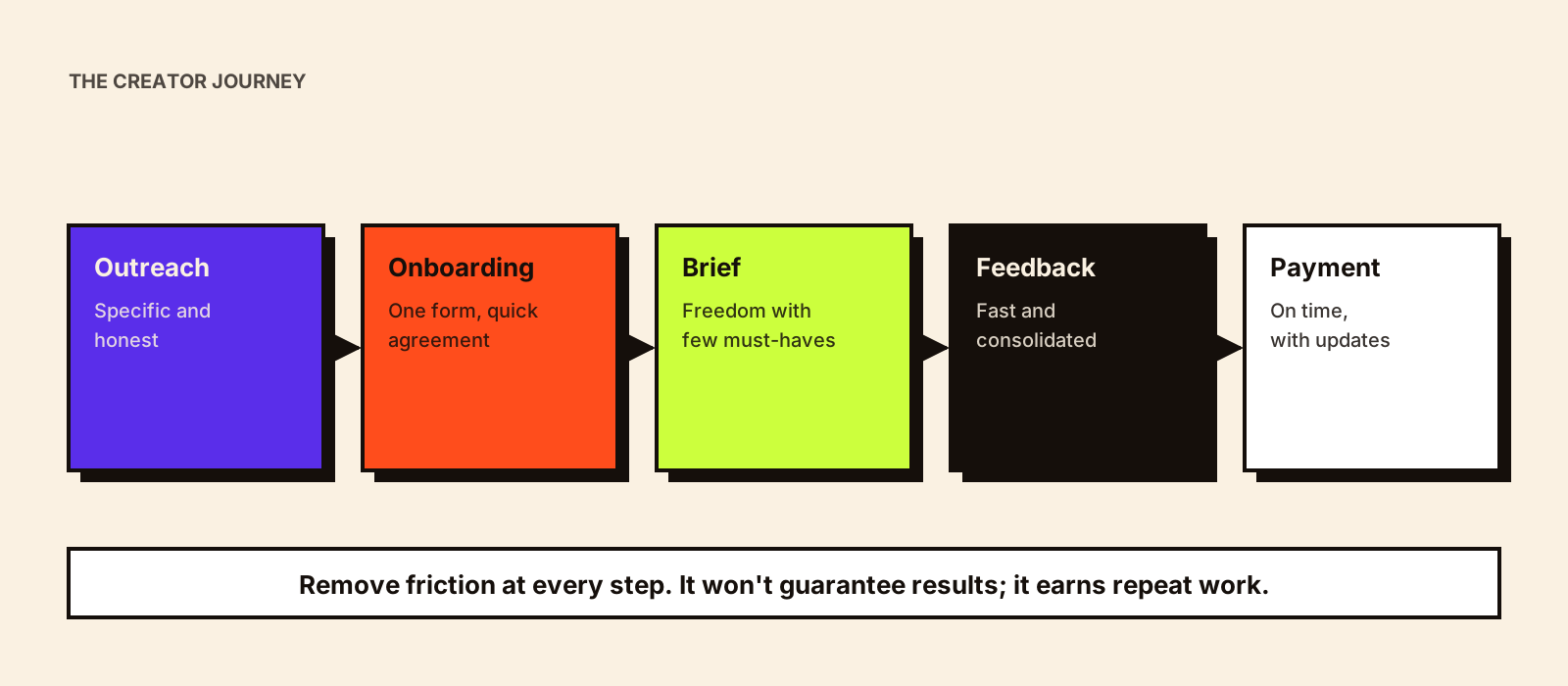
Brands spend a lot of effort on customer experience and very little on creator experience, even though creators decide whether to work with you, how much effort to put in and whether to come back. A creator who had to chase three people for a brief, waited a week for feedback and two months for payment will still deliver. They just won't go out of their way next time.
Quick answer
Creator experience is how working with your brand feels from the creator's side, from the first message to payment and beyond. Brands improve it by mapping each step of the creator journey and removing friction: clear and respectful outreach, fair terms, simple onboarding, good briefs with creative freedom, fast and specific feedback, realistic deadlines, predictable approvals, on-time payment, shared results and genuine appreciation. A better experience tends to improve communication, reliability and repeat partnerships, though it doesn't guarantee campaign results.
Why creator experience matters
| Area | How experience affects it |
|---|---|
| Communication | Creators who trust you raise problems early instead of going quiet |
| Reliability | Clear processes make on-time delivery easier |
| Content quality | Time and creative freedom go into the content instead of admin and rework |
| Repeat partnerships | Good creators prioritise brands they enjoy working with |
| Retention | Fewer of your best creators drift to competitors |
| Efficiency | Fewer revisions, fewer chases, fewer disputes |
| Reputation | Creators and managers talk about which brands are good to work with |
The creator journey and its friction points
| Stage | Common friction | Better experience |
|---|---|---|
| Outreach | Generic message; unclear if paid | Specific, honest, clear offer |
| Negotiation | Lowball offers; slow replies; vague terms | Fair offer; prompt replies; terms in writing |
| Onboarding | Repeated requests for details; late agreement | One information form; agreement within days |
| Product | Arrives late or wrong | Shipped early, right size or shade, tracked |
| Brief | Script disguised as a brief; changes after filming | Clear goals, few must-haves, creative freedom; brief frozen |
| Feedback | Vague, slow, many voices | Specific, consolidated, within agreed time |
| Approval | Unlimited rounds; unclear final approval | Agreed rounds; written approval |
| Payment | Vendor setup surprises; late payment; no updates | Clear process; on time; proactive updates |
| After the campaign | Silence | Results shared; thanks; talk about next time |
Each stage has a detailed guide: influencer outreach strategy, negotiate influencer rates, influencer onboarding, influencer campaign brief, influencer feedback, influencer payment terms and repeat influencer collaborations.
Principles of a good creator experience
- Respect: creators are partners, not media inventory.
- Clarity: everything important is written down and easy to find.
- Predictability: dates, feedback windows and payment timing are known and kept.
- Fairness: pay that reflects the work; no unpaid extras; changes compensated.
- Creative freedom: direction without scripts.
- Speed: quick replies and feedback, so creators don't wait on you.
- Recognition: thanks, results and credit.
How to measure creator experience
| Measure | How |
|---|---|
| Brand response time | Average time to reply to creator messages |
| Feedback turnaround | Days from draft received to consolidated feedback |
| Revision rounds | Average rounds per deliverable; rounds caused by brief changes |
| Payment timeliness | Share of payments made by the due date |
| Repeat acceptance | Share of rebooking offers top creators accept |
| Creator feedback | A short question after each campaign: 'How easy were we to work with?' (1–5) and 'What should we change?' |
Creator feedback loop covers how to ask and act on creators' input.
Where to start
1. One named contact per creator, with a stated response time
2. One information form at onboarding instead of repeated requests
3. Consolidated feedback within two working days, with agreed revision rounds
4. Vendor setup started at agreement; payment dates communicated and met
5. A results-and-thank-you note after every campaign
Creator experience in India
- Many smaller and regional creators are new to contracts, invoicing and disclosure; patient guidance is part of the experience.
- Language matters: briefs and calls in the creator's language reduce friction.
- Delivery to smaller towns needs more planning; late product is a common frustration.
- Prompt payment matters especially to creators for whom brand income is a large share of earnings.
Hypothetical example
Hypothetical: a beauty brand asks its last 20 creators one question after each campaign: 'How easy were we to work with, and what should we change?' The most common answers: feedback came from too many people, and payment dates weren't clear. The brand names a single reviewer, adds a payment-date line to every agreement summary and sends payment confirmations. Over the next few campaigns, fewer creators chase payments and more accept repeat offers. The brand didn't change fees; it changed the experience.
Questions to ask about your own process
- How many messages does it take a creator to get from 'yes' to a signed agreement?
- How often do we ask creators for the same information twice?
- How many people give feedback on a typical draft?
- How many days from approval to payment, on average?
- Do creators hear from us after the campaign, without having to ask?
- Could a creator new to brand deals understand our agreement and invoicing instructions?
Answer honestly and the fixes usually become obvious. Influencer marketing operations covers building those fixes into a repeatable system.
Common mistakes
- Designing processes only around internal convenience.
- Requiring creators to use tools that don't work on a phone.
- Adding approval layers without adding time.
- Assuming fee alone determines whether creators return.
- Never asking creators what they think.
Conclusion
Creator experience is the sum of many small things: a clear message, a fair offer, a simple onboarding, a good brief, fast feedback, on-time payment and a thank-you. Map the journey, remove the friction, measure a few signals and ask creators directly. It won't guarantee results, but it makes good creators want to work with you, which is where good results usually start. For the system that delivers it consistently, see influencer marketing operations.