Influencer Marketing Governance: How Brands Can Create Rules for Creator Partnerships
How brands set rules and standard processes for creator partnerships: the policies every brand needs (selection, brand safety, disclosure, claims, contracts, payments, data, crisis), who approves what, a campaign SOP with templates, and keeping governance light enough that campaigns still move.
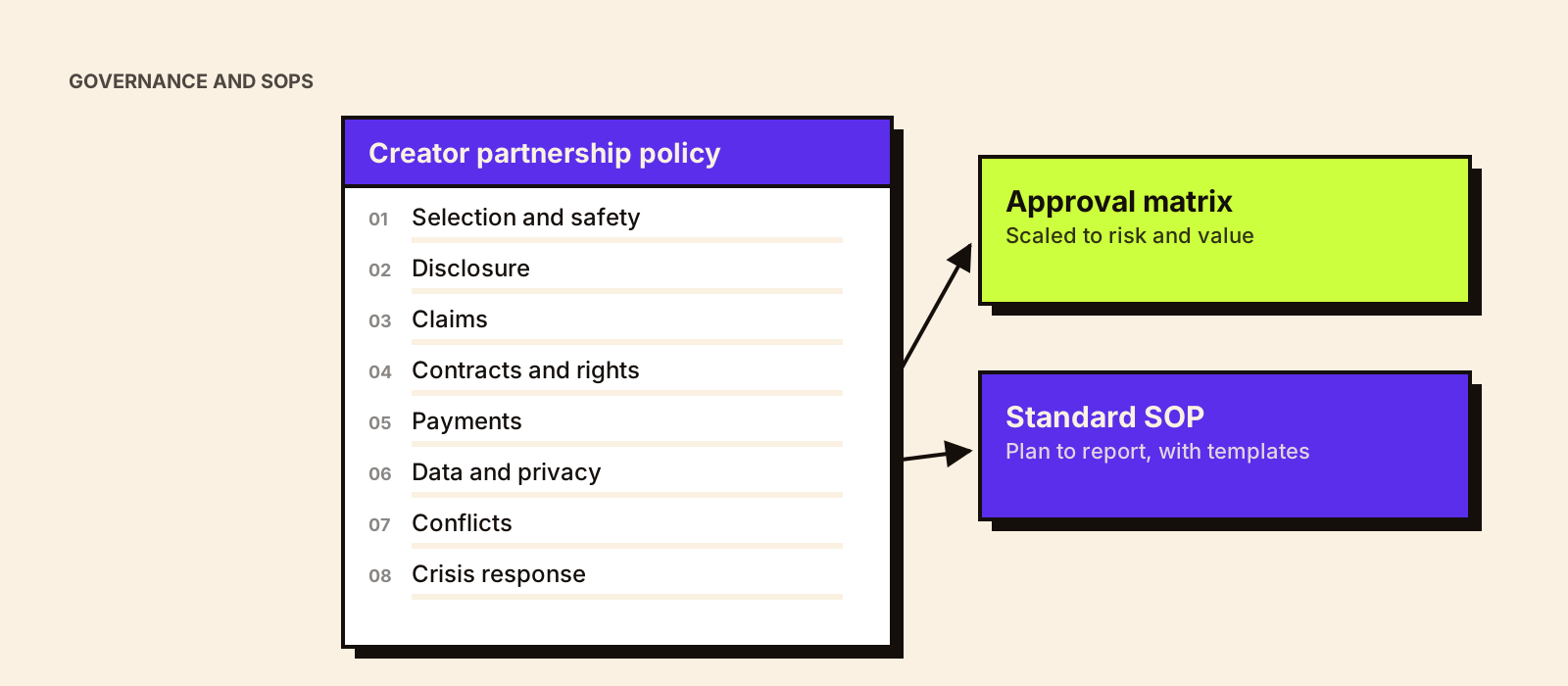
When one person runs a few creator collaborations, rules live in their head. When five teams, two agencies and a hundred creators are involved, that stops working: one team pays creators in thirty days and another in ninety, one checks disclosure and another doesn't, and nobody is sure who can approve a health claim. Governance is the small set of rules and processes that keeps creator work consistent and safe as it grows.
Quick answer
Influencer marketing governance means written policies for creator selection and brand safety, disclosure, claims and regulated categories, contracts and usage rights, payments, data handling, conflicts and exclusivity, and crisis response; a clear approval matrix; and a standard campaign SOP with templates (brief, contract terms, QA checklist, report). Keep it short, name an owner, review it yearly, and make sure it speeds campaigns up by removing repeated decisions rather than adding red tape.
The policies every brand needs
| Policy | What it decides | Related guide |
|---|---|---|
| Creator selection and brand safety | Minimum checks before any creator is booked; categories and behaviours that rule creators out | How to vet influencers |
| Disclosure | Labels, placement and checking on every post, including gifting and employees | Influencer marketing compliance |
| Claims and regulated categories | Approved claims list; who approves health, finance, food or education claims | Expert creator marketing |
| Contracts and usage rights | Standard terms, usage durations, exclusivity limits, who signs | Influencer marketing contracts |
| Payments | Payment timelines, advances, TDS and GST handling, who pays when agencies are involved | Influencer marketing payments |
| Data and privacy | What creator and customer data is collected, stored and shared | Influencer marketing agency checklist |
| Conflicts and exclusivity | Competitor relationships, employee creators, family members | Influencer marketing contracts |
| Crisis response | What happens if a creator or post causes backlash | Influencer marketing brand safety |
Guides: how to vet influencers, influencer marketing compliance, expert creator marketing, influencer marketing contracts, influencer marketing payments and influencer marketing brand safety.
Who approves what
| Decision | Owner | Consulted |
|---|---|---|
| Annual creator strategy and budget | Marketing head | Finance, category heads |
| Campaign plan | Creator marketing lead | Brand, performance |
| Creator shortlist | Brand manager | Creator marketing lead |
| Regulated claims | Legal or regulatory | Brand manager |
| Contracts above a set value or unusual terms | Legal | Procurement |
| Paid usage and amplification | Performance lead | Creator marketing lead |
| Crisis response | Communications lead | Legal, marketing head |
A standard campaign SOP
| Step | Standard | Template |
|---|---|---|
| 1. Plan | Objective, KPI, audience, budget written before outreach | One-page campaign plan |
| 2. Select | Minimum vetting checks passed and recorded | Vetting checklist |
| 3. Contract | Standard terms; deviations approved | Contract terms sheet |
| 4. Brief | Key messages, approved claims, disclosure, dates | Creator brief template |
| 5. Review | QA before approval; revision limits | QA checklist |
| 6. Publish | Live links, disclosure and tracking verified | Go-live checklist |
| 7. Pay | Invoices processed within policy timelines | Payment tracker |
| 8. Report | Results against KPI, learnings recorded | Report template |
The templates already exist in Kudozz's guides: the one-page plan in influencer campaign planning, the vetting checklist in how to vet influencers, the creator brief in influencer campaign brief, and the report structure in influencer campaign reporting.
Keep it light
- Write the policies on a few pages, not a manual nobody reads.
- Set thresholds so small, low-risk collaborations need fewer approvals than large or regulated ones.
- Pre-approve standard terms and claims so teams don't renegotiate them every time.
- Name one owner for the governance document and review it yearly or when rules change.
- Share the rules with agencies and creators upfront; most problems come from people not knowing them.
Governance with agencies and multiple partners
If several agencies or teams run creator work, governance is what keeps them consistent: the same disclosure standard, payment timelines, contract terms and reporting format. Put these in every agency statement of work, and review adherence quarterly. How to structure internal ownership and multiple vendors is covered in influencer marketing team structure.
Common mistakes
- No written disclosure standard, so it varies by team and agency.
- Legal reviewing every post instead of pre-approving claims.
- Different payment terms across teams, damaging creator relationships.
- Policies nobody outside marketing has seen.
- Governance written once and never updated as platforms and rules change.
Conclusion
Good influencer marketing governance is short, owned and shared: clear policies on selection, disclosure, claims, contracts, payments, data and crisis; an approval matrix scaled to risk; and a standard SOP with templates. It should make campaigns faster and safer at the same time. Policies touching law and tax should be reviewed by your legal and finance teams.